
Choose the yard outcome before the surface
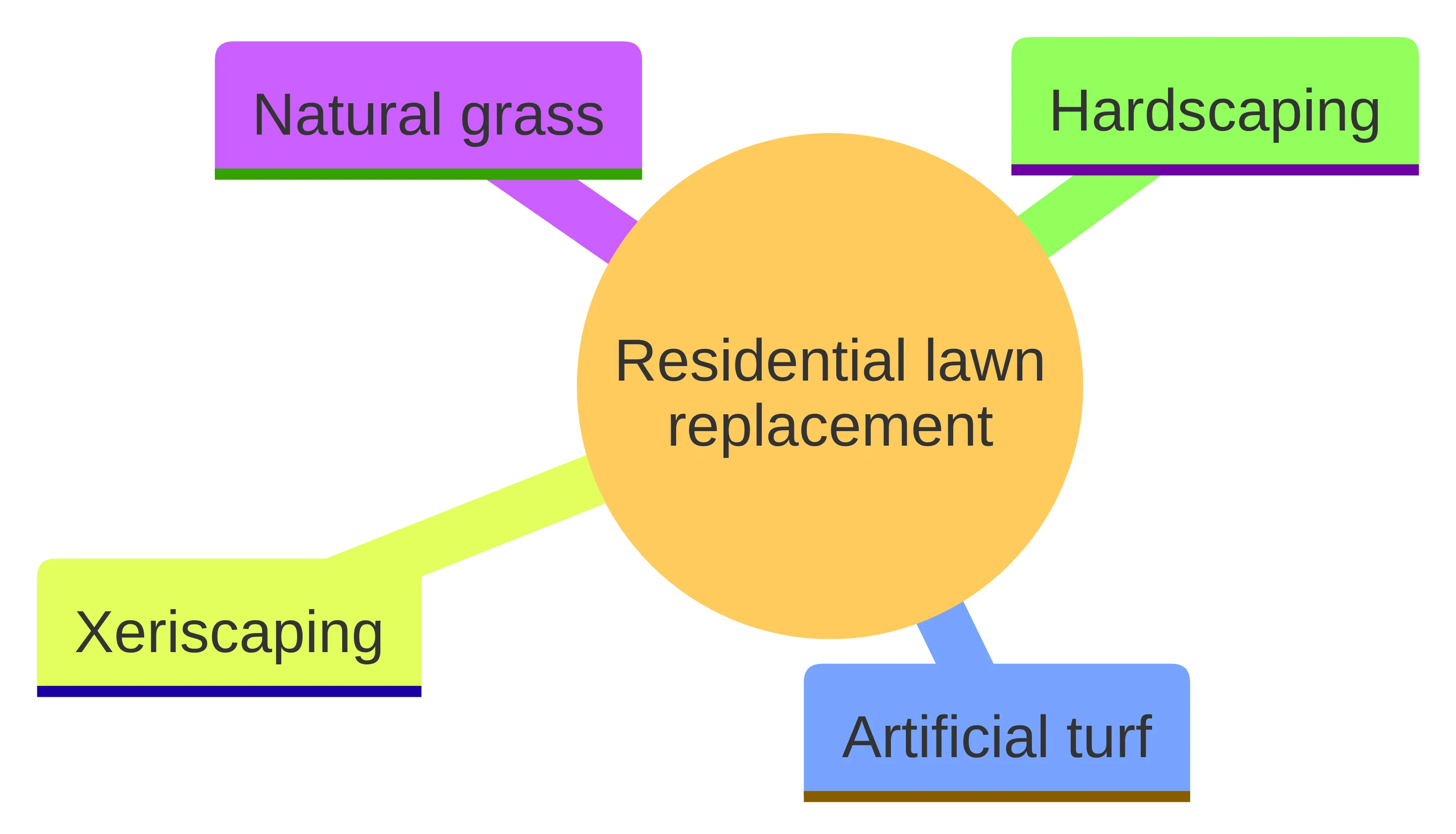
A residential lawn replacement should begin with the result you want from the front or back yard, then compare four paths: living grass, artificial turf, xeriscaping, and hardscaping. Decide whether the space needs regular activity, a consistent appearance, less routine lawn work, limited irrigation, pet accommodation, or a mix of planted areas and hard surfaces. Those priorities narrow the approaches worth examining before any material or installer is chosen.
Artificial grass is one option when a synthetic lawn appearance and lower routine lawn work matter, and it can save homeowners time, water, and maintenance costs. Actual results vary with the property and how you use the space. The practical question is how that option compares with living grass, xeriscaping, and hardscaping for your yard—not whether synthetic grass sounds attractive in general.
For a Kansas City, Kearney, Overland Park, Olathe, or nearby Missouri yard, compare the options against the outcome you want:
- Living grass keeps the lawn plant-based, with the maintenance demands of natural grass.
- Artificial turf uses synthetic fibers and may reduce some routine lawn tasks, but it brings installation, drainage, and ongoing-care questions.
- Xeriscaping uses drought-tolerant or native plants and hardscaping to limit irrigation.
- Hardscaping uses nonplant surfaces such as paths, rock, gravel, brick, or pavers where that landscape composition fits the yard.
Then record which trade-off matters most: routine care, irrigation, runoff and water quality, appearance, pet or activity use, or the role of planted and hard-surface areas. Weigh the convenience of synthetic options against your environmental values and the maintenance demands of natural grass. If artificial turf remains a candidate, carry the unanswered site questions into a project-specific estimate; otherwise, continue comparing the landscape direction that matches your priorities.
Map the main options for a residential front or back yard
A residential lawn replacement can be organized around four broad surface approaches: natural grass, artificial turf, xeriscaping, and hardscaping. Each approach changes what the yard is made of and what questions you need to answer before work begins.
| Option | What it uses | What to examine first |
|---|---|---|
| Natural grass | Living grass | The maintenance demands you are willing to accept and how the surface supports your intended use |
| Artificial turf | Synthetic fibers in place of traditional plants | Intended use, drainage, weather exposure, existing surface, and post-installation maintenance |
| Xeriscaping | Drought-tolerant or native plants arranged with water-conscious design | Planting needs, irrigation expectations, and how planted areas will work with the yard’s layout |
| Hardscaping | Materials such as rocks, gravel, brick, or pavers | How much of the yard should become a nonplant surface and how the layout handles water |
Artificial turf and xeriscaping are distinct approaches. Artificial turf replaces traditional plants with synthetic fibers, while xeriscaping uses drought-tolerant or native plants and hardscaping to limit irrigation. Hardscaping can therefore be a major part of a xeriscape plan rather than a direct substitute for every planted area.
A front-yard replacement may prioritize a consistent visual field and a relationship with walks, beds, or a driveway. A back-yard replacement may need to accommodate more activity, pets, seating, or transitions between surfaces. Those are planning questions, not promises about what any material will deliver.
Artificial turf deserves further evaluation when you want to examine a synthetic surface as part of a low-maintenance landscape. Natural grass deserves comparison when living vegetation and its maintenance pattern align with your priorities. Xeriscaping or hardscaping deserves consideration when plant selection, irrigation limits, and nonplant areas matter more than recreating a conventional lawn. Select the landscape outcome first, then ask which material can support it on your property.
Compare upkeep and environmental trade-offs across four paths
Each replacement path changes the work a homeowner performs. Living grass retains the maintenance demands of natural grass; artificial turf may reduce some routine lawn tasks but still requires care; xeriscaping shifts attention to drought-tolerant or native plants and hardscaping; and hardscaping changes how much of the yard is planted. None should be treated as a maintenance-free decision.
Separate recurring care from installation and long-term upkeep. Consider which tasks you are willing to perform, which plants or hard surfaces you want to maintain, and how much the yard’s appearance may change over time. Artificial turf can save time, water, and maintenance costs, while actual results depend on the property and use. Compare that qualified possibility with the maintenance demands of natural grass and the care associated with the other landscape approaches.
Artificial turf also has an environmental trade-off that belongs in the decision. In one controlled rainfall study, both artificial-grass types produced more runoff than living grass, while living grass retained more water and delayed drainage more effectively. The study compared specific artificial-grass types with living grass under controlled conditions; it does not establish the result for every installed yard.
Water use is therefore only one part of the comparison. Residential landscape runoff can carry pollutants to waterways, so compare water demand with the potential water-quality effects of runoff. Xeriscaping may address the landscape through drought-tolerant or native plants and hardscaping rather than synthetic fibers. If environmental values carry significant weight for you, include that question before choosing a surface.
A Kansas or Missouri lawn decision should record the trade-off you are accepting. Artificial turf may reduce some recurring lawn tasks, but the choice still needs to account for drainage, weather exposure, the existing surface, and the maintenance you will perform after installation. A living lawn, xeriscape, or hardscape may align more closely with your priorities when runoff, plants, or landscape composition matter more than a synthetic lawn appearance.
Match the surface to how the yard will be used
The intended use of a residential yard should shape the surface decision before you compare turf products. A front yard used mainly for appearance raises different questions from a back yard used for frequent activity, and a space with pets may need a different evaluation from a space used for occasional access. Write down the people, animals, movement, and outdoor routines the surface must accommodate.
Use this short planning record:
- Identify whether the area is a front yard, back yard, side yard, or a connected combination.
- Describe the activity the surface must support and how often it occurs.
- Note whether pets will use the area and whether their activity is light or vigorous.
- Separate the area that needs a lawn-like surface from areas better suited to plants, paths, seating, or hardscaping.
- List the maintenance tasks you are willing to perform after installation.
These answers give an installer a usable starting point without pretending that a material can be selected from a description alone.
A dog-use area needs a separate workload question. Hall Turf states that active dogs may require more resilient grass capable of withstanding vigorous activity without showing visible wear. That statement does not establish a universal product specification or guarantee a particular result on your property.
If dogs will use the yard, describe their activity before asking for a proposal. Include where they run, whether one area receives concentrated use, and what maintenance routine you can manage. If the area will serve several purposes, identify the highest-demand use rather than evaluating the space only as a decorative lawn. Ask the installer to explain how the proposed surface and site preparation relate to that use.
Test each option against drainage, exposure, and the existing surface
Before selecting among the four approaches, screen the intended use, drainage conditions, weather exposure, existing surface, and post-installation maintenance. Those factors help determine whether a planted lawn, synthetic surface, xeriscape, or hardscape fits the property and what work the project may require.
Start with observations you can make without diagnosing the property:
- Mark areas where water appears to collect or move after rain.
- Record whether the proposed area receives direct sun, shade, or changing exposure during the day.
- Describe the current surface and any sections that are uneven, damaged, planted, or built from another material.
- Note nearby downspouts, paths, beds, structures, and transitions that may affect the layout.
- List the maintenance tasks you expect to handle after installation.
We prepare the site before installing artificial grass. A site-specific review can then address which preparation work belongs in the project rather than leaving that work as an assumption.
One source describes synthetic turf as able to bear snow and rain efficiently and as durable and low maintenance, but that description does not establish quantified winter performance for Kansas or Missouri.
For a yard in the Kansas City metropolitan area, Kearney, Johnson County, Jackson County, or a nearby suburb, describe the exposure you expect the surface to face and ask how the proposed installation addresses the actual site. Keep the question focused on the complete project: the existing surface, drainage conditions, weather exposure, intended use, and maintenance routine. A general statement about synthetic turf does not establish a property-specific result.
Drainage is also an environmental question, not only a convenience question. A controlled rainfall study found greater runoff from both tested artificial-grass types than from living grass. That finding does not determine what will happen on your property, but it gives you a reason to discuss how the proposed landscape handles water before choosing the surface.
Ask for a clear explanation of the drainage conditions the estimate assumes. If those conditions are unknown, keep the decision open until an on-site assessment addresses them.
Compare project scope before comparing price
A cost-per-square-foot figure is only an initial comparison point because an artificial-turf project includes site-specific scope. A Kansas City cost report lists landscape installation at an average of $55 per hour per person plus materials, with a reported range of $37.50 to $72.50. That figure is an hourly landscaping rate, not an artificial-turf installation price per square foot.
The distinction matters in Kansas City and surrounding communities. An hourly landscaping figure cannot tell you what your artificial-grass project will cost, what preparation it requires, or which materials and services belong in the scope. Use any broad cost reference as context, not as a substitute for a property review.
An artificial-turf estimate should connect the price to the work being proposed. Before comparing numbers, ask whether the written scope identifies:
- The area being considered and how its size was determined.
- Site preparation and any work needed for the existing surface.
- Materials, labor, and other project charges.
- Conditions that could change the scope or add a surcharge.
- The expected schedule and how weather affects that schedule.
- Maintenance responsibilities after installation.
For an artificial-turf proposal, use an itemized written estimate to compare the defined work. It should identify scope, fees, and surcharges rather than leaving the comparison to a verbal number.
Your budget should be considered alongside your needs and environmental priorities. We recommend assessing your needs and budget before planning an artificial-grass installation, while also weighing synthetic convenience against environmental values and the maintenance demands of natural grass. A lower-looking initial figure is not meaningful if it describes a different project scope.
Use a site assessment to test the leading option
An on-site assessment is a decision tool when physical conditions could change which landscape path fits or what work it requires. It becomes especially useful when you cannot clearly describe the existing surface, drainage pattern, weather exposure, intended use, or post-installation maintenance routine.
Keep the choice open and request that review if any of these conditions apply:
- The proposed area includes several surfaces or levels.
- Water movement or drainage is uncertain.
- The existing lawn has damaged, uneven, or changing areas.
- The yard will serve pets, frequent activity, or more than one use.
- You are comparing a lawn-like surface with xeriscaping or hardscaping.
- You need a price tied to actual scope rather than a general benchmark.
A property visit does not decide your priorities for you. It tests the options against a defined site, use, and scope.
An artificial-grass installation requires site preparation, and Hall Turf states that the site must be prepared before artificial grass is installed. An on-site assessment is the point at which you can ask what preparation the proposed project includes and how that work affects the estimate.
Ask for the assessment to address the complete area rather than only the visible grass surface. The written result should make the proposed scope understandable enough for you to compare it with another landscape direction or decide which unanswered property questions still need attention.
A general article or broad price reference cannot determine whether a particular yard is suitable for a particular installation approach. Keep the decision conditional until the intended use, drainage, exposure, existing surface, and maintenance expectations have been discussed for the property.
Make an artificial-turf proposal comparable
Once artificial turf remains a candidate, compare an itemized proposal with other landscape directions before approving work. Its purpose is to show what the artificial-turf project includes, so the quoted scope can be considered alongside the other options rather than treated as a standalone number.
A Kansas City hourly landscaping rate should not be placed beside an artificial-turf square-foot price as though the two figures measure the same work. The reported $55-per-hour average plus materials is a landscaping-installation figure, with a reported range of $37.50 to $72.50 per hour per person; it is not an artificial-turf price per square foot.
Compare estimates only after you understand what each proposal includes. Project scope, preparation, materials, labor, and possible additional charges matter more than a bare unit price.
Ask installer questions that make the project accountable
An installer discussion should answer practical questions about responsibility, scope, and the work plan. Before hiring an installer, ask about insurance, experience, included work, written estimates, contract terms, who will perform the work, equipment, scheduling and weather, reviews, and how problems are handled.
Use the questions below to keep the conversation specific:
- What experience do you have with projects that use this type of surface and intended use?
- What work is included in site preparation?
- Who will perform the installation, and who will manage the project?
- What equipment and materials are included?
- How do weather or scheduling changes affect the work?
- What contract terms describe the scope, fees, and responsibilities?
- How are concerns or problems handled after the work is complete?
These questions are useful for any installer you consider. They are not a substitute for matching the proposed work to your property’s conditions.
Prospective installers should be asked for written proof of insurance, including a certificate of insurance and applicable liability and workers’ compensation coverage. Written documentation gives you a concrete item to include in your project records rather than treating an informal statement as sufficient.
A written estimate should also identify the scope, fees, and surcharges. Keep insurance questions and price questions separate: coverage documentation addresses responsibility, while an itemized estimate explains what the proposed work costs.
The proposed installation should also match how you will use the yard. Tell the installer whether the space is a front lawn, back lawn, pet area, activity area, or mixed-use landscape. Active dogs may require more resilient grass capable of withstanding vigorous activity without visible wear, so concentrated pet activity should be part of the discussion rather than an afterthought.
Ask the installer to connect the recommendation to your stated use, drainage conditions, weather exposure, existing surface, and maintenance routine. A clear answer should identify the condition being addressed and the limit of what the proposal can establish.
Turn the four-way comparison into a next step
A Kansas City lawn replacement is ready for the next planning step when you can describe the desired result, intended use, maintenance expectations, environmental priorities, and property questions that still need answers. Use those answers to rank the four approaches rather than treating artificial turf as the default: living grass, artificial turf, xeriscaping, and hardscaping each create a different balance of plants, hard surfaces, routine care, irrigation, and runoff considerations.
Use the remaining unknowns to choose the action:
- If the desired landscape outcome is unclear, compare the four approaches before comparing products.
- If drainage, exposure, or the existing surface is uncertain, arrange an on-site assessment.
- If artificial turf is still in contention and price is the main uncertainty, request an itemized written estimate rather than relying on a general hourly or square-foot figure.
- If use is the main uncertainty, describe activity, pets, and maintenance expectations before selecting the surface.
A qualified professional should decide individual suitability after reviewing the property and proposed work. The next discussion should test your stated priorities against the site’s unresolved conditions.
A free quote is an appropriate next step when you want to assess whether artificial grass fits your residential yard, site conditions, intended use, and priorities in Kansas or Missouri.
Questions for comparing lawn-replacement options
How does artificial turf compare to natural grass in terms of maintenance and environmental impact?
Artificial turf may reduce some routine lawn tasks, but it does not eliminate maintenance entirely. It can produce more runoff than natural grass, which retains more water and delays drainage more effectively. Weigh the convenience of synthetic options against your environmental values and the maintenance demands of natural grass.
When is an on-site assessment necessary before installing artificial grass?
An on-site assessment is necessary when property conditions could change the installation approach or estimate, such as uncertain drainage patterns, existing surface conditions, or if the yard will serve multiple uses.
What should I include in a written estimate for artificial turf installation?
An itemized estimate should identify the project scope, including the area being considered, site preparation, materials, labor, fees, surcharges, and maintenance responsibilities after installation.
What questions should I ask an installer before hiring them for artificial turf installation?
Ask about their experience, the scope of work included, who will perform the installation, equipment used, how weather affects scheduling, and how they handle problems after the work is complete.
How can I determine if artificial turf is the right choice for my yard?
Assess your yard’s intended use, maintenance expectations, environmental priorities, and any property-specific questions that need answers before deciding on artificial turf.
What are the average costs associated with landscaping installation in Kansas City?
The average cost for landscaping installation in Kansas City is reported at $55 per hour per person plus materials, with a range of $37.50 to $72.50.