
What a pet-turf quote must answer before you compare prices
Artificial turf installation cost in Kearney and the Kansas City area cannot be reduced to one universal number. Lawn size, material quality, site preparation, and installation complexity all influence the final price, so a useful budget starts with the complete installed system rather than a bare square-foot figure.
A pet-turf budget should account for the following parts of the project:
- The measured installation area and its boundaries.
- Removal, disposal, base preparation, grading or finished-level work, and edge treatment.
- Turf quality, backing, installation materials, labor, seams, and infill.
- Drainage work and any system intended to manage water or pet urine.
- Odor-control layers or specialty infill.
- The number of dogs, their activity level, and the amount of wear the area will receive.
- The installation method and the work included in the written estimate.
Each item can change the scope. A larger area may cost more in total even when its price per square foot decreases, while poor soil or a complicated yard can add preparation work.
For a Kearney or Kansas City project, begin by describing the area your dogs will actually use instead of pricing the whole yard by guesswork. Record the surface, boundaries, drainage concerns, and intended use before you compare estimates. That information gives each estimate the same starting point and makes a low headline number less likely to hide omitted work.
Build the base installation cost from area and site conditions
Project size is the first cost variable because a larger turf area requires more product and installation work. Larger turf projects have a higher total installation cost, although the price per square foot may go down. Measure the proposed dog area separately from patios, planting beds, walkways, and unused lawn so the quoted area reflects the work you actually want completed.
Site condition is the second major variable. Labor-intensive base work and the quality of the turf and infill are described as the leading cost factors for most pet-turf projects, while complex yards or poor soil conditions can add to the total. Removal, disposal, uneven ground, restricted access, and difficult edges are practical details to identify before a price is compared with another one.
Local labor rates, soil, and climate can affect preparation and installation techniques. That matters when you are planning a project in Kearney, Kansas City, Overland Park, Lee’s Summit, Olathe, Shawnee, Lenexa, Liberty, or another nearby community because the same measured area can require different site work from one property to another. Use your location to describe the project, not to assume a fixed regional rate.
A practical first-pass budget separates the installation into four questions:
- How much area will be covered?
- What must be removed, repaired, or prepared before turf is placed?
- Which turf, infill, drainage, and odor-control components fit the dog area?
- Which labor and finishing tasks are included in the estimate?
This structure keeps the price discussion tied to identifiable work. It also lets you ask why two projects with similar dimensions have different totals.
Define the ground work included beneath the visible turf
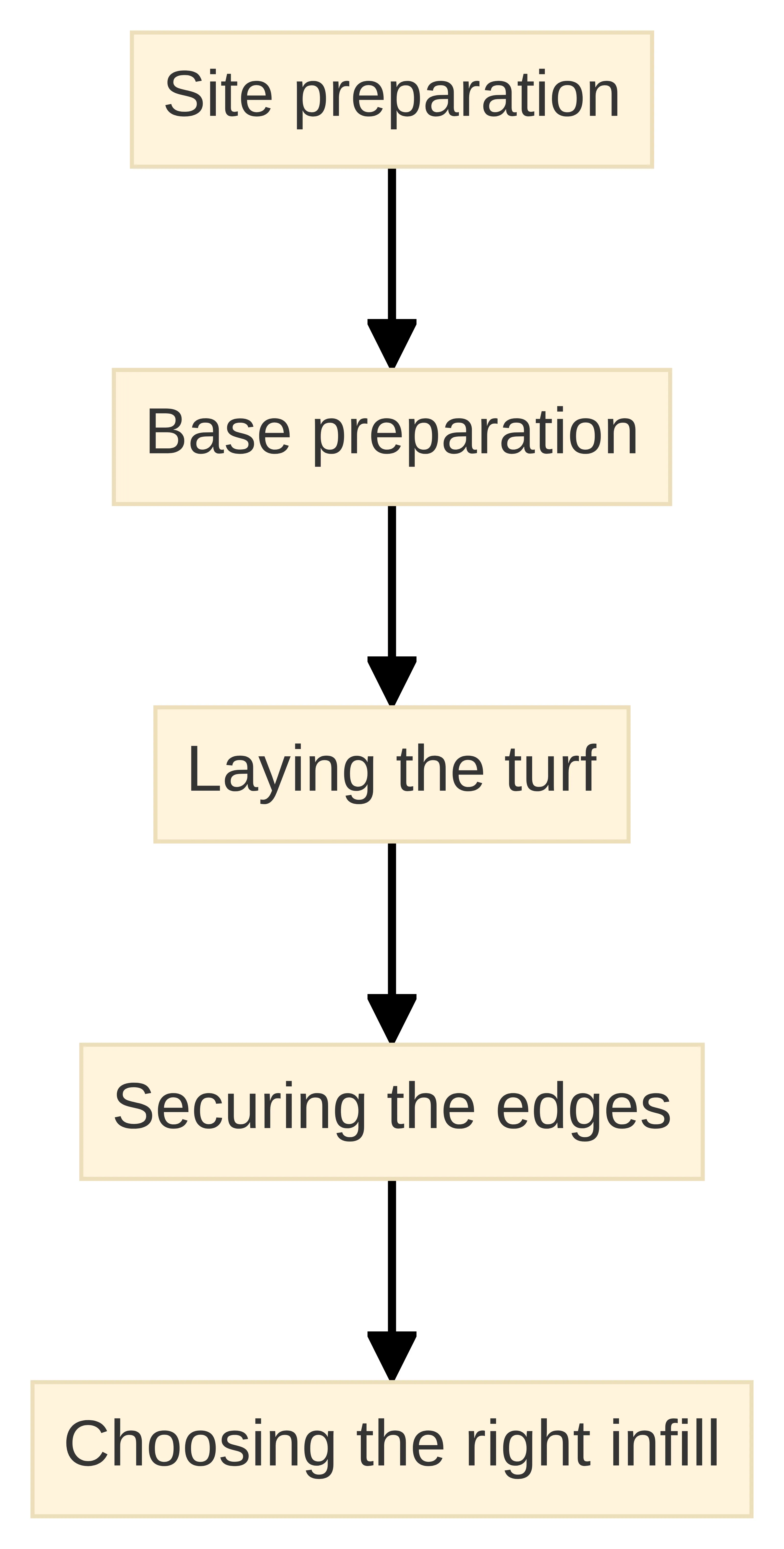
Site preparation comes before artificial grass installation, and the finished turf surface depends on the work beneath it. Preparing the base, laying the turf, securing the edges, and choosing the right infill are key installation steps. A quote that names only the visible grass does not tell you whether the necessary foundation work is included.
A written estimate should identify the measured installation area and boundaries, the turf product and relevant specifications, and the work included for removal, disposal, base preparation, and finished levels. Ask for each item in plain language:
- What existing surface will be removed?
- How will removed material be disposed of?
- What base preparation is included?
- How will finished levels be established?
- How will edges and seams be handled?
- What infill is included, and in what amount?
The answers define the actual installation scope more clearly than a total alone.
Drainage belongs in the ground-work discussion, not as an afterthought. Before installation, ask how drainage concerns, seams, edges, infill, site preparation, and the estimated installation timeline will be handled. The estimate should also explain existing water-management issues, proposed drainage work, exclusions, and the process for changes to the scope.
At Hall Turf, our installation guidance treats site preparation as a prerequisite before artificial grass is installed. Use that same distinction when reviewing a proposal: separate the preparation that makes the surface ready from the turf material that becomes visible after installation.
Account for dog use, drainage, infill, and odour control
Pet turf can cost more than regular artificial grass because pet systems prioritize drainage, durability, and odor control. Those priorities can involve different backing, stronger yarns, and specialty infills, so the right comparison is between complete systems rather than between grass products viewed in isolation.
Dog activity changes the performance requirements you should describe. Hall Turf’s guidance states that active dogs may require more resilient grass that can withstand vigorous activity without showing signs of wear. Tell the installer whether the area will serve one calm dog, several dogs, a running path, a play zone, or a frequently used dog run; that use pattern helps define the material and preparation questions that belong in the estimate.
Drainage and urine management can change the system design and the cost. Enhanced drainage systems intended to manage water and pet urine can raise artificial turf costs. Odor-control layers can also increase pet-turf cost, while some pet-turf offerings include antimicrobial features intended to keep grass for dogs fresh. Ask which feature is proposed, what part of the system it belongs to, and whether it is included or separately priced.
Infill is another separate choice. Silica sand, deodorizing infill, and rubber differ in price and effectiveness, so the word “infill” alone is not enough for a comparable estimate. Request the material name, its purpose in the pet area, and the amount included. A different infill can change both the initial system cost and the care questions you need to ask later.
With good installation and routine cleaning, pet turf often lasts 10–15 years or more, depending on traffic, climate, and product quality. Treat that range as a conditional planning statement, not a promise for your property. Your dog count, activity pattern, local exposure, product selection, installation quality, and cleaning routine all belong in the durability discussion. That makes the lifespan statement useful for comparing product, traffic, climate, and care assumptions, but not for calculating a guaranteed annual ownership cost from an installation quote.
Separate upfront system choices from ongoing pet-turf care
Artificial turf generally requires less maintenance than natural grass, but artificial turf still needs care to remain in good condition over the years. The installation decision and the maintenance decision should therefore be reviewed together. A lower initial price may describe the surface without explaining the work required after dogs begin using it.
A pet-turf maintenance plan should answer four practical questions:
- What cleaning procedure should you use for ordinary waste and routine rinsing?
- What grooming is needed to keep the surface in working condition?
- How are repairs handled if a seam, edge, or turf area is damaged?
- When does the system need additional infill material?
Ask these questions before installation so the ongoing work is part of the decision rather than an unexpected responsibility.
Weather affects cleaning frequency. Artificial turf may need less frequent cleaning in cooler or rainy climates, while hot weather requires more frequent cleaning to manage odor buildup. Use the conditions your Kearney or Kansas City property experiences as a reason to discuss the care routine, but do not assume that a seasonal pattern removes the need for regular attention.
The useful budget question is not only what the installation costs on the day work is completed. Ask what the selected turf, infill, drainage approach, and cleaning plan require over time, then keep those continuing tasks separate from the upfront system price.
Prepare a measurable project brief for a local estimate
A project brief turns a general request into a defined installation question. Your brief does not need to diagnose the property; it needs to describe the area, existing surface, visible site conditions, dog use, and system features you want priced.
Record the proposed area and boundaries first. Measure the length and width of simple zones, note irregular sections separately, and identify anything that will remain outside the turf. Ask the estimate to use the measured installation area and state whether paths, edges, transitions, and connected dog-run sections are included.
Describe the existing surface and the work beneath it. Note whether the area contains natural grass, soil, an older surface, concrete, landscaping, or other material. Ask what removal, disposal, base preparation, and finished-level work the estimate includes. Hall Turf’s guidance requires site preparation before artificial grass is installed, so keep that work visible in the brief.
Describe visible water conditions without trying to provide an engineering assessment. Mention places where water collects, slopes toward or away from the area, existing drains, and any known drainage concern. Ask the estimate to explain existing water-management issues, proposed drainage work, exclusions, and the treatment of any scope change.
Describe how the dogs will use the space. Include the number of dogs, whether they run or dig, how often the area is used, and whether the space is a narrow run or a broader yard zone. Active dogs may require more resilient grass, and pet systems may add drainage, durability, odor-control, or specialty-infill requirements.
Finish the brief with the system questions you want answered:
- Which turf product and specifications are proposed?
- Which infill and odor-control features are included?
- How will drainage, seams, edges, and base preparation be handled?
- What work is included, separately priced, or excluded?
- What installation timeline is estimated?
- What maintenance, grooming, repair, and infill responsibilities should you plan for?
A local estimate built from these details is more useful than a request based only on a yard’s approximate size.
Compare DIY material savings with professional installation scope
A separate estimate states that DIY can save the labor portion, often $3–$8 per square foot, while requiring time, tools, and careful base preparation. The material range and the labor-savings range describe different cost components. Do not add them together or present either range as the final price of a DIY project.
DIY installation still involves substantial physical and technical work. DIY also requires a plan for how drainage, seams, edges, and infill will be handled. Those details affect the work even when the material purchase is separate from labor. The person doing the installation must also distinguish the area to be covered from surfaces that remain, account for removal and disposal, and identify the finished level expected at transitions. If the site has poor soil or a complicated layout, the preparation questions can be more important to the material figure. A DIY budget therefore needs room for the base work and the tools and time required to complete it, rather than treating the turf roll as the whole project. You also need to understand site preparation, drainage concerns, seams, edges, infill, and the estimated timeline before starting.
If you install artificial turf yourself, follow a detailed installation guide to pursue professional-quality results. Plan for the tools, time, base preparation, material handling, cuts, edges, and drainage details before deciding that the material figure represents your complete budget.
A professional estimate should make the included work visible rather than hiding labor inside a single total. Ask for included work, separately priced items, and applicable charges. Compare that scope with the work you would perform yourself: removal, disposal, base preparation, turf placement, edge finishing, infill, drainage work, and cleanup.
Build a Kearney or Kansas City pet-turf cost model
For a Kearney or Kansas City pet-turf project, treat the budget as the price of a complete installed system rather than a single square-foot number. Separate the measured area, site preparation, turf and labor, drainage, infill, odor-control features, installation method, and ongoing care. The total can vary widely because lawn size, material quality, site preparation, and installation complexity differ from project to project.
The product portion of each estimate should identify the measured area, boundaries, turf product, and relevant specifications. Ask whether the proposed product is intended for the activity level you described and whether a sample or product identification is available. Keep product differences separate from labor and site-work differences.
The price portion should identify included work, separately priced items, applicable charges, exclusions, and the process for approving a scope change. A complete quote with these categories lets you compare the same project rather than choosing between incomplete totals.
Turn those categories into a line-item cost worksheet before requesting an estimate. The worksheet is not a substitute for a quote; it is a way to show which parts of the project have been defined and which parts remain unknown. Leave a space for the description, the quantity or measured area, whether the item is included or separate, and the amount supplied by the installer. Do not treat a blank amount as zero.
Use these lines in the worksheet:
-
Measured area and boundaries: Record the dog area separately from patios, planting beds, walkways, and lawn that will remain. Note irregular sections and connected dog-run areas so the installation area is not based on a rough whole-yard assumption.
-
Removal and disposal: Identify the existing surface and ask whether removal, hauling, and disposal are included. This keeps an apparently low turf-material figure from being mistaken for the cost of preparing the site.
-
Base and finished levels: Record the proposed base preparation and any finished-level work. Poor soil or a complex yard can add to the total, so these conditions belong on their own line rather than being hidden under “installation.”
-
Turf and installation materials: Write down the proposed product and relevant specifications, then keep the turf material separate from labor. Product quality can change the system cost independently of the amount of work required at the property.
-
Labor and installation method: Note whether the work is professional installation or a DIY project, and identify the tasks included in the labor figure. For DIY planning, keep tools, time, material handling, cuts, edges, and base work visible even when no labor charge appears on the worksheet.
-
Infill: Name the proposed infill rather than recording only the word “infill.” Silica sand, deodorizing infill, and rubber differ in price and effectiveness, so the material and its purpose need to remain visible as separate decisions.
-
Odor control: Record any odor-control layer or antimicrobial feature separately from the turf and infill. – Edges, seams, and finishing: Note how perimeter edges and seams will be handled, along with any transitions or cleanup included in the scope. These details describe finished work that may otherwise disappear from a short total.
-
Ongoing care: Keep cleaning, grooming, repair, and future infill responsibilities outside the installation total. Artificial turf requires less maintenance than natural grass but still needs care, and the selected pet system can affect the questions you need to ask about that care.
The worksheet can also show how the total changes under different project conditions without inventing a local price. Start with a core installation scenario containing only the measured area, stated site preparation, selected turf, installation materials, labor, and the finishing work included in the proposal. Then mark separate additions for pet-performance requirements, such as a more resilient grass for active dogs, drainage intended to manage pet urine, odor-control features, or specialty infill. Finally, mark site-complexity additions such as removal, disposal, poor soil preparation, difficult access, or complicated edges when those conditions apply. Do not add every possible line automatically; use the property description and the proposed scope to decide which lines need an amount.
This structure helps explain why two projects with similar dimensions may produce different totals without claiming that one universal component always costs more. One project may have simpler preparation but need a pet-specific system, while another may use a similar turf system but require more removal, base work, drainage, or edge finishing. The worksheet separates those reasons so the difference can be discussed rather than guessed.
For a professional estimate, ask the installer to complete or respond to each applicable line and identify exclusions. For a DIY plan, fill in the material lines from the products being considered, keep the approved material and potential labor ranges in their proper categories, and list the physical work that will not be performed by a contractor. In either case, the result should distinguish a known amount, a separately priced item, an excluded item, and an unresolved site question. That distinction gives you a more realistic cost model than a single headline figure while keeping the budget tied to the actual pet-turf system.
Know what published cost figures cannot establish locally
General planning figures cannot establish your Kearney or Kansas City installed total. DIY pet-turf materials alone are described as typically ranging from $3–$10 per square foot, while potential DIY labor savings are described separately as often $3–$8 per square foot. Neither figure includes the complete combination of your area, site work, turf, drainage, infill, labor, and project conditions.
A published figure also cannot resolve the factors that vary by property. Artificial turf installation cost can vary widely because lawn size, material quality, site preparation, and installation complexity influence the final price. Labor rates vary by location and provider, while local soil and climate can affect preparation and installation techniques.
Use a general range only as a prompt for better questions. Ask what portion refers to materials, labor, preparation, drainage, infill, odor control, or other work. Then replace the broad planning figure with a written estimate based on your measured area and stated site conditions.
The local decision becomes clearer when every estimate identifies the same area, product, preparation, drainage approach, included work, separate charges, and exclusions. Until those items are defined, a low or high square-foot figure is a limited planning signal rather than a dependable project total.
Decide whether your project is ready for a local quote
Your pet-turf project is ready for a local estimate when you can describe the measured area, existing surface, visible water concerns, dog activity, desired durability, drainage, infill, odor-control features, and expected maintenance. A quote should then define the boundaries, product, preparation, drainage work, exclusions, scope changes, and included charges.
Before sending your request, keep this short checklist with your project notes:
- Measured area and clear boundaries.
- Existing surface and preparation needs.
- Water-management concerns and proposed drainage questions.
- Dog count, activity pattern, and expected wear.
- Turf, infill, odor-control, and maintenance questions.
- A request for included work, separate charges, exclusions, and scope-change terms.
A qualified professional should decide whether the proposed system suits your property’s specific conditions. Once your scope is defined, use Hall Turf’s configured next step to move from general planning to a project-specific quote.