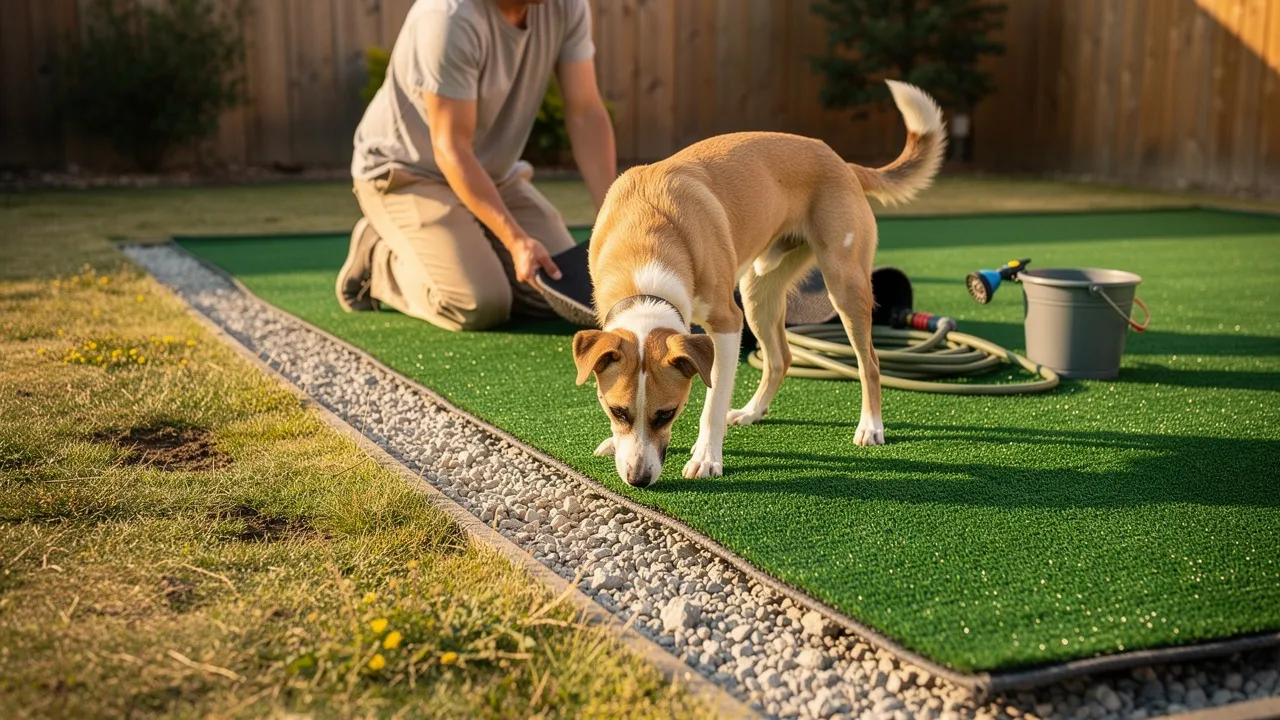

Pet turf is artificial turf designed for dog areas
Pet turf is artificial turf configured for a dog area, such as a private run, a designated backyard section, or a space used frequently by dogs. General artificial turf can serve many landscape purposes; pet turf places more attention on how dogs use the surface, how urine and waste will be managed, how the area will be cleaned, and how the installed system will handle repeated activity.
The label describes the intended use. It does not, by itself, guarantee drainage, odor control, durability, safety, or maintenance-free performance. Those results depend on the property, the installation assembly, the selected materials, the dogs’ habits, and the care routine you can maintain.
For a Kansas City-area property, start with the job the space must perform rather than with the appearance of a turf sample. A small relief area used by one dog has different demands from a run used by several active dogs. A low spot near a foundation raises different drainage questions from a sunny, well-drained part of a yard. Your decision should connect the dogs’ use pattern to the site and to the work you are willing to continue after installation.
Follow the installed system from the ground up
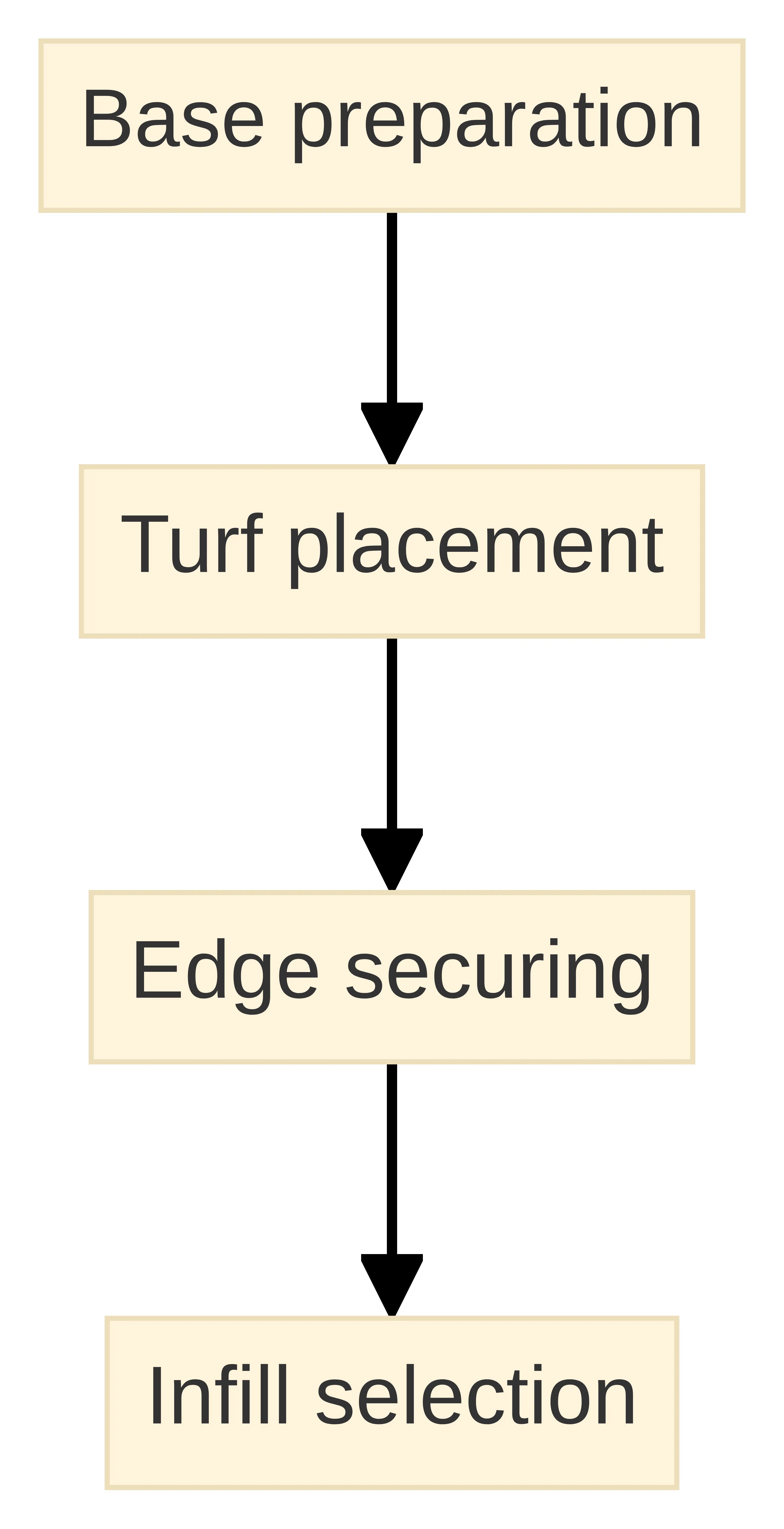
A pet-turf installation is an assembled system, not merely a green surface placed over whatever is already in the yard. A pet-turf installation includes base preparation, turf placement, edge securing, and infill selection; the base material can affect drainage and odor control.
You can understand the system by following its sequence:
- Base preparation: The ground beneath the turf establishes the foundation for the surface and its water-management approach.
- Turf placement: The artificial grass is positioned for the intended dog area, including the places where your dogs run, rest, turn, or relieve themselves.
- Edge securing: The perimeter must be addressed so the installed surface has a defined boundary.
- Infill selection: The infill is part of the system’s performance and maintenance considerations, rather than a decorative afterthought.
This sequence changes how you should evaluate proposals. Instead of asking only how the turf looks or feels, ask what will be beneath it, how the edges will be handled, and which infill is proposed for your use. A surface sample cannot answer those questions. A written installation scope can.
Connect drainage, base material, and odor management
Drainage and odor management in pet turf begin with the site and base, not with a deodorizer alone. Installation guidance says base material can affect drainage and odor control, while infill selection is one of the important installation decisions. Where will water go? Look at the proposed dog area’s grade, nearby low points, existing drainage patterns, and any place where water already collects.
2. What will support the turf? Ask how the base will be prepared and how that preparation relates to the property’s soil and drainage conditions.
3. That is an aid, not a promise that odor will disappear. If the proposed approach treats odor control as a product feature while leaving the base and water path unexplained, pause before choosing it. Ask for the relationship between the existing site, the prepared base, the infill, and the cleaning routine.
Keep those requests separate when you review the answer. Drainage is a site-and-base question: where will water move, and what existing condition could interrupt that path? Odor control is a system-and-care question: how will urine be addressed by the proposed infill or deodorizer, and what ongoing cleaning is expected? This distinction makes a proposal easier to evaluate. If the installer explains the infill but not the base, the drainage question remains open. If the installer explains the base but not the care routine, the odor-management plan remains incomplete. A clear proposal should let you discuss these parts independently before you decide whether the complete system fits the property.
Expect routine cleaning even with less lawn work
Pet turf remains a maintained surface even when it reduces some ordinary lawn work. Artificial turf is a durable, low-maintenance option for pet owners. Your plan should identify:
- how you will remove dog waste promptly;
- how the surface will be rinsed or cleaned after repeated use;
- how you will respond if urine odor develops;
- which cleaning products or deodorizing materials are appropriate for the proposed system; and
- who will handle upkeep when the area receives heavy daily use.
The practical distinction is lower routine lawn work, not no work. If you want a dog area that looks consistent between uses but do not want to remove waste, rinse the surface, or address odor when needed, pet turf may not match your maintenance priorities. If you accept that continuing care, include it in your household plan and in the questions you bring to an installer.
Match the surface to the dogs’ activity and traffic
Artificial turf can withstand various weather conditions and heavy foot traffic, making it a practical choice for residential lawns, playgrounds, and pet areas.
Describe your dogs’ actual behavior before discussing materials:
- Do they sprint, turn sharply, wrestle, or spend long periods in the same lane?
- Do they dig at edges, scratch after relieving themselves, or push against gates?
- Will several dogs use the area at once?
- Will people, lawn equipment, or other traffic cross the same surface?
High activity does not automatically make pet turf suitable or unsuitable. It tells you that edge treatment, surface selection, base preparation, and the assumptions behind durability need more attention. Ask the installer to relate the proposed system to your dogs’ use rather than offering a general durability statement.
Evaluate the Kansas City-area property before choosing pet turf
A Kansas City-area property should be assessed at the proposed dog area, not judged from the street address alone. In Kansas and Missouri, a professional site assessment can examine soil, drainage, irrigation, obstacles, measurements, and project scope before work begins. Pet-turf layout guidance also includes drainage, sun exposure, soil type, and where dogs spend time. – Exposure: Record which parts receive sun, shade, or changing exposure during the day.
- Existing systems: Mark irrigation lines, gates, fences, utilities you know about, trees, beds, hardscape, and other obstacles.
- Dimensions: Measure the space and identify narrow passages, turning points, entrances, and the places your dogs use most.
- Use pattern: Separate relief areas from play areas, rest areas, and routes that receive repeated traffic.
This record helps you discuss the actual property in Kearney, Kansas City, Overland Park, Lee’s Summit, Olathe, Shawnee, Lenexa, Liberty, or another nearby community. It also keeps the project from being evaluated solely by a product label. If the site’s water path, soil, or obstacles remain unclear, request a professional assessment before deciding on the system.
Compare pet turf with natural grass by the outcome you need
The pet-turf versus natural-grass choice should follow the outcome you need from the area, not a universal claim that one surface is better. Dog-area surfacing affects safety, drainage, cleanliness, maintenance labor, odor control, and total cost of ownership.
| Decision criterion | Pet turf | Natural grass |
|---|---|---|
| Routine lawn work | Artificial turf is described by Hall Turf as a durable, low-maintenance option for pet owners. Ongoing cleaning still belongs in the plan. | Natural grass fields can reduce surface temperatures, support biodiversity, reduce soil erosion, and act as carbon sinks. cite |
| Odor and cleaning | Deodorizer or deodorizing infill may help control pee odor, but it does not remove the need for ongoing care. cite | Your comparison should include how you will manage dog waste, wet conditions, and routine lawn care on the living surface. |
| Environmental cost | Do not judge the material from appearance alone; include water, drainage, upkeep, and the full project scope. | The cited case study states that natural grass emits far fewer greenhouse gases than artificial turf. cite |
Use the table to name the trade-off you are willing to accept. If your priority is a designated dog area with lower routine lawn work, investigate the complete pet-turf system. If water management, surface temperature, biodiversity, or greenhouse-gas emissions carry greater weight for your property, keep natural grass in the comparison.
The comparison has a further limitation: the environmental discussion cited here concerns natural grass fields, and the water and emissions statements come from a cited case study. They provide decision context, not a prediction for every residential dog run in Kansas City. Do not turn those findings into a guarantee about the result on your property. Instead, use them to identify the outcomes that matter enough to investigate. If surface temperature, biodiversity, erosion, runoff, water storage, or greenhouse-gas emissions are high priorities, keep natural grass in serious consideration. If lower routine lawn work is the priority, investigate the complete pet-turf system rather than stopping at the low-maintenance label. In either case, separate the outcome from the assumption: ask which surface better matches the priority, then ask whether the site and the maintenance plan support that choice. This keeps the comparison balanced without pretending that one material has the same advantages in every setting.
Understand pet turf through its installed components
For a Kansas City-area dog owner, “pet turf” is a use-specific description of an artificial-turf system intended for a dog area. The name identifies the setting; by itself, it does not establish the system’s drainage approach, odor-control approach, durability assumptions, safety considerations, or care requirements.
Separate the installation components
Installation guidance identifies base preparation, turf placement, edge securing, and infill selection as important parts of the work. Each describes a different part of the installed system:
- Base preparation: Base material can affect drainage and odor control, so the base is a distinct part of the system rather than an incidental detail.
- Turf placement: This is the step that puts the artificial-turf surface in place. The surface is only one part of the installed system.
- Edge securing: Edge securing is a separate installation step that addresses the system’s perimeter.
- Infill selection: Infill is another installation choice. A turf deodorizer or deodorizing infill may help control urine odor; the material described in the guidance absorbs urine and releases fresh scents over time. That is an odor-management aid, not an odor-elimination statement.
Keep performance language separate from the label
A pet-turf product description calls synthetic turf extremely durable and wear-and-tear resistant for digging, scratching, and running; that wording is promotional rather than independent validation. Likewise, the term “pet turf” does not define a system’s cleaning requirements. Reading the term this way explains what it refers to and keeps the label separate from claims about a particular system’s performance.
Turn a suitable fit into a documented installation scope
A documented installation scope should connect your dogs’ use pattern and property conditions to the work being proposed. Installation guidance identifies base preparation, turf placement, edge securing, and infill selection as important steps, and it says base material can affect drainage and odor control.
Ask for the scope to identify:
- the area to be covered and the use pattern it is intended to support;
- site and soil conditions that affect the design;
- base preparation and the planned drainage approach;
- turf placement, edge treatment, and infill selection;
- the odor-management approach and expected cleaning routine;
- the assumptions behind durability for your dogs’ activity; and
- applicable product certifications, CAD files, and testing documentation.
A qualified professional should decide individual suitability when site conditions require professional judgment. If the scope answers these questions and the option fits your dogs, property, and maintenance expectations, you have a clear basis for proceeding.
Common questions about pet turf
What is pet turf?
Pet turf is a type of artificial turf specifically designed for dog areas, focusing on how dogs use the surface, manage waste, and maintain cleanliness. It differs from general artificial turf by emphasizing drainage, odor control, and durability tailored to pet activities.
How does pet turf manage drainage and odor?
Effective drainage and odor management in pet turf start with proper base preparation and infill selection.
How should I evaluate my property for pet turf installation?
A professional site assessment is recommended to examine soil conditions, drainage patterns, and other site-specific factors before installing pet turf.
What are the trade-offs between pet turf and natural grass?
When comparing pet turf to natural grass, consider factors like maintenance requirements, drainage capabilities, environmental impact, and how each surface meets your specific needs for your dogs and property.
What factors should I consider about my dogs before choosing pet turf?
Assess your dogs’ activity levels, behavior, and how they use the space. Consider whether they dig, run, or spend time in specific areas, as these behaviors will influence the durability and suitability of the turf.
What is the next step if I decide pet turf is suitable for my dog area?
If you determine that pet turf is appropriate for your needs, the next step is to request a professional quote for installation, which should include a detailed scope of work based on your specific site conditions and requirements.