
Compare dog-friendly ground cover by use and trade-offs
Dog-friendly ground cover should be chosen by the recurring problem your yard needs to solve, not by appearance alone. A dog area that becomes muddy after rain has a different requirement from a quiet side yard that receives moderate traffic. A space used for vigorous running has a different requirement from a small relief area beside a patio.
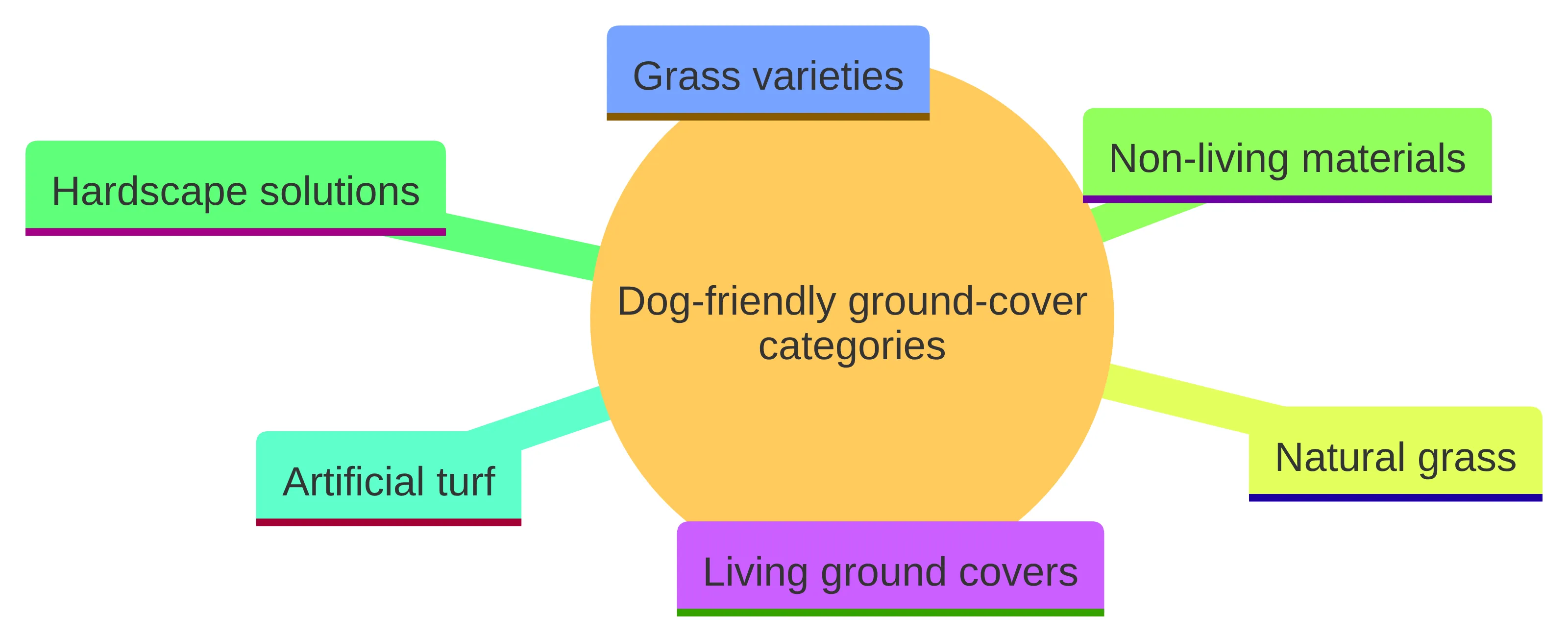
Living ground covers, grass varieties, non-living materials, hardscape, natural grass, and artificial turf are broad starting points for a dog-area comparison. Use the categories as a comparison set: living ground covers and fine fescue offer no-mow possibilities but differ in traffic tolerance and site needs; natural grass can become muddy and maintenance-intensive under high traffic, urine, and weather; artificial turf is conditional on pet-appropriate design, drainage, and cleaning; and non-living materials or hardscape need material-specific checks. A landscaping guide groups dog-friendly choices into living ground covers, grass varieties, non-living materials, and hardscape solutions, while separate dog-area guidance treats natural grass and artificial turf as distinct options to compare by maintenance and long-term use.
Start with the job your surface must perform:
- Control mud: Focus first on how water leaves the area and how the surface behaves after weather.
- Handle traffic: Match the surface to your dog’s activity, digging, running, and repeated paths.
- Limit routine work: Compare mowing, watering, reseeding, debris removal, rinsing, and other care rather than assuming any option is maintenance-free.
- Support a cleanable dog area: Ask how waste, dirt, and odor concerns will be managed as part of the surface plan.
- Protect household priorities: Include heat, water use, environmental trade-offs, and the size and scope of the project.
Artificial turf can be a conditional option for dog areas, but its performance depends on pet-appropriate design, drainage, and cleaning. The useful output is a side-by-side comparison of the surfaces and the trade-offs the household can manage.
Your first decision is whether the yard needs a different surface everywhere or only in the dog-use zone. Keeping natural grass in lower-use areas while assigning another material to a worn path or relief area can narrow the project and make the comparison more useful. That is a planning choice, not a promise that a particular layout will solve every drainage or maintenance problem.
For a Kansas or Missouri home, record the area’s intended use, the dog’s activity level, the traffic from people, and what happens after rain before you compare products. Then judge each option against those facts. A surface that fits a small, moderately used area may not fit a large run, a heavily traveled gate path, or a low spot that already receives water from elsewhere.
Map the main dog-friendly ground-cover categories
Dog-friendly ground-cover categories give you a starting map, but the category does not decide suitability by itself. Living ground covers, grass varieties, non-living materials, and hardscape solutions each require a different set of questions about traffic, sunlight, soil, water, and maintenance. The cited landscaping guidance evaluates options by durability against digging, urine, and heavy traffic, along with water requirements and maintenance level.
| Option category | Where the category may fit | Questions to resolve before choosing |
|---|---|---|
| Living ground covers | Areas where appearance, sunlight, soil, and moderate use can be balanced | Can the plants establish under the site’s conditions? How much traffic, digging, watering, and care will the area receive? |
| Grass varieties | A lawn-like surface where no-mow or lower-mow coverage is being considered | Does the selected grass suit the sunlight, soil profile, and expected traffic? |
| Natural grass | A conventional lawn where routine mowing, watering, fertilizing, and seasonal repair fit the household | Can the area tolerate the dog’s traffic, urine, and local weather without becoming an ongoing mud and maintenance problem? |
| Non-living materials | A defined surface where planting is not the only design goal | How will the material handle water, cleaning, heat, movement, and transitions to the rest of the yard? |
| Hardscape solutions | Paths, edges, or other defined areas where a non-plant surface is being considered | Will the surface suit the dog’s movement and the household’s expectations for drainage, cleanliness, and comfort? |
| Artificial turf | A dog-use area where consistent appearance and lower routine work are priorities | Is the turf designed for pet use, and are drainage, base preparation, cleaning, heat, and ongoing care addressed together? |
Artificial turf belongs in the comparison as a complete system rather than as a grass-like layer considered by itself. Dog-area guidance describes it as conditional: consistent performance and a cleaner appearance depend on pet-appropriate design, suitable drainage, and a cleaning plan.
The use profile should narrow the categories before you compare colors or textures. Sunlight and soil matter for living coverage and grass alternatives. Foot traffic matters, and the guidance presents sedum, moss, creeping phlox, and creeping thyme as options for moderate traffic.
A dog that repeatedly runs the same route creates a different demand from a dog that uses a small area briefly. Digging, urine, wet weather, and human traffic also change the questions you need to ask. Use the categories as a checklist:
- Living coverage: Can the plants tolerate the intended traffic and site conditions?
- Grass alternatives: Can the selected variety provide the coverage you want with the care you accept?
- Non-living or hardscape surfaces: Can the material be cleaned, drained, and integrated with the rest of the yard?
- Artificial turf: Can the product and installation plan address pet use, water movement, heat, cleaning, and wear?
Choose the category that matches the problem, then investigate the specific material and installation rather than treating the category name as a performance guarantee.
Match living coverage and grass alternatives to moderate use
Living coverage and grass alternatives make the most sense when your intended use is compatible with establishment, traffic, sunlight, soil, and maintenance. Fine fescue and some ground covers are described as no-mow options, but the choice depends on the property’s aesthetic, foot traffic, sunlight, and soil profile.
Moderate use is the key boundary. That does not turn any named plant into a universal dog surface. It gives you a starting point for asking whether your dog’s behavior matches the expected use.
Use living coverage as a candidate when:
- Your dog does not repeatedly run, dig, or concentrate use in one narrow route.
- The area has sunlight and soil conditions that suit the selected coverage.
- You accept the establishment period and the care required by the chosen plant or grass.
- You can tolerate seasonal changes in appearance and coverage.
- The area can be separated from higher-traffic paths if necessary.
Before choosing, describe the area rather than relying on a plant name. Note the hours of sun, the soil condition, the path your dog uses most, the number of dogs, and whether people cross the area. Those details determine whether moderate-use guidance is relevant to your yard.
A no-mow label does not mean no maintenance. Fine fescue and ground covers may reduce mowing in the circumstances described by the landscaping guidance, but you still need to account for watering, establishment, trimming or seasonal care, weeds, and repairs that may apply to the selected coverage. The source supports a comparison based on aesthetics, traffic, sunlight, and soil; it does not establish that a named option will withstand every dog or every Kansas and Missouri property.
Choose a living option only after you can state the use boundary clearly: moderate traffic, the relevant site conditions, and the maintenance routine you are willing to manage. If your main concern is repeated mud, concentrated wear, or a dog that uses one route heavily, move that area into a closer comparison with natural grass and artificial turf rather than assuming a ground cover will carry the load.
Keep natural grass when its trade-offs fit the household
Natural grass can remain a reasonable choice when your household accepts its care and the dog-use pattern does not create an unacceptable cycle of mud and repair. Dog-area guidance says high traffic, urine, and weather can turn natural grass into a muddy, maintenance-intensive surface. Hall Turf’s own service information contrasts artificial turf with natural grass that requires frequent mowing, watering, and fertilizing.
Keep natural grass in the comparison when:
- The yard receives use that the existing grass can tolerate.
- You are willing to mow, water, fertilize, and repair the lawn as needed.
- Mud after weather is manageable for your household.
- The look, feel, and living landscape matter more than reducing routine lawn tasks.
- Water use is acceptable as part of the yard’s environmental trade-off.
Natural grass is not automatically the wrong answer for a dog owner. It may fit a household that values a living lawn and can manage the consequences of traffic, urine, and weather. It may fit less well where repeated use turns the same section into mud or where frequent lawn work is the problem you are trying to remove.
Water use belongs in the natural-grass comparison, but it should not be treated as a complete environmental verdict. A case study and literature review identified substantial water use as a drawback of natural grass while also raising concerns about artificial turf’s emissions, microplastics, permeability, and PFAS. Those findings support a trade-off discussion rather than a universal ranking.
Write down the natural-grass tasks you actually want to continue. If mowing, watering, fertilizing, and repairing worn areas are acceptable, keeping grass may avoid a larger project. If those tasks are the main source of frustration, compare the complete artificial-turf system and its ongoing care rather than comparing only the visible blades.
Compare dog-area surfaces by use and trade-offs
For a Kansas or Missouri home, ground-cover choice is easier when the yard problem is defined before a material is selected. The comparison starts with four broad categories: living ground covers, grass varieties, non-living materials, and hardscape solutions. Natural grass and artificial turf then need their own checks for dog use, maintenance, drainage, and long-term trade-offs.
A practical comparison uses the intended area and its demands rather than appearance alone:
- Living ground covers and fine fescue can provide no-mow coverage, but the choice depends on the desired look, traffic, sunlight, and soil profile.
- Natural grass can become muddy and maintenance-intensive when high traffic, urine, and weather combine. Its water use is another household trade-off.
- Non-living materials and hardscape solutions require a separate look at their fit for the intended dog area, including water movement, cleaning, heat, and environmental considerations.
- Artificial turf can provide consistent performance and a cleaner appearance only when it is designed for pet use and paired with suitable drainage and a cleaning plan. Backing design and drainage-hole spacing can affect permeability.
Hall Turf describes its artificial turf as a durable, low-maintenance option for pet owners and as lower maintenance than natural grass, which requires frequent mowing, watering, and fertilizing. That service information belongs beside—not instead of—the broader comparison. Product choice, site conditions, installation, and continuing care determine whether the artificial-turf trade-offs fit the household.
Dog activity is a central comparison filter. Hall Turf’s service information notes that active dogs may need more resilient grass to withstand vigorous activity without visible wear. Separately, Hall Turf lists pet areas among the settings for its artificial turf. That description does not promise a result for every product, dog, or property.
The use profile changes which questions deserve attention. A relief area puts drainage, waste removal, and cleaning at the center. A play area raises questions about activity, wear, and heat. A mixed-use lawn adds traffic, appearance, and routine maintenance. Sun exposure, existing water movement, soil conditions, the number and activity of dogs, and the area’s intended use should be clear before one category is treated as a fit.
This comparison keeps the decision broader than a turf specification: the suitable surface is the one whose care requirements and trade-offs match how the household will use the space.
Odor management belongs in the artificial-turf plan, but odor control still depends on the surface and its care. Ask how the complete system handles routine cleaning, rinsing, waste removal, and water movement. One maintenance guide recommends regular debris removal and rinsing, along with prompt attention to spills and stains; the dog-area guidance likewise makes a cleaning plan a condition of the option’s performance.
Treat odor as a routine-and-design question. A product discussion that never addresses cleaning, drainage, and the intended dog use is incomplete. Keep natural grass in the comparison if you prefer a living surface or do not want the continuing cleaning obligations associated with an artificial system.
Screen drainage, activity, traffic, and heat before choosing
Drainage is a property-and-product question, not a label you can settle by looking at the turf face. Synthetic-turf guidance says drainage performance varies by product and that backing design and the spacing of drainage holes can affect permeability. Separate installer guidance identifies base preparation and drainage as factors that can affect long-term turf performance.
Screen the site before comparing products:
- Mark the proposed dog area and note whether it sits at a low point.
- Record where water moves after heavy rain and whether water arrives from another part of the yard.
- Identify existing drains, slopes, downspouts, and transitions to patios, paths, or planting.
- Ask what base preparation the area needs and how the finished system will move water.
- Ask for the selected product’s drainage design rather than accepting a general statement about artificial turf.
These steps do not predict a result for your property. They create a focused brief for a site assessment and help you distinguish a product question from a grading or base-preparation question.
Activity and traffic should be measured by behavior, not by the yard’s total square footage. The appropriate product and system still depend on the use you describe.
Separate the area into use zones if necessary:
- High-use route: Fence lines, gates, and repeated running paths need the closest review of wear and base conditions.
- Relief area: Cleaning and drainage questions may take priority over appearance.
- General lawn: People, children, and dogs may create a wider traffic pattern than a dedicated pet zone.
- Low-use edge: Living coverage or another landscape treatment may be more appropriate if the area is not heavily used.
Choose a system only after each zone has a stated job. A single material across the entire yard may be convenient, but convenience does not establish that every zone has the same requirements.
Heat should be screened before dogs use an artificial surface in a sunny area. A state environmental review reports that people exercising on synthetic turf may encounter hotter ground-level temperatures than on comparable natural grass, while the size of any added risk is difficult to determine because turf types and local conditions vary. That review concerns people exercising and does not provide a temperature result for your dog or your Kansas or Missouri yard.
Use the finding as a design question rather than a universal conclusion. Ask how the proposed area’s sun exposure, shade, timing of use, surface selection, and household routine should be considered. If heat is a major concern, include it in the same early screen as drainage and traffic. Do not treat a general product description as a property-specific answer.
Balance lower routine work with ongoing artificial-turf care
Artificial turf can reduce routine lawn work without becoming maintenance-free. Hall Turf states that its artificial turf has lower maintenance requirements than natural grass, while an artificial-grass maintenance guide recommends regular cleaning, including monthly debris removal and rinsing. Another guide explains that system life is influenced by grass quality, installation, base construction, and maintenance.
Compare the work you want to remove with the work you are willing to keep:
| Natural-grass task or concern | Artificial-turf question to ask |
|---|---|
| Mowing and trimming | What routine debris and edge care will the completed area require? |
| Watering and fertilizing | How will the system be rinsed and how will water leave the area? |
| Worn or muddy paths | How is the selected system intended to handle the dog’s traffic and activity? |
| Seasonal lawn repair | What care, inspection, and repair process applies to the installed system? |
| Dog-use cleanliness | What cleaning routine addresses waste, dirt, and odor concerns? |
The table is a planning aid, not a promise that one option eliminates the other’s obligations. Use it to ask for a complete care plan before you decide.
A practical artificial-turf care plan should state what you will do and how often you will do it. One guide recommends monthly debris removal and rinsing and says that prompt action on spills and stains matters; another explains that maintenance is one factor affecting system life alongside product quality, installation, and base construction.
Before choosing artificial turf, ask for plain answers to these care questions:
- What debris needs to be removed regularly?
- How should the area be rinsed?
- What should happen after dog waste or a spill?
- Which cleaning products are suitable for the selected system?
- What signs of movement, wear, or drainage change should prompt an inspection?
Keep those instructions with your project record. Lower routine work is a meaningful benefit only when the remaining work fits your household.
Weigh heat and environmental trade-offs without assuming a universal winner
Synthetic turf’s heat question should be considered alongside use patterns and local conditions. A state environmental review says synthetic turf may have hotter ground-level temperatures than comparable natural grass during physical activity, but it also says the exact increase in risk is difficult to determine because turf types and local environmental factors vary.
That evidence supports a boundary: do not promise that artificial turf will feel like natural grass under every Kansas or Missouri weather condition, and do not treat a general heat discussion as a measurement of your yard. Instead, identify the area’s exposure and intended use. Ask how the selected system should be evaluated for hot, sunny periods and whether the household can choose times or shaded areas for active use when conditions warrant.
Heat should not be considered in isolation. Drainage, traffic, cleaning, and the dog’s behavior belong in the same property review. If the area has intense sun and high activity, keep those facts visible when you compare artificial turf with natural grass or another surface.
These environmental trade-offs do not point to a universal winner. A case study and literature review raised concerns about artificial turf’s emissions, microplastic pollution, permeability, and PFAS, while identifying substantial water use as a drawback of natural grass. The review examined a New Jersey setting and related literature, so it should be used as a reason to ask specific project questions rather than as a direct measurement of your Kansas or Missouri property.
Use a balanced environmental screen:
- What water use would the natural-grass option require for your intended area?
- What material, drainage, and cleaning questions apply to the artificial system?
- How much of the yard actually needs a change?
- Can a smaller dog-use zone address the recurring problem without replacing every surface?
- What ongoing care and future changes should be included in the project discussion?
A smaller or mixed-surface plan may change the scope, but it does not settle the environmental trade-off by itself. Choose after you understand the material, site, use, and care conditions that matter to your household.
Prepare questions about the complete installation system
Artificial-turf questions should cover the complete installation system rather than the turf product alone. Homeowner guidance recommends verifying licensing, reviewing the installation process, comparing warranty coverage, and getting important terms in writing. The same guidance identifies base preparation, drainage, seam placement, and installation technique as factors that can affect long-term performance.
Bring these questions to an installer or supplier:
- Pet use: Is the proposed product and system intended for the dog’s activity, traffic, and area size?
- Drainage: How does the backing and drainage-hole pattern affect permeability, and what site work is required?
- Base: What preparation is needed beneath the turf, and which existing conditions could change the scope?
- Water movement: Where will water go after heavy rain, rinsing, or routine cleaning?
- Seams and edges: Where will seams and transitions occur, and how will they be installed?
- Cleaning: What routine should you follow for debris, rinsing, stains, and dog-use cleanliness?
- Heat: How should sun exposure and hot periods be considered for the intended use?
- Wear: How does the recommendation account for running, digging, repeated routes, and human traffic?
- Written terms: What product, installation, warranty, maintenance, and repair terms will be provided in writing?
- Credentials: What licensing information and installation experience apply to the project?
The purpose of these questions is not to force a particular answer. It is to expose the conditions that determine whether the proposed system fits your property.
Prepare a short project brief before the conversation. Include the proposed area’s approximate dimensions, current surface, dog activity, people traffic, sun exposure, known low spots, drainage observations, access limitations, and the maintenance tasks you want to reduce. Add photographs taken from the area and from nearby transitions if they help explain water movement or use patterns.
A supplier or installer can respond more precisely when the intended job is visible. Ask for the recommendation to separate product selection from base preparation, drainage work, seams, edging, cleaning, and warranty terms. This separation helps you compare complete scopes rather than comparing a turf price with an installed-system price. The drainage guidance supports asking about product design and permeability, while installer guidance supports asking about the process and written terms.
Do not proceed on appearance alone. A product sample can help you judge color and texture, but it cannot answer the property questions that determine installation scope.
Separate Hall Turf’s service information from unresolved project facts
Hall Turf provides artificial turf installation information for pet owners, while the suitability of a particular dog area still depends on its property and use conditions. Our artificial turf is a durable, low-maintenance option for pet owners. We also describe artificial turf for residential lawns and pet areas as capable of handling various weather conditions and heavy foot traffic, and we recognize that active dogs may need more resilient grass.
Hall Turf also states that professional installation is important for artificial turf. That service information does not resolve the drainage, heat, base, access, traffic, cleaning, or scope questions for your yard. Those questions remain part of the project discussion.
Your property record should remain separate from Hall Turf’s general service information. Use the record to describe the dog area and ask for a project-specific response about:
- The intended use and traffic pattern.
- The selected turf’s pet-use design and resilience.
- Existing drainage, grading, and base conditions.
- Heat exposure and the timing of dog activity.
- Cleaning, rinsing, waste, and odor-management routines.
- Seams, edges, transitions, access, and installation steps.
- Warranty and other material terms in writing.
Dog-area guidance makes drainage and cleaning conditions part of artificial turf’s performance, while homeowner guidance recommends reviewing installation, licensing, warranty coverage, and written terms. Use those points to structure the conversation without treating general service information as a result for your property.
Hall Turf can address the installation service. You still need the property facts that determine whether the proposed system fits your household.
Request a quote only after the property questions are clear
Artificial turf may fit your dog area when lower routine lawn work, a defined surface, and a planned cleaning routine outweigh the obligations and trade-offs of the complete system. It may not fit when drainage, heat, traffic, environmental priorities, or ongoing care remain unacceptable. The decision should rest on the yard’s job and the conditions that affect that job, not on a universal promise about any ground cover.
Before you move forward, make sure you can describe the area, the dog’s activity, the traffic pattern, the water movement, the sun exposure, and the care routine you will accept. A qualified professional should decide individual suitability after considering those property-specific conditions. Request a quote once those questions are clear enough for the proposed scope to be discussed in concrete terms.
What should dog owners confirm before choosing artificial turf?
What are some dog-friendly ground cover alternatives to natural grass?
Dog-friendly ground cover options include living ground covers, grass varieties, non-living materials, and hardscape solutions. Each category has different characteristics regarding durability, maintenance, and suitability for dog activity.
How does artificial turf perform in terms of drainage for dog areas?
The drainage performance of artificial turf varies by product design, including the backing and spacing of drainage holes.
What maintenance is required for artificial turf in dog areas?
Artificial turf requires regular cleaning, including monthly debris removal and rinsing. While it has lower maintenance needs compared to natural grass, it still requires attention to ensure longevity and cleanliness.
What factors should I consider when choosing a ground cover for my dog?
Consider factors such as the dog’s activity level, the intended use of the area, drainage conditions, sunlight exposure, and maintenance requirements. Each of these factors will influence the suitability of different ground cover options.
How can I assess whether artificial turf is suitable for my property?
Evaluate your property’s drainage, traffic patterns, heat exposure, and the specific needs of your dog. A qualified professional can help determine if artificial turf fits your yard’s conditions.
What questions should I ask an installer before proceeding with artificial turf?
Ask about the product’s suitability for pet use, drainage design, base preparation, maintenance requirements, and warranty coverage. It’s important to understand how the installation will address your specific needs.
What are the environmental considerations when choosing between artificial turf and natural grass?
Consider the water usage of natural grass versus the potential environmental impacts of artificial turf, such as emissions and microplastic pollution. Each option has trade-offs that should be evaluated based on your priorities.