
Make the dog-specific suitability decision first
A dog-specific suitability decision starts with the way your dogs use the yard, not with a grass color or product name. Pet turf can be a durable, low-maintenance option, but the fit depends on activity, waste routines, drainage, heat exposure, site conditions, and installation quality. Use those factors as a single decision rather than judging the surface layer by itself.
The practical question is whether a designed and maintained surface fits your household. Before you request a project price, work through five checks:
- Use: Do your dogs mainly rest, walk, run, or spend long periods in one area?
- Waste: Where do they usually relieve themselves, and what cleanup routine can you maintain?
- Water: Does the proposed area already drain well after rain, or does it hold water?
- Heat: Will the surface receive strong sun during warm weather?
- Installation: Can the project address soil, grading, drainage, obstacles, and the underlying base?
A “yes” to low-maintenance goals does not answer the other four questions. A surface that works for a lightly used side yard may require different planning from one used by active dogs every day. A yard that looks level may still need assessment below the grass layer. A product chosen without that context can leave important decisions unresolved.
For Kansas and Missouri homes, carry this checklist into a site discussion rather than treating regional weather as a reason to make a blanket choice. Your property’s sun, soil, drainage patterns, irrigation, and dog-use areas determine the questions that matter. A professional assessment examines those conditions before installation begins, and a selected dog-turf study recommends checking surface temperature before use during hotter conditions.
Define what the surface needs to solve
A residential pet-turf project should begin with a written problem statement for the yard. Decide whether you are trying to address mud, worn patches, repeated lawn repair, mowing and watering demands, a defined dog run, or a separate relief area. Each goal changes the layout, surface selection, drainage questions, and care routine you should discuss.
Hall Turf states that our artificial turf has lower maintenance requirements than natural grass, which requires frequent mowing, watering, and fertilizing. Lower routine maintenance does not mean that a dog-use area needs no attention. Solid waste, surface debris, drainage, heat, and wear still belong in the project plan.
Describe the proposed area in practical terms:
- Location: Mark the portion of the yard that dogs use most, including gates, paths, doors, patios, plant beds, and any narrow passage.
- Daily pattern: Note where each dog rests, runs, relieves itself, and crosses repeatedly. A concentrated relief zone creates different planning questions from a broad lawn used for occasional play.
- Household priority: Choose whether your main priority is lower routine lawn care, a more consistent surface, a designated dog area, or a combination of these.
- Existing trouble: Record mud, pooling, uneven spots, worn paths, or places where rain changes how the yard can be used.
- Care capacity: Decide which cleanup and grooming tasks you are prepared to continue after installation.
This record prevents a common mismatch: asking for “dog turf” when the actual project must solve a drainage problem, organize traffic, or accommodate several different uses. Artificial turf can address some lawn-maintenance demands, but the installed result still depends on the location, preparation, product choice, use, and upkeep.
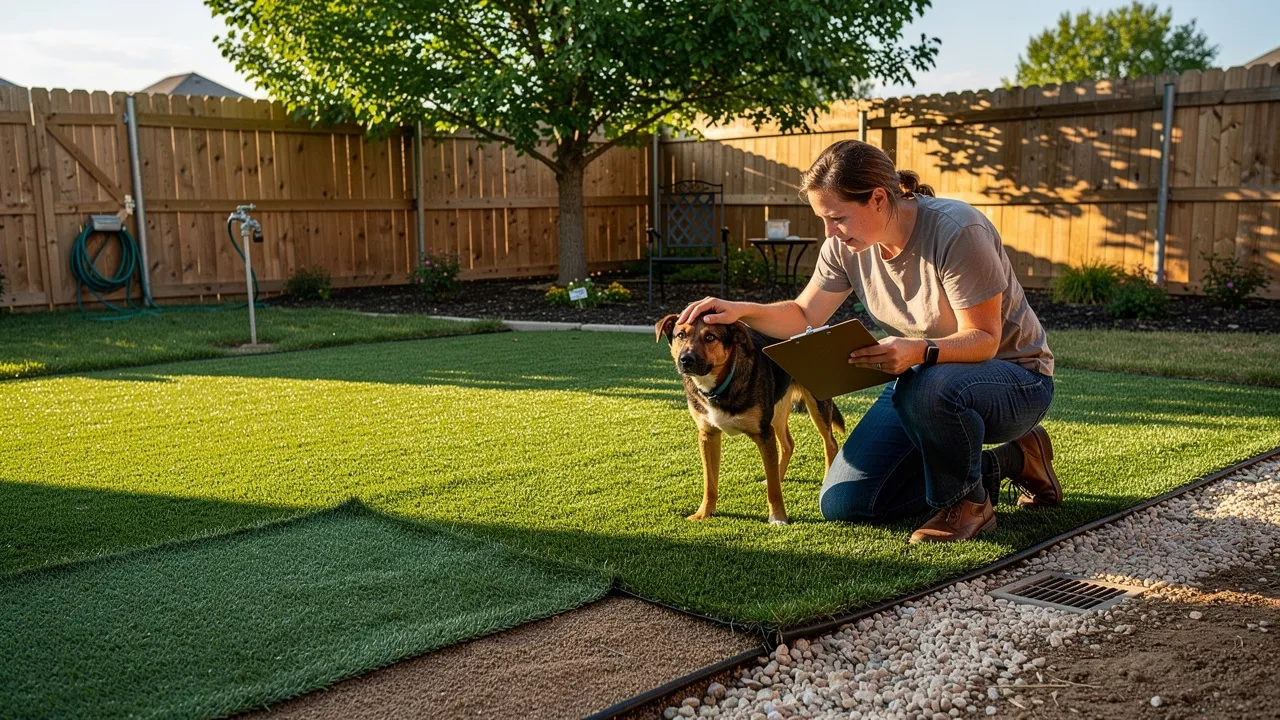
Bring photographs or a simple sketch showing the areas your dogs use most. A site assessment can then connect your stated problem with soil conditions, drainage patterns, irrigation, obstacles, measurements, and project scope instead of treating the entire yard as one uniform surface.
Match turf resilience to how the dogs use the yard
Dog activity determines the resilience questions you should ask about an artificial-grass product. That premise does not identify one universal product; it tells you to match the selected system with the actual intensity and concentration of use.
Separate occasional activity from repeated stress. Your notes should cover:
- The number of dogs using the area.
- The amount of running, turning, chasing, or rough play.
- Whether the same route receives traffic between the house, gate, and relief area.
- Whether dogs spend short periods outside or remain in the area for much of the day.
- Whether the proposed turf will also carry people, furniture, play equipment, or other traffic.
The same square footage can present different demands depending on how it is used. A large lawn with evenly distributed movement may need a different discussion from a narrow dog run where every trip follows the same path. A resting area may not require the same resilience conversation as a turn near a gate or a route to a water bowl.
Ask the installer to connect the use pattern to the product specification rather than offering a generic durability statement. Useful questions include: What product characteristics address vigorous activity? Which areas should receive the most attention in the layout? How will seams, edges, transitions, and concentrated traffic be handled? What maintenance should you expect as use accumulates?
Avoid choosing solely from an image or a short description. Appearance may help you compare options, but it does not explain how a particular system fits your dogs’ activity. Record the use pattern first, then ask for a product and installation recommendation that addresses that pattern.
Treat waste management and odor as a drainage-and-routine question
Pet waste management depends on both drainage and the routine you can maintain after installation. Effective drainage can assist with pet-waste management and odor control, but it does not guarantee odor-free turf. Treat that distinction as a planning boundary, especially if your dogs use one small area repeatedly.
Map the waste routine before selecting the layout. Identify the usual relief locations, the path used to reach them, the place where solid waste is removed, and any area where water currently collects. Then ask how the proposed system will handle the site’s soil, slope, subsurface layers, and drainage path. Surface appearance alone cannot answer those questions.
Your installer discussion should cover:
- How the proposed area will be graded and connected to drainage.
- Whether existing soil or subsurface conditions require preparation.
- How the design separates a concentrated relief area from general play or lounging space, if separation suits your yard.
- Which cleaning and waste-removal routine the selected system requires.
- How blocked or slow drainage would be identified after heavy rain.
- Which site conditions could contribute to lingering moisture or odor.
Do not treat drainage as a substitute for waste removal. Do not treat a drainage statement as a promise that odor will never occur. The practical goal is a system and care routine that address waste where it accumulates, while recognizing that product, installation, use, and maintenance affect the result.
A drainage source dated May 1, 2026, reported that well-maintained artificial turf should drain completely within 30 minutes of moderate to heavy rainfall under normal conditions. That wording carries material limits: the statement concerns well-maintained turf and normal conditions, not every yard or every storm. Use it as a question for your installer, not as a guarantee for your property.
Plan for heat and sun exposure before dogs use the area
Surface temperature is a separate suitability question from lawn color, appearance, or routine maintenance. A selected dog-turf study recommends evaluating artificial-turf surface temperature before use when ambient air temperatures exceed 25 °C. The study tested only one type of artificial turf, so its findings may not apply equally to every product.
Use that limitation to shape your conversation. Record which parts of the proposed yard receive direct sun, which parts receive afternoon exposure, and which parts have shade from structures, trees, or other features. Note whether dogs can move to another surface or remain in the turf area during warm weather. These details help you discuss the intended use rather than assuming that one temperature observation applies to every part of the property.
Depending on the turf type, the study suggests considering shade or active cooling during warm conditions and checking the surface temperature before allowing dogs to use the area. Examples described in the study include water irrigation, trees, and tarps. Any cooling approach needs to fit your yard, the selected system, and your ability to use it when conditions change.
Add these questions to the project brief:
- Which proposed areas receive the most direct sun?
- How will you check surface temperature during warm conditions?
- What shade or cooling options fit the layout and selected turf type?
- Can your dogs reach a shaded or different surface when the turf is too warm for use?
- What care or inspection routine applies after hot, sunny weather?
Kansas and Missouri homeowners should plan for the warmest exposure their own yard receives, not for an average image of the region. A shade tree that covers part of the lawn does not answer the question for an unshaded strip beside a fence. Heat planning belongs in the site assessment and daily-use decision before the area is opened to dogs.
Read Kansas and Missouri site conditions before selecting the system
Kansas and Missouri site conditions should be recorded at the proposed installation area rather than assumed from the property address. A professional site assessment examines soil conditions, drainage patterns, irrigation systems, obstacles, measurements, and project scope before physical work begins. Pet-turf guidance also describes evaluating drainage, sun exposure, soil type, and the places dogs spend time before designing the layout.
Walk the area and collect useful observations:
- Water movement: Note where rainwater enters, crosses, collects, or leaves the space.
- Soil and grade: Identify visible low spots, slopes, soft areas, settled sections, and transitions to hard surfaces.
- Sun exposure: Mark shade and direct-sun areas at the times when your dogs usually go outside.
- Irrigation: Locate sprinkler heads, buried lines, valves, and systems that may need removal, capping, or redesign.
- Obstacles: Record trees, roots, utility lines, structures, steps, gates, posts, and narrow access routes.
- Dog movement: Mark the high-traffic paths, relief areas, resting spots, and places where dogs turn or wait.
The goal is not to diagnose the property yourself. The goal is to give the installer enough context to ask better questions and build a site-specific scope.
Do not use a generic regional assumption to replace an assessment. Two yards in the same Kansas City metropolitan area can have different shade, slope, soil, irrigation, access, and drainage conditions. The quote discussion should explain how the proposed system responds to the conditions actually present in your yard.
The assessment should also distinguish what you observed from what the installer still needs to verify. For example, “water collects beside the gate after rain” is an observation; the cause and the appropriate preparation remain assessment questions. Ask the installer to label each item as an existing condition, proposed work, assumption, or exclusion. This makes the quote easier to compare and helps prevent a visible symptom from being mistaken for a complete drainage diagnosis. It also gives you a clearer basis for deciding whether the proposed layout addresses the dogs’ actual routes or simply covers the existing footprint. Ask what findings would change the proposed scope. A clear answer identifies the conditions that remain unknown and tells you what should be measured or inspected before work starts. That is especially useful where a dog route crosses an existing path, gate, or low area, because the use pattern and site condition must be considered together.
Use drainage evidence carefully rather than as a promise
Drainage evidence is useful when you keep its conditions attached to the conclusion. A drainage source dated May 1, 2026, reported that most turf products are rated to drain 30 to 50 inches of water per hour and said visible water after 30 to 60 minutes warrants investigation. The same source described complete drainage within 30 minutes of moderate to heavy rainfall under normal conditions for well-maintained artificial turf.
Those figures do not establish what your yard will do. A rating for a product does not describe the soil beneath it, the slope around it, the condition of the base, the amount of rainfall, or whether the system has been maintained. Effective drainage can support pet-waste management and odor control, but the result remains dependent on the installed system and the site.
Turn the evidence into a property-specific question set:
- Where will water go after it passes through the turf and base?
- What existing drainage pattern will the installation preserve, change, or connect to?
- Which soil, grade, or subsurface conditions could slow movement away from the surface?
- What observation should prompt an investigation after a moderate or heavy rain?
- What maintenance keeps drainage paths functioning as intended?
Visible water after a storm is a useful observation, not a diagnosis. Record when it appeared, where it collected, how long it remained, and whether the condition repeated. Share those details during the site assessment. They can help separate a surface symptom from a problem involving grade, base preparation, soil, or a broader drainage path.
A credible discussion should keep product ratings, normal-condition statements, and your property’s actual behavior separate. Ask the installer to explain the difference. Do not select a system because a general drainage number sounds like a guarantee.
When reviewing a proposal, look for an explanation that connects the rating or drainage statement to the actual assembly and site. A useful response should identify the proposed flow path, the preparation that supports it, and the observation or maintenance issue that would trigger follow-up. If the response only repeats a product rating, the property-specific question remains unanswered. Keep that limitation in the decision record so a favorable general number does not outweigh unresolved pooling, grade, soil, or access conditions.
Evaluate the complete installation, not just the grass layer
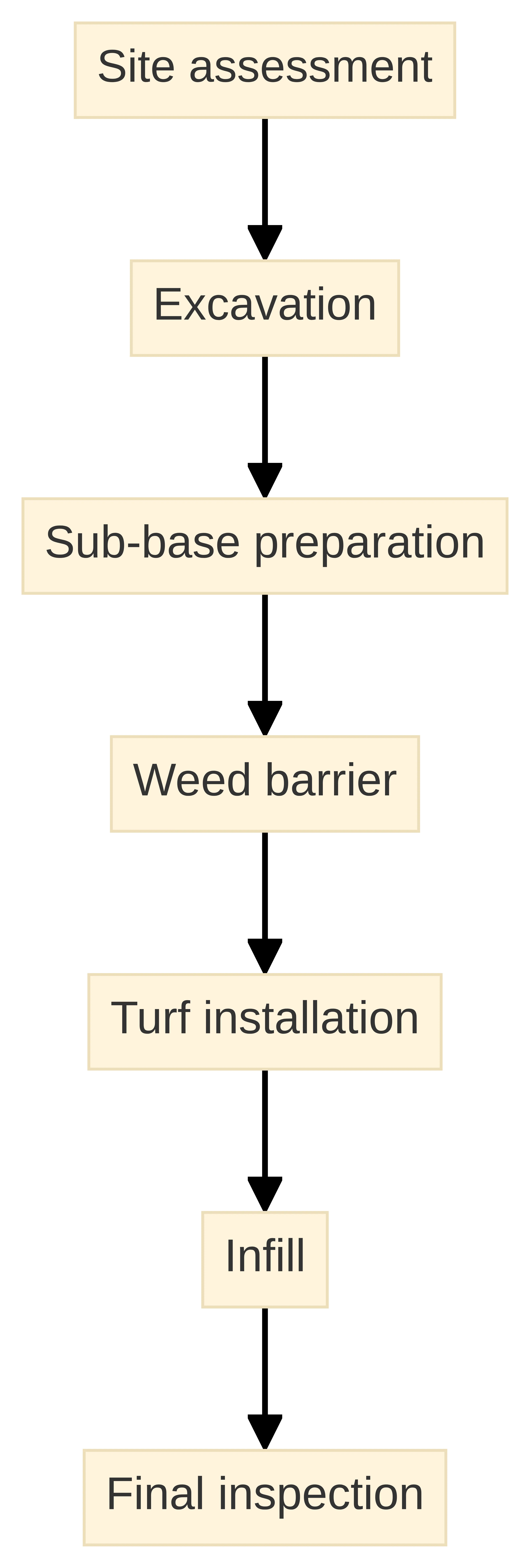
An artificial-turf installation is a layered site project, not merely a roll of grass placed over the existing yard. A commonly described professional sequence includes site assessment, excavation, compacted sub-base preparation, weed-barrier installation, turf installation, infill, and final inspection.
Use the sequence as a scope checklist:
- Site assessment: Review soil, drainage, sun exposure, irrigation, obstacles, measurements, and dog-use patterns.
- Excavation: Establish what existing grass, soil, debris, or other material must be removed.
- Sub-base preparation: Ask what base material, grading, and compaction the project requires for the site.
- Weed barrier: Ask whether a weed barrier belongs in the proposed system and how it will be installed.
- Turf installation: Discuss layout, cuts, seams, edges, transitions, and attachment.
- Infill: Ask which infill is proposed, how it is applied, and what care it requires.
- Final inspection: Establish how seams, edges, drainage paths, surface appearance, and cleanup will be reviewed.
The exact scope depends on the property and selected system. The sequence does not promise a specific lifespan, drainage result, or level of wear resistance. It gives you a way to identify missing work before comparing proposals.
A weak project description may mention only turf material and square footage. A useful project description explains preparation, layers, transitions, drainage, access, and finishing work. This distinction matters for dog areas because repeated traffic, concentrated waste, and wet-weather use can expose problems that the grass layer cannot correct.
Ask what happens below the visible surface and how each stage relates to your yard. Professional installation guidance says nonprofessional work may cost more in the long run when problems require rework by professionals. That possibility is a reason to clarify the complete installation before choosing between methods.
Choose between DIY availability and professional responsibility
DIY and professional artificial-turf installation options are available, but availability does not make the two approaches identical in responsibility or site assessment. Hall Turf’s selected business facts state that professional installation is important for artificial turf while also recognizing DIY and professional services as installation options.
DIY may appear manageable when the area is small, access is simple, and the work below the surface is well understood. Even then, you would need to take responsibility for the installation and its future care. A dog-use area adds the need to think about waste routines, concentrated traffic, heat exposure, and drainage after rain.
Professional installation deserves serious consideration when the proposed area includes any of the following:
- Unclear soil or subsurface conditions.
- Existing pooling, slope changes, or drainage concerns.
- Irrigation lines, roots, utility lines, structures, or difficult access.
- Several turf areas joined by seams or transitions.
- A concentrated dog run, relief area, or high-traffic route.
- A need to connect the surface to existing landscape grades or drainage paths.
Ask a professional installer to explain how the site will be assessed, which preparation stages are included, and what conditions could change the scope.
The decision is not a contest between a cheaper-looking method and a more formal one. It is a question of whether you can take responsibility for the complete installed system, including site investigation, preparation, finishing, and future care. If those responsibilities are unclear, use a professional site assessment before choosing the method.
Set realistic expectations for care and service life
Artificial turf can reduce routine lawn work without removing the need for care. Pet use still creates a separate maintenance discussion involving waste removal, surface condition, drainage, debris, and the areas that receive the most traffic.
Hall Turf also states that our artificial-turf lifespan can vary based on maintenance and environmental factors. Treat that variability as a planning fact. Do not build your decision around a fixed service-life promise when the relevant conditions include how the area is used, how it is maintained, and what the environment exposes it to.
Before installation, ask for a practical care outline:
- What waste-removal routine applies to the selected system?
- What cleaning or rinsing practices are appropriate?
- How should you watch for slow drainage or standing water?
- Which areas need more frequent attention because dogs use them repeatedly?
- What changes in surface appearance, seams, edges, or infill should prompt a service question?
- How should the area be managed during periods of strong sun or warm surface temperatures?
A lower-maintenance lawn can still require an ongoing routine. The right comparison is not “no care” versus “care.” Compare the care you expect for the artificial system with the mowing, watering, fertilizing, repair, and reseeding demands that led you to consider a change. Keep waste management, heat checks, drainage observations, and product-specific instructions visible in that comparison.
Build the installer-question checklist and quote brief
Start the quote brief by recording the dogs’ use, relevant yard conditions, and project scope, then request and review the product documentation, CAD files or technical specifications, testing documentation, certifications, and licensed-contractor information. Use the following checklist before contacting an installer.
1. Describe the dogs’ use of the space.
Record how many dogs use the area, where they run, where they rest, where they relieve themselves, and which paths receive repeated traffic.
2. Mark the proposed area.
Provide approximate dimensions and a simple sketch or photographs. Show gates, doors, patios, fences, plant beds, trees, structures, steps, and narrow access points. Identify whether the project covers the whole yard, a dog run, a relief area, or several connected areas.
3. Record water and soil observations.
Describe where water collects, how the yard behaves after rain, whether any areas remain soft, and whether the site has visible slopes or settled spots. Ask the installer to assess soil conditions, drainage patterns, irrigation, obstacles, measurements, and project scope before physical work begins.
4. Document sun and heat exposure.
Mark direct-sun and shaded areas during the times your dogs use the yard. Ask how the selected turf type should be evaluated during warm conditions. A selected dog-turf study recommends checking surface temperature when ambient air temperatures exceed 25 °C and suggests considering shade or active cooling depending on the turf type.
5. Connect the product discussion to activity.
Ask how the proposed system addresses the recorded traffic pattern. Ask what the proposed system requires for seams, edges, transitions, infill, and upkeep. Avoid accepting a broad durability description without relating it to the actual use pattern.
6. Make waste management explicit.
Identify the usual relief area and ask how the design, drainage path, and maintenance routine address it. In the brief, record the waste-related conditions and questions that need a site-specific answer. Ask how to recognize slow drainage, what care is expected, and what conditions could contribute to lingering moisture or odor.
7. Request the full installation sequence.
Ask whether the scope includes site assessment, excavation, compacted sub-base preparation, weed-barrier installation, turf installation, infill, and final inspection. Ask what preparation, grading, drainage, access, transitions, and cleanup are included. A grass-only description is not a complete installed-system description.
8. Separate known facts from open questions.
List the conditions you observed and label the conditions that require professional assessment. Keep product selection, site preparation, drainage, heat management, waste care, and expected service life as separate questions. Hall Turf states that our artificial-turf lifespan can vary based on maintenance and environmental factors, so avoid filling an unresolved question with a fixed number.
9. Compare proposals by scope.
When you receive project information, compare the same categories: measured area, preparation, base, drainage, turf, seams, edges, infill, finishing, and care instructions. The goal is not to rank a proposal by a single material label. The goal is to see whether the proposed work addresses your dogs’ use and the property conditions you documented.
A complete brief does not decide the project for you. It gives the installer a clear starting point and gives you a structured way to identify what remains uncertain before you move forward.
Use the documentation request as a comparison tool, not as a substitute for the site visit. Check that the proposed product documentation corresponds to the product named in the quote and that technical specifications identify the system being considered. Ask whether the CAD files reflect the measured area, boundaries, transitions, and any design features discussed for the dog-use pattern. Review testing documentation and product certifications for the product or system being proposed, and ask which claims those documents support. They can add technical context, but they do not by themselves establish that the installed surface will drain, remain cool, resist wear, or control odor at your property. Those outcomes still require discussion of site conditions, installation, use, and upkeep. Also ask the installer to identify its licensed-contractor information and to explain who is responsible for each stage of the work. If a proposal omits a document, specification, or responsibility that matters to your checklist, mark it as an open question rather than assuming it is included. This gives you a more reliable comparison of scope and uncertainty before requesting or accepting a quote. Where two proposals use different labels, compare the underlying scope rather than assuming the labels mean the same preparation, infill, or finishing work.
Request a site-specific Hall Turf quote if the fit is clear
A pet-turf project is worth pursuing when your dogs’ use pattern, waste routine, heat exposure, drainage conditions, maintenance expectations, and installation scope point in the same direction. If one of those areas remains unclear, carry the question into the site assessment rather than treating the uncertainty as resolved.
Hall Turf’s artificial turf is a durable, low-maintenance option for pet owners, and its suitability depends on dog use, site conditions, installation, maintenance, and environmental factors. A site-specific assessment connects those conditions to the actual yard.
Prepare your sketch, photographs, use notes, drainage observations, sun exposure, and installer questions before taking the next step. A qualified professional should make the final suitability decision for your property and dogs after reviewing the actual site and intended use.
When the checklist points toward a project, take the next step with that brief in hand.
What should homeowners confirm before choosing astroturf for dogs?
What factors should I consider when deciding on artificial turf for my dogs?
Evaluate how your dogs use the yard, including their activity levels, waste routines, drainage conditions, heat exposure, and the quality of installation. Each factor influences the suitability of the turf for your specific needs.
What should I ask an installer before proceeding with artificial turf installation?
Inquire about the site assessment process, drainage solutions, product specifications, maintenance requirements, and how the installation will address your yard’s specific conditions and your dogs’ usage patterns.
How can I manage pet waste on artificial turf?
Effective drainage is crucial for managing pet waste and odors. Discuss with your installer how the turf design will facilitate waste removal and drainage, and establish a routine for cleaning and maintenance.
What is the expected lifespan of artificial turf?
The lifespan of artificial turf can vary based on maintenance practices and environmental factors. It’s important to discuss these aspects with your installer to set realistic expectations.