
Start with a local turf-company verification file
Comparing local turf companies in Kearney and Kansas City is a provider-accountability exercise, not just a turf-shopping exercise. Before giving weight to a sample or a total, determine whether each company can identify its relevant services, document the proposed work, answer questions about local conditions, and explain responsibilities after installation.
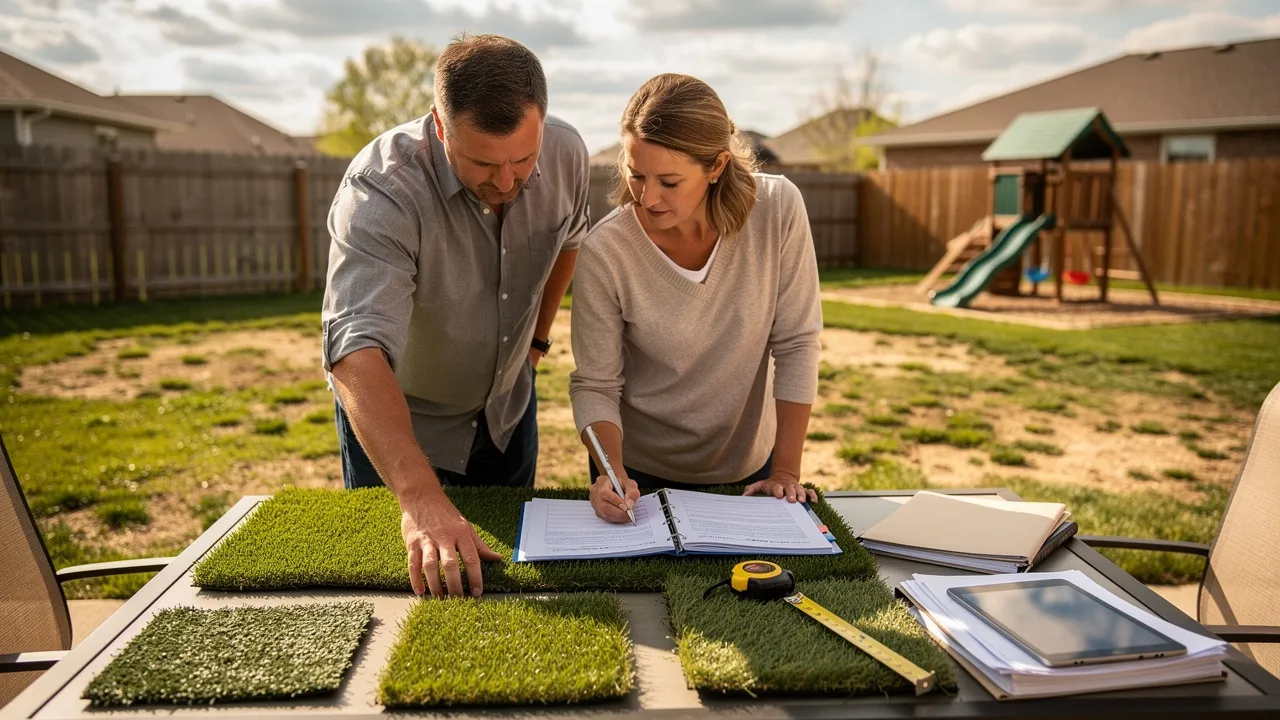
Create one provider record for every company. Keep its service list, contact details, licensing and insurance answers, relevant Kansas or Missouri project experience, references, product documents, proposal, warranty terms, and unresolved questions together. A missing answer remains unresolved; do not treat a polished website or broad service label as proof.
Use this order:
- Screen for the intended use and the company’s stated service fit.
- Record answers about licensing, insurance, relevant local work, and references.
- Check whether product specifications and technical documents match the proposed use.
- Review the written scope, exclusions, warranty terms, and process for handling changes.
- Record maintenance responsibilities and how questions or repairs will be handled after installation.
- Compare how clearly each company communicates, not just the appearance of its turf.
Request samples and verify the claims made about the turf and installation before choosing a supplier. The result should be a provider record that shows what each company can substantiate and what still needs an answer.
The strongest comparison separates product questions from project questions. Product questions cover specifications such as pile height and face weight, while project questions cover installation methods, drainage solutions, scope, warranty coverage, and pricing components. A company may present an attractive product, but the written plan still needs to show how that product fits your site and intended use.
Use the same six headings for every proposal: use fit, site response, installation scope, material details, ongoing obligations, and documentation. If a company cannot answer one of those headings in a clear proposal, mark that item as unresolved instead of filling the gap with an assumption. That boundary keeps your comparison fair and gives you a specific question for the next conversation.
Gather the same provider information before comparing
Prepare a provider comparison file before contacting local turf companies. The file should give every company the same project context while concentrating on whether the company can respond with relevant, documentable information.
Record these details:
- Property context: Note whether the project is in Kearney, Kansas City, or another supplied Kansas or Missouri location, along with access limits that a company should understand before discussing the work.
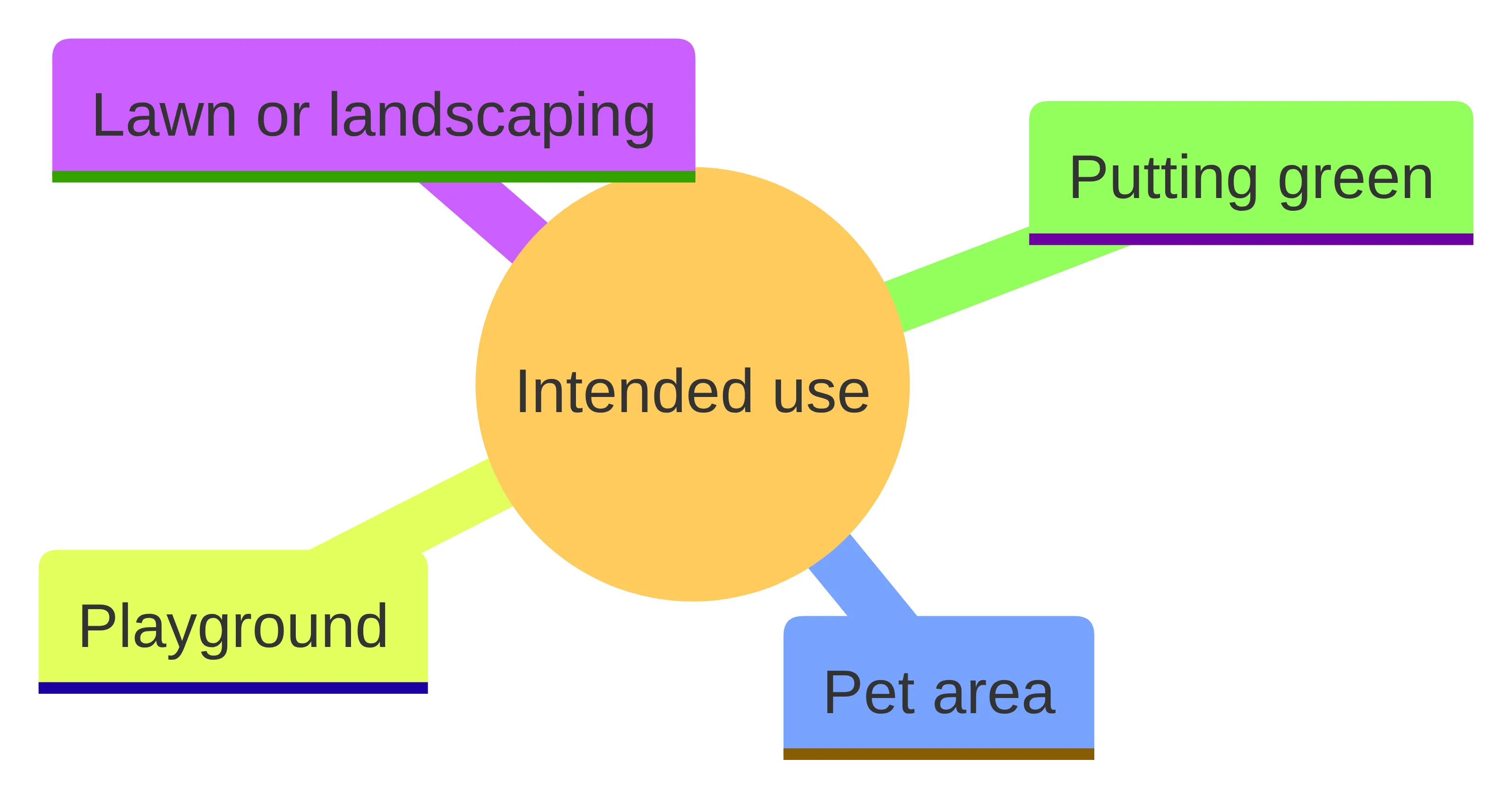
- Intended use: Identify a lawn, landscaping area, dog area, playground, putting green, or combination of uses.
- Project conditions: Record approximate area, boundaries, slopes, existing surfaces, water-collection points, and the weather exposure you have observed.
- Provider credentials: Ask each company to identify its current licensing and insurance status and the person responsible for the project.
- Relevant experience: Request examples or references connected to the intended use and Kansas or Missouri conditions. Treat a general gallery or service list as a starting point, not as confirmation of comparable work.
- Technical records: Ask what product specifications, certifications, CAD files, testing documentation, samples, and written scope the company can provide for the proposed system.
- Accountability terms: Record who handles site questions, how changes are documented, which tasks are excluded, and what warranty or post-installation responsibilities are described.
Keep the provider’s exact wording beside your notes. This makes it easier to distinguish information about the quoted system from a generic statement about artificial turf.
The estimate request should ask each company to respond to the same brief. Ask what the quoted price includes, which site conditions could change the scope, and which work remains your responsibility. Ask for material specifications, installation methods, drainage solutions, warranty terms, and long-term cost considerations in the same exchange.
Your brief should also distinguish a known fact from an unresolved question. For example, you may know that water collects beside a patio, while the cause and proposed response still need professional review. Write both facts down separately. A company can then explain how its plan addresses the condition instead of receiving an incomplete description and making a hidden assumption.
Use the project brief as your comparison record. Add each proposal beneath the same headings, and preserve the company’s exact material descriptions and scope language. That approach helps you compare like with like before you focus on price.
Check service fit against the intended use
A company’s service fit is the first screen, but a service label alone does not verify its ability to discuss your project. Ask for information connected to the surface’s primary use and keep the provider’s answer with the rest of its record.
- Lawn or landscaping: Ask whether the company handles the type of landscaping or artificial-grass project you are considering, how it approaches transitions to planting beds and hardscape, and which documents describe the proposed work. Hall Turf offers artificial-grass solutions focused on golf greens, playgrounds, and landscaping in Kansas City.
- Pet area: Describe the number and activity level of your dogs, how waste will be managed, and how often the area will be used. For an active dog area, consider whether the turf is resilient enough to withstand vigorous activity without showing signs of wear. Ask how the proposed process is intended to prevent standing water or odor after rain.
- Playground: Ask for information specific to the intended play area, including relevant project examples, site preparation, drainage, transitions, and the responsibilities that remain after installation. A general lawn product description does not answer playground-specific questions.
- Putting green: State whether the space is for casual backyard use, golf practice, or another purpose. Hall Turf offers backyard putting-green installation for golf lovers. Ask each company to describe the proposed green, surrounding area, documentation, installation scope, and continuing care in terms you can compare.
Keep a provider’s service claim unresolved until it is connected to your use, the proposed product, and a written response or relevant reference. That approach narrows the comparison without ranking companies on unsupported impressions.
The use-fit test should connect your daily activity to a material and scope question. Frequent foot traffic calls for a discussion of the quoted product’s specifications and expected upkeep. Vigorous dog activity calls for a resilience question. A putting green calls for a defined playing surface and surrounding finish. A landscape area calls for a plan for transitions and ongoing care.
Avoid choosing by label alone. Terms such as pet turf, landscape turf, or putting-green turf identify a general use, but they do not answer every project question. Ask for the exact product, the reason it was selected for your use, and the conditions attached to any durability or maintenance statement. Choose a proposal only after the company has connected its recommendation to your stated use.
Audit the written proposal and project accountability
A written scope is the main record of what a turf company is agreeing to discuss and deliver. Ask every bidder for a scope that identifies the base depth, drainage method, and seam placement. Also ask the company to identify who performs each part of the work and how changes are recorded after site review.
Ask the proposal to identify, in plain language:
- The area, boundaries, and existing surfaces included in the discussion.
- Preparation, removal, retention, and base work.
- The proposed base depth and the reason it applies to the stated conditions.
- The drainage method and the conditions it is intended to address.
- Seam locations, edge treatment, transitions, and finishing work.
- Items excluded from the proposal and circumstances that could change the scope.
- Cleanup, completion criteria, and the person responsible for resolving scope questions.
For a Kansas or Missouri property, ask how the site plan addresses seasonal freeze-thaw, heavy spring rains, and summer heat. Also ask how the proposed system addresses drainage, seam integrity, and snow or ice management to help reduce the risk of frost heave and seam separation.
Treat details that appear only in a conversation as unresolved until the company places them in the proposal or another written project record.
Product specifications and installation methods belong in the same comparison because the grass layer is only one part of the project. Compare pile height, face weight, installation method, drainage solution, pricing components, and long-term cost questions for the quoted system.
A lower total may reflect a narrower scope rather than a lower cost for the same work. Check whether each proposal includes the same area, preparation, drainage work, seams, edges, labor, and finishing tasks. If two estimates use different terms, ask the companies to explain the difference instead of assuming the scopes match.
Your practical boundary is simple: do not judge the project from a sample alone. Keep the sample, specifications, written scope, and total cost together so you can evaluate the complete installation.
Stress-test proposals against Kansas and Missouri weather
Kansas and Missouri weather should be part of the site-planning discussion for a project in Kearney or the Kansas City area. Seasonal freeze-thaw conditions, heavy spring rains, and summer heat can affect the questions you ask about the proposed system.
Ask each company to explain how its plan addresses the conditions visible at your property. You do not need to accept a general statement that the turf is suitable for the region. Ask for a site-specific explanation tied to the drainage method, seam integrity, and proposed preparation.
Use these questions in each proposal review:
- How does the proposed drainage approach address the places where water collects after heavy spring rain?
- How does the scope address seams where seasonal movement could matter?
- What snow or ice management guidance applies to this system?
- Which parts of the proposal respond to summer heat or strong sun exposure?
- What site condition would require a change to the proposed plan?
The answer should identify the relevant project feature and the work included. If the response remains general, record the weather issue as unresolved and ask for clarification before comparing the price.
Drainage and seam questions deserve separate attention because they address different parts of the system. Proper drainage, seam integrity, and snow or ice management can help avoid frost heave and seam separation in Kansas and Missouri synthetic turf systems. That statement describes factors to discuss; it does not promise a particular result for your property.
Ask the provider to connect each factor to your site. A drainage answer should identify the proposed method. A seam answer should identify placement and handling. A snow or ice answer should explain the expected care. Keep those answers beside the written scope so you can see whether the proposal supports its regional-weather discussion with specific work.
Verify materials, samples, and performance claims
Performance claims should have a defined object and condition. Ask whether a statement concerns the grass material, the installation, drainage, maintenance, or expected service life. Then ask how the statement applies to your intended use and local site conditions.
A provider may also describe the quoted turf as designed to conserve water or reduce long-term upkeep. Ask for that description in writing and ask how it affects the long-term cost discussion. Those factors may affect long-term savings, but your result depends on the product, installation, care, and property conditions.
Use a sample to inspect appearance and feel, then use the written specifications and scope to evaluate performance claims. Keep these functions separate. The sample answers what the material looks and feels like; the proposal answers what you are buying and how it will be installed.
Confirm maintenance support and continuing responsibility
Post-installation support is part of assessing a local turf company. Hall Turf’s artificial turf has lower maintenance requirements than natural grass, which requires frequent mowing, watering, and fertilizing. That comparison does not remove the need to establish who explains care, responds to questions, and handles minor issues.
Budget for cleaning and minor repairs to help extend the lifespan of your artificial turf. Ask each company to document:
- Routine cleaning and the equipment or products it recommends.
- Care after heavy use or severe weather.
- Minor repairs that may arise and the party responsible for them.
- Care differences for a lawn, pet area, playground, or putting green.
- Maintenance actions that affect warranty coverage, if applicable.
- The contact process for a post-installation question.
Place these answers beside the provider’s scope and warranty terms. A company’s willingness to explain continuing responsibilities is part of the service comparison, not an issue to postpone until after the installation.
Artificial-turf lifespan can vary according to maintenance and environmental factors. Treat any service-life discussion as conditional rather than as a fixed promise. Ask what environmental conditions, use patterns, and maintenance practices the statement assumes.
Pet areas require an additional care conversation. Ask how waste is managed, how the proposed process is intended to prevent standing water or odor after rain, and what cleaning remains your responsibility. For heavily used areas, ask whether the quoted product is intended for the activity level you described.
Your comparison is complete on this point only when you can answer three questions: what routine work remains, what minor repairs may arise, and which conditions could affect the turf’s lifespan. Keep those answers in writing with the proposal.
Review credentials, technical records, and warranty terms
Credentials and technical records make a local-company comparison easier to check. Hall Turf is a licensed artificial-turf installation company. Hall Turf uses CAD files and product certifications as technical materials. Ask Hall Turf and other companies for the current documents relevant to the quoted system, including testing documentation when available.
Keep these records together:
- Business identity, current licensing and insurance information, and the project contact.
- Relevant Kansas or Missouri project examples or references.
- Product specifications, certifications, CAD files, and applicable testing documentation.
- Written area, project boundaries, preparation, drainage method, and seam placement.
- Material and labor cost components, inclusions, exclusions, and change conditions.
- Cleaning and minor-repair responsibilities.
- Warranty length, terms, and separate material or workmanship coverage when applicable.
Do not assume that a document for one product, use, or location answers a different project question. Ask the company to connect each document to the proposed system and retain the response with the provider record.
Total project cost should be read through the included scope and the obligations that continue after installation. Compare pricing components and long-term cost questions rather than ranking proposals by a single number. Check whether each price includes the same preparation, drainage work, seams, product quantity, labor, and finishing.
Warranty comparisons should distinguish length from terms. Check whether materials and workmanship have separate coverage, when applicable, and ask which conditions or maintenance actions affect that coverage. Do not treat a longer period as a complete comparison until you understand what the warranty actually covers.
Use a three-column review for each company: included, unresolved, and excluded. Put every scope item and warranty condition in one of those columns. That format shows whether two totals describe the same work and gives you a direct list of questions for the final review.
Choose the provider with the clearest accountable plan
Make the contact decision from the provider record. Keep a company in active consideration when its answers show a clear connection between your intended use, its relevant services, its documentation, and the work it is willing to describe in writing.
Before contacting a provider, check these points:
- The company has identified the person responsible for the project and answered the licensing and insurance questions you consider relevant.
- Its examples, references, or explanations address the intended use and the Kansas or Missouri setting.
- Product specifications, certifications, CAD files, testing documentation, and samples correspond to the proposed system where applicable.
- The written scope identifies preparation, base depth, drainage method, seam placement, boundaries, exclusions, and change conditions.
- Maintenance, minor repairs, warranty terms, and post-installation questions have named responsibilities.
- Remaining gaps are visible rather than being filled with assumptions.
For a Kansas City project involving landscaping, playgrounds, or a golf green, Hall Turf’s stated offerings can be checked against the intended use. Hall Turf also offers backyard putting-green installation for golf lovers. Those service-fit points are only one part of the review; the provider record still needs to establish the proposed scope and responsibilities.
A suitable turf proposal connects the surface, intended use, weather response, installation work, material choice, continuing care, warranty, and total cost into one understandable plan. Our artificial turf has lower maintenance requirements than natural grass, while cleaning, minor repairs, environmental conditions, and use patterns still belong in your planning. If your project includes an active dog area, keep resilience and post-rain odor or standing-water questions in the final review.
Bring the project brief, measurements, photographs, sample notes, written scopes, and unresolved questions into the next conversation. That record lets you judge whether the provider’s proposal fits the work you want done and the responsibilities you are prepared to keep.
What should homeowners ask before choosing a local turf company?
What should I include in my project brief when contacting local turf companies?
Your project brief should include details such as location and access, intended use of the turf, approximate area and boundaries, current problems with the site, water and weather observations, care expectations, and budget questions.
How can I assess the installation approach of different turf companies?
Request a written scope from each company that details the base depth, drainage method, seam placement, and any work that is excluded. This will help you compare how each proposal addresses preparation and water movement.
What factors should I consider regarding drainage and maintenance for artificial turf?
Discuss how each company’s proposed drainage method addresses water collection after rain, and ask about ongoing maintenance responsibilities, including cleaning and minor repairs, to ensure the turf’s longevity.
How do I compare warranty terms among different turf providers?
When comparing warranties, look at the length and terms, including whether materials and workmanship have separate coverage. Ensure you understand what conditions or maintenance actions could affect that coverage.
What specific questions should I ask about the turf's performance and suitability for my project?
Inquire about the turf’s specifications, such as pile height and face weight, and ask how the product is designed to handle your intended use, including resilience for pets or children.
How can I ensure that the turf installation will withstand Kansas and Missouri weather conditions?
Ask each company how their proposed system addresses seasonal freeze-thaw conditions, heavy spring rains, and summer heat, and ensure they provide site-specific explanations.