
Plan for drainage, odor, heat, and care
Judge the proposed backyard by the operating problems the finished dog yard must handle, rather than by a general promise that turf is maintenance-free. Artificial grass can provide a cleaner, low-maintenance surface for outdoor use, reduce muddy paws, and make pet waste easier to manage. It still involves drainage, odor control, heat, cleaning, and upfront cost.
For a Kansas or Missouri backyard, start with the actual conditions: where dogs relieve themselves and run, where rain and rinse water can move, how much direct sun reaches the surface, and which surrounding surfaces affect access and runoff. These observations do not predict a particular yard’s performance; they identify questions the installation plan must answer.
Use these problem-to-response checks when reviewing a proposed system:
- Odor and waste: Rain alone does not eliminate dog-urine odors. Effective drainage helps control odors and supports pet-waste management, while urine that is not rinsed away can contribute to odors over time. Ask how the proposed base and drainage route will handle urine, solid waste, rain, and routine rinsing, and what cleaning or deodorizing work is expected.
- Cleaning and surface condition: Turf is not maintenance-free. Plan for occasional rinsing, debris removal, and brushing the fibers upright. Infill can settle and wear down over time, so confirm how its upkeep and replenishment will be handled.
- Activity and wear: Active dogs may require more resilient artificial grass for vigorous movement. Discuss the turf, infill, secure edging, seams, and base preparation as one system; base preparation, drainage, seam placement, and installation techniques are important factors in long-term performance.
- Heat and comfort: Synthetic materials can become warm in strong sunlight and may be uncomfortable for bare paws on very hot days. Lighter-colored turf or shaded areas can help manage heat, so note sun exposure and ask how the proposed layout accounts for it.
- Cost and trade-offs: Upfront cost and any potential long-term water or maintenance savings should be treated as separate questions; do not assume savings. Ask for the materials, site preparation, drainage, edging, seams, and care expectations to be identified before comparing proposals.
Before requesting a quote, ask the installer to identify the proposed response to each condition, explain the installation process, and state warranty coverage and important terms in writing. Verify licensing as part of that review. If drainage, heat, odor control, or ongoing care remains unresolved, the suitability decision is not finished.
Create the site record that the audit will fill
Treat the site record as the audit’s central artifact. It links the prepared site and drainage approach to the base, turf surface, infill, edging, seams, and cleaning routine. Recording those parts together keeps the visible grass from standing in for the whole project. Pet-specific installations should address excellent drainage and secure edges, while base preparation, drainage, seam placement, and installation techniques are important factors in long-term performance.
The record should show which recurring obligations would change, not promise their disappearance. Note the need to rinse, manage debris, brush fibers, and address pet-related odor. Surface heat, drainage, odor control, and upfront cost belong in the same record because each can change the decision.
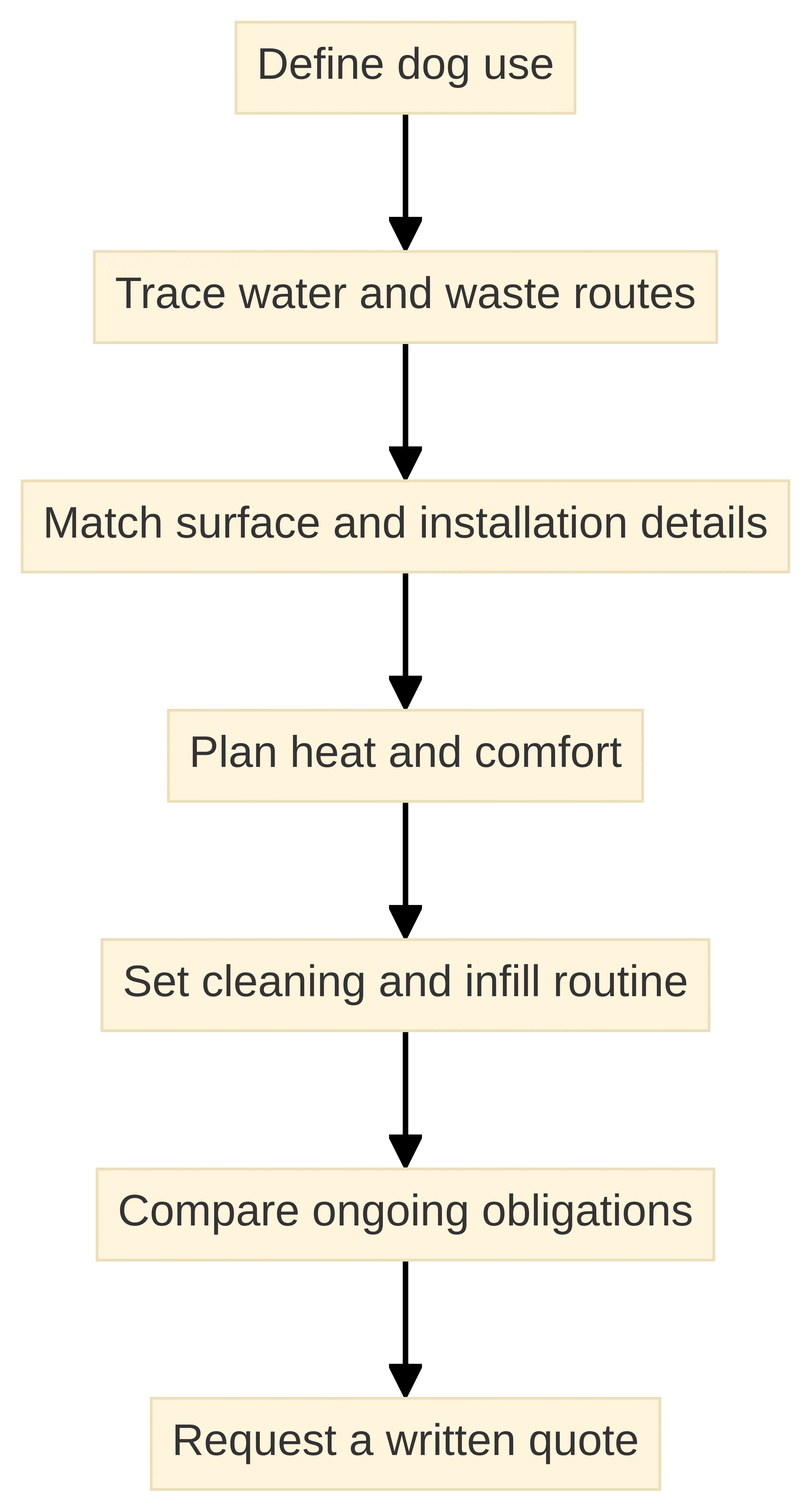
Complete the record in this order:
- Draw the use zones and mark activity, shade, access, and transitions.
- Trace rain, urine, and rinse-water routes through the proposed area.
- Attach turf, infill, base, edging, and seam questions to the zones that need them.
- Mark heat and comfort conditions on the same zone map.
- Write the cleaning, debris, brushing, and odor-care tasks beside the relevant zones.
- Compare the complete installed scope and recurring work with the obligations of the current grass.
- List every unresolved condition for the installer to answer in the quote.
The useful output is a short site record with three kinds of entries: conditions you observed, details the proposed system must specify, and questions that remain unresolved. It should let you see whether the water route, surface response, materials, care work, and installed scope have been addressed for the actual dog-use zones. If one of those entries is missing, carry it into the installer conversation instead of filling the gap with a general product claim.
Map dog-use zones and their demands
Use one row per use zone in the site record. For each row, note the number and size of dogs using it, their usual movement, the zone’s size, cleaning needs, and whether vigorous activity is likely. This turns a general request for a green lawn into a use profile an installer can examine.
Divide the yard according to actual use rather than drawing one undifferentiated rectangle. A high-use run, quieter lounging area, and transition beside a patio or gate can each receive a row. Add traffic, cleaning access, edge security, and sun exposure to the relevant row. The point is to describe intended use before anyone assigns a product.
In a high-activity row, note that active dogs may require more resilient artificial grass that can withstand vigorous activity without showing visible wear. That consideration is different from choosing a surface by color or blade appearance alone. Ask how the proposed turf is intended to respond to your dogs’ movement and how the installer will address areas where turning, running, or repeated passage is concentrated.
The zone record should show:
- The approximate area and shape of the proposed turf zone.
- The dogs’ typical activity, including whether they run, turn, or remain mostly in one part of the yard.
- The location of gates, paths, patios, fences, planting beds, and other transitions.
- The frequency and type of cleaning you can realistically perform.
- Any shade or exposed-sun areas that may affect comfort.
- The questions you want answered about drainage, edging, seams, turf resilience, and infill.
Pet-specific installation also calls for secure edges. Include gates and perimeter transitions in the discussion rather than considering the central field alone. Treat the zone record as ready for the next discussion only when the proposed system has been matched to the way your dogs will actually use the space.
Trace the water routes through each zone
Create a water-route note for every high-use zone. Start where rain, urine, and rinse water reach the surface, then record the intended path away from the dog-used area. Effective drainage supports pet-waste management and helps control odors; a pet-specific installation should address excellent drainage rather than treating water movement as an afterthought.
Walk the proposed area after rain if you can and add observations to the water-route note: where water collects, crosses the yard, approaches the house, or reaches a gate and paved transition. Mark the locations where your dogs spend the most time. These observations do not replace a professional site assessment, but they give you concrete conditions to discuss instead of relying on a generic lawn specification.
For each water route, ask the installer to explain:
- How the existing grade and low areas will be handled.
- How the prepared base will support water movement through the system.
- Where rainwater and routine rinse water are expected to go.
- How the plan addresses the dog-use zones with the most concentrated urine and traffic.
- How edges, seams, gates, patios, and other transitions will be finished.
- What site conditions would require a change to the proposed scope.
Base preparation and drainage are among the installation factors associated with long-term turf performance. A quote that names the grass but leaves the underlying preparation or water path unclear leaves the water-route note unfinished. Request the drainage and base approach in writing so you can see whether the proposal addresses the conditions you recorded.
Kansas and Missouri homeowners should be especially careful not to treat a general regional description as a prediction for a specific backyard. The audit question is not whether artificial turf drains in the abstract. Record how the proposed system is expected to handle the water movement created by your site, dogs, and cleaning routine. Keep the route unresolved until the explanation identifies the intended path and the conditions that could alter it.
Record the odor-control route and care burden
Add an odor-control entry to each high-use zone in the site record. If pet urine is not rinsed away, odors can develop over time, and rain alone does not eliminate dog-urine odors. Active cleaning and deodorizing may be needed when urine buildup becomes an issue, so the entry should connect the water route with the care task.
Do not mark odor control as resolved from the grass description alone. Drainage helps support pet-waste management, but drainage by itself does not replace cleaning. Conversely, a cleaning routine cannot correct every site or installation problem. Keep the water route, rinse access, and care method together in the same zone entry.
For each high-use zone, complete these odor-control fields:
- Where will urine move after it reaches the surface?
- How will you rinse the high-use zones, and can you reach them with the available hose or irrigation setup?
- What cleaning and deodorizing products or methods are compatible with the proposed turf and infill?
- How should you handle a recurring odor in one location?
- What maintenance signs would indicate that the system needs attention?
- Which parts of the odor-control routine are included in installation guidance, and which will remain your responsibility?
Do not mark a fresh installation as a promise that odors will never occur. Record the care that dog use requires from the beginning, then ask for instructions you can follow consistently. Hosing the surface and using a suitable cleaner can be part of pet-turf care; use the installer’s directions for the specific system rather than applying an unapproved chemical treatment.
The odor-control entry is incomplete when it contains only a drainage question or only a cleaning question. If the proposed scope explains the visual surface but not the route for urine, rinse water, and ongoing deodorizing, keep that gap open before comparing prices.
Build the proposed turf-system specification
Use the system record to connect repeated dog activity with the turf, infill, base, edging, and installation details proposed for each zone. Active dogs may require more resilient artificial grass that can withstand vigorous movement without showing visible wear. The surface specification should follow the use profile you recorded, not a generic assumption that every backyard needs the same system.
Complete a separate infill entry because infill contributes to the installed system and can settle or wear over time. Record which infill is proposed, what role it is expected to play, how it will be maintained, and how the installer will determine whether it needs attention. Keep the answer specific to the selected turf and your dogs’ use rather than assuming that an infill choice has the same effect in every installation.
Complete the system record by asking how the installer will address:
- Base preparation for the existing site and expected use.
- Drainage through the completed system.
- Secure edging around the dog-use area and at gates or transitions.
- Seam placement in locations where dogs run or turn.
- The resilience of the proposed grass in concentrated traffic zones.
- The cleaning access needed around fences, structures, and landscaping.
Proper base preparation, drainage, seam placement, and installation techniques are important factors in long-term turf performance. A professional installation guide also recommends reviewing the installation process, warranty coverage, and written terms before work begins. Use those subjects to compare the responsibility assigned to each proposal.
You do not need to select a product before an installer understands the site and the dogs’ behavior. Give the installer the activity profile, request the proposed system in writing, and mark which assumptions would change the recommendation. Treat the system entry as unresolved until its material and installation details correspond to the repeated use you expect.
Overlay heat and comfort on the zone map
Add a heat-and-comfort overlay to the zone map. Synthetic turf can become warm in strong sunlight and may be uncomfortable for bare paws on very hot days. Lighter-colored turf or shaded areas can help manage that condition, but neither choice removes the need to examine how your backyard is exposed.
On the same map, mark the sunny and shaded parts of the proposed area at the times your dogs usually go outside. Note whether a fence, tree, patio, or structure provides shade, and identify the parts of the yard that would remain exposed. Then attach the proposed color and surface selection to those exposure zones. Keep the entry tied to actual use rather than assuming that a single temperature or product description will represent every backyard.
Use the heat overlay to distinguish a short crossing from a resting or running zone. A dog that spends a short time crossing a sunny strip presents a different comfort question from a dog that runs and rests there for long periods. Include resting locations, paths, and the areas where your dogs tend to remain still.
For each exposed zone, ask the installer:
- Which parts of the proposed area receive strong direct sunlight?
- What lighter-color or shade options are available for the intended system?
- How should you manage use during very hot conditions?
- Which outdoor areas could remain available if one part of the yard is uncomfortable?
- Does the proposed quote identify the selected surface clearly enough for you to compare it with another option?
Treat comfort as a recorded project condition, not as a blanket promise about artificial turf. If the site has substantial unshaded exposure and you do not have a practical way to manage hot periods, keep that limitation in the decision. If the installer cannot connect the proposed surface to the actual exposure and use pattern, leave the heat entry unresolved before proceeding.
Turn the audit findings into a care plan
Finish the site record with a care entry for each dog-use zone. Artificial turf needs a recurring care routine even when it requires less routine lawn work than natural grass. The tasks for a dog-used area include rinsing, removing debris, brushing the fibers upright, cleaning spills, and addressing odor when urine buildup becomes a problem.
Write the care tasks beside the zones where they will occur so the work does not depend on memory:
- Inspect the surface: Look for leaves, dirt, spills, waste, displaced infill, and areas that receive concentrated dog traffic.
- Remove debris: Clear leaves and other material with a blower or rake suited to the surface.
- Rinse as needed: Use water to remove residue and support the cleaning routine, with extra attention to high-use areas.
- Brush the fibers: A plastic leaf rake, power broom, or stiff-bristled push broom can be used according to the system’s instructions; brush against the direction of the turf so the blades stand upright.
- Clean spills promptly: Remove as much of a spill as possible, then use water and a mild detergent when appropriate for the surface.
- Address odor actively: Do not rely on rain alone to remove dog-urine odors; use the compatible cleaning or deodorizing approach provided for the system.
Infill can settle and wear down over time. One installation guide recommended planning to replenish it every three to five years, but treat that as a planning reference rather than a fixed schedule for every backyard. Ask the installer how you will recognize the need for replenishment and which material is included in the proposed system.
Your routine should also account for access. A narrow side yard, enclosed dog run, or area beside a fence may need a different way to remove debris and apply water than an open lawn. Before you approve the project, check each care entry against your equipment, schedule, and dogs’ use. Lower mowing and watering obligations do not mean that pet turf can be left unattended; an impractical care entry remains an unresolved project condition.
Compare turf with natural grass by ongoing obligations
Artificial turf and natural grass should be compared by the obligations you will accept over time, not by appearance alone. Artificial turf still requires care and generally costs more upfront than natural sod.
| Decision criterion | Artificial turf | Natural grass baseline |
|---|---|---|
| Routine lawn work | Lower routine maintenance than natural grass, but still requires rinsing, debris removal, brushing, and pet-related cleaning. | Frequent mowing, watering, and fertilizing are part of the maintenance profile described for natural grass. |
| Initial outlay | Generally higher upfront installation cost than natural sod. | Use your current sod or grass plan as the comparison point rather than assuming a fixed price. |
| Dog-related odor care | Drainage, rinsing, and active cleaning remain relevant; rain alone does not eliminate dog-urine odor. | Compare the actual care and waste-management obligations of your existing yard. |
| Heat and comfort | Strong sunlight can make synthetic turf warm and uncomfortable for bare paws on very hot days. | Assess how your present yard performs in the same exposed areas and during the same use periods. |
The table is a decision aid, not a promise of savings. Artificial turf may reduce the mowing, watering, and fertilizing work you associate with natural grass, but you exchange those obligations for installation cost, pet-surface cleaning, drainage planning, heat screening, debris removal, brushing, and possible infill care.
Write down your current obligations before requesting a quote. Include how often you mow and water, what work follows heavy rain, where dogs create the most wear, and which tasks you would still be willing to perform after installation. Then compare that list with the proposed turf routine. If the change solves a problem you care about and the remaining work is realistic, continue to the installed-scope review. If it only changes the appearance while leaving your main site or care problem unresolved, keep the decision open.
Price the complete installed scope
Review the installation process and warranty coverage, and request important terms in writing before comparing proposals. The useful budget question is whether the proposed system, preparation, installation, and continuing care fit your backyard and your priorities.
Request an itemized quote that identifies the parts of the project being priced. At minimum, ask the installer to show how the proposal addresses:
- The measured area and the shape of the dog-use zone.
- Site preparation and base work.
- Drainage work and the intended water path.
- Turf, infill, edging, and seam-related work.
- Installation labor and finishing at gates, patios, fences, or landscaping.
- Cleaning and care instructions after installation.
- Warranty coverage and the terms that apply to the selected system.
These questions do not create a fixed local price. They make two proposals easier to compare by showing whether each one is addressing the same conditions. Base preparation, drainage, seam placement, and installation techniques are important to long-term performance, so a lower figure may reflect a different scope rather than a lower cost for the same completed system.
Keep potential long-term water or maintenance savings separate from the initial price. Use your own current bills, labor, equipment, and time as a personal comparison, then ask the installer which scope assumptions could change the quoted amount.
A proposal provides a clearer basis for the decision when it identifies what is included, what is excluded, which site conditions could change the work, and which future care tasks remain yours. If the proposal combines all of those items into one unexplained figure, ask for a clearer breakdown before using it as a basis for the decision.
Use a scope-normalization worksheet to interpret the breakdown. Copy each line from the proposal into one of four categories: site preparation, selected system materials, installation details, or continuing homeowner care. This prevents a product line from being compared with a site-work line or an included installation task from being treated as future maintenance.
Next, connect each line to the condition it addresses. Base preparation and drainage should connect to the water-route observations. Edging and seam work should connect to gates, paths, patios, and concentrated dog activity. Turf resilience and infill should connect to the use profile and repeated movement. Cleaning, rinsing, brushing, debris removal, and odor management should be listed separately because they remain part of the ownership routine rather than disappearing into the installation figure.
Mark each entry with one of three labels:
- Addressed: The proposal names the material, work, or responsibility clearly enough to compare.
- Conditional: The proposal says the scope could change, but does not yet explain which observed site condition would cause the change.
- Unresolved: The line is missing, described only in general terms, or assigned to neither party.
This classification produces a more useful result than ranking proposals by their headline figures. Two quotes are comparable only when they address the same recorded conditions and make the same responsibilities visible. If one quote includes drainage work while another leaves the water path open, the figures do not represent the same completed scope. If one quote identifies a cleaning routine and the other does not, the difference belongs in the decision even if neither figure changes.
Use the worksheet to separate three decisions that are often blurred together: whether the backyard needs a particular site response, whether the proposed system matches the dogs’ activity and comfort conditions, and whether the household accepts the remaining care work. A proposal can be clear on one of these points while remaining incomplete on another. Keep asking for clarification when a missing entry could change the drainage plan, material selection, installation boundary, warranty understanding, or care responsibility.
The final worksheet does not need to predict savings or produce a universal ranking. Its purpose is to show whether you are comparing like with like, which assumptions still need confirmation, and which ongoing obligations would remain after installation. Proceed to the next discussion when the unresolved entries are specific questions for the installer rather than hidden gaps in the price.
Prepare the questions that make a quote comparable
A comparable quote starts with the same property facts and the same questions for every installer you contact. Send the approximate area, dog-use pattern, sun exposure, drainage observations, access constraints, and care expectations before discussing product differences.
Use this question set:
About use and materials
- Does the proposed turf match the number of dogs, their size, and their activity?
- What resilience is recommended for vigorous running and repeated turning?
- Which infill is proposed, how will it be maintained, and how will replenishment be assessed?
- Which parts of the system are selected specifically for pet use?
About drainage and installation
- How will rain, urine, and rinse water move through and away from the completed system?
- What base preparation is included for this site?
- How will the installer handle low areas, edges, gates, seams, and transitions?
- What site conditions would require a change in scope?
About care and comfort
- What rinsing, debris removal, brushing, and odor-control routine applies after installation?
- Which cleaning or deodorizing methods are compatible with the proposed materials?
- How should you manage the surface during very hot, sunny conditions?
- What signs indicate that the surface, drainage, or infill needs attention?
About responsibility and documentation
- Is the installer licensed, and what installation process will be followed?
- What warranty coverage applies, and which terms will be provided in writing?
- Which product certifications, CAD files, and testing documentation apply to the proposed system?
- What is included in the quote, and what remains your responsibility after completion?
Verifying licensing, reviewing the installation process and warranty coverage, and requesting important terms in writing are useful steps before work begins. Put the answers beside the proposal rather than relying on a verbal explanation that is difficult to compare later.
Finish by asking the installer to identify unresolved site questions. A clear quote does not need to promise that every backyard will perform identically. It does need to show the assumptions, materials, installation boundaries, care requirements, and conditions that would change the project.
Key Highlights
Artificial turf can work for a dog-used backyard, but the decision rests on the complete system and the routine you are willing to maintain.
- Start with use. Record the area, dog activity, cleaning needs, and high-traffic zones before comparing turf.
- Make drainage specific. Ask where rain, urine, and rinse water will go, and how the base and edges support that plan.
- Treat odor as ongoing care. Rain alone does not eliminate dog-urine odors; rinsing and compatible cleaning or deodorizing may be needed.
- Match resilience to activity. Active dogs may need more resilient artificial grass that can withstand vigorous movement without visible wear.
- Screen heat exposure. Synthetic turf can become warm in strong sunlight, so review shade, lighter-color options, and hot-day use.
- Keep the care list visible. Rinsing, debris removal, brushing, spill cleanup, odor management, and possible infill replenishment remain part of ownership.
- Compare obligations, not promises. Artificial turf may reduce the mowing, watering, and fertilizing associated with natural grass, but it generally costs more upfront and is not maintenance-free.
- Request a comparable scope. Have the quote identify preparation, drainage, materials, edging, seams, installation, warranty terms, and future care responsibilities.
Use these points as a go/no-go screen. Continue toward a quote when the site conditions, system requirements, care routine, heat plan, and budget all have workable answers. Stop and resolve the unanswered drainage, material, or scope question when any of those conditions would change your decision.
Choose the next step from the unresolved site questions
Your backyard is ready for a project discussion when you can describe how the dogs use it, where water must go, how heat will be managed, what care you will perform, and which installed-scope questions still need an answer. Artificial turf can reduce routine lawn work compared with natural grass, but the result depends on matching the site, materials, installation, and care routine to the property.
Prepare a short project brief with the area dimensions, dog activity, drainage observations, sunny and shaded zones, access points, current lawn obligations, and questions about turf, infill, base preparation, edges, seams, cleaning, warranty, and written scope. A qualified professional should decide individual site suitability after reviewing those conditions in person or through the appropriate project assessment.
We provide artificial turf installation for residential pet areas in Kansas and Missouri. If the proposed system answers the unresolved site questions and fits the way you use your backyard, move forward with a property-specific scope rather than a generic product comparison.
What should you confirm before requesting a dog-turf quote?
Can dogs use artificial turf in a backyard?
Yes, dogs can use artificial turf in a backyard, provided the installation is designed to accommodate their activity and includes proper drainage and maintenance routines.
What are the maintenance requirements for artificial turf used by dogs?
Artificial turf requires regular maintenance, including rinsing to remove pet urine, debris removal, brushing the fibers, and addressing odors with appropriate cleaning products.
How does drainage affect artificial turf for dogs?
Effective drainage is crucial for artificial turf used by dogs, as it helps manage urine and rainwater, preventing odors and ensuring the surface remains usable.
What should I consider about odor control for artificial turf with dogs?
Odor control involves regular cleaning and rinsing, as rain alone does not eliminate odors from pet urine. A consistent maintenance routine is necessary to prevent buildup.
What factors influence the cost of installing artificial turf for a dog-friendly backyard?
The cost of installing artificial turf includes factors such as site preparation, drainage solutions, turf and infill materials, installation labor, and ongoing maintenance requirements.
What questions should I ask an installer before getting a quote for artificial turf?
Ask about the proposed turf’s suitability for your dogs, drainage plans, maintenance routines, warranty coverage, and how the installation will address specific site conditions.
How can I ensure the artificial turf is safe and comfortable for my dogs?
Choose lighter-colored turf to manage heat, ensure proper drainage, and confirm that the turf is resilient enough to withstand vigorous activity without showing wear.
What are the benefits of using artificial turf instead of natural grass for a dog-friendly backyard?
Artificial turf offers lower maintenance, reduced mud, and easier waste management compared to natural grass, making it a practical choice for dog owners.