

Complete a zone-by-zone artificial turf property worksheet
Treat each part of the yard as its own worksheet row rather than judging the property as one surface. Create one row for a lawn, pet area, play space, or putting-green area, then record five observable inputs:
- Job: the primary use and expected traffic.
- Water: where water collects or moves during and after heavy rain.
- Base: soil, an existing lawn, or concrete, plus the visible condition.
- Exposure: the zone’s weather exposure in the Kansas or Missouri setting.
- Upkeep: the tasks you will accept after installation and the project scope you will consider.
For a concrete area, Hall Turf assesses concrete condition before installing artificial grass on concrete to help ensure a solid foundation.
Give each row one status:
- Ready for a quote conversation: the intended use, existing surface, and observed water behavior are recorded, with remaining items listed as questions.
- Pause: water behavior or foundation condition is not understood well enough to describe the scope.
- Investigate: heat, drainage, seams, snow or ice management, ongoing care, or waste questions need project-specific discussion.
These statuses organize questions; they do not certify a site or predict performance. Artificial turf may reduce routine maintenance, but it can still require brushing, sanitization, infill replacement, and sometimes irrigation in the cited athletic-field context. Natural grass can reduce surface temperatures, support biodiversity, reduce erosion, and reduce runoff, while requiring water and sometimes flooding during heavy rain.
Keep one row per zone so a pet area or concrete section does not inherit assumptions from the rest of the property.
Your first decision should answer four practical questions:
- What will the area do most often: provide a general lawn, support pets, serve as a play space, or function as a putting green?
- What happens to water on the property during and after heavy rain?
- What existing surface, grade, access conditions, or construction work could affect installation?
- Which ongoing tasks are you willing to perform after installation?
The answers do not produce an exact design or price. They create a clear starting point for a professional assessment. They also help you distinguish a project that needs more site investigation from one that is ready for a detailed conversation.
Define the surface by its residential job
Artificial turf should be selected by the residential job it must perform, not by appearance alone. A general lawn has different priorities from a dog area, a children’s play space, or a backyard putting green, so begin with the dominant use and identify secondary uses that could change the specification.
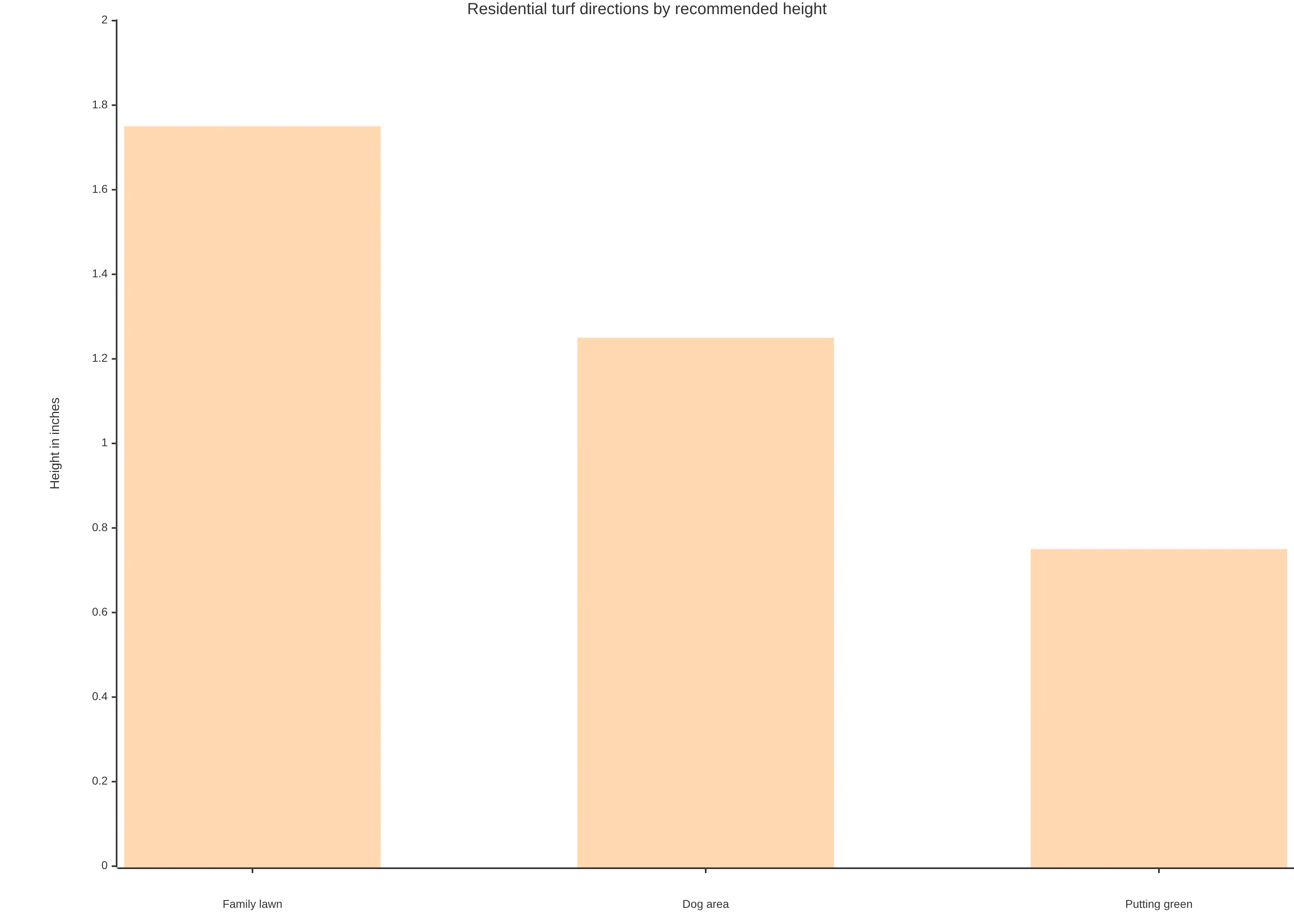
A turf-selection guide describes two distinct residential directions:
- A low-maintenance family lawn: the guide recommends 1.5- to 1.75-inch landscape turf with medium to high density and silica-sand infill.
- A dog area or space with heavy pet use: the guide recommends 1.0- to 1.25-inch pet turf with fully permeable backing and antimicrobial or odor-control infill.
These are recommendations from one guide, not universal rules for every Kansas or Missouri property. Treat them as questions for the specification conversation rather than as a design you can order without reviewing the site. The right direction depends on the use, the ground conditions, drainage, access, and the performance expectations you bring to the project.
Your surface map should separate the main use from occasional use. For example, a backyard may need a general lawn surface most of the time but also contain a dog path, a children’s play area, or a small practice zone. Listing those uses prevents a broad lawn specification from being applied to every part of the space without discussion.
Write down the following before comparing products:
- The primary activity in each area.
- The people, pets, or equipment that will use it.
- How often that use occurs.
- Whether the area connects to a patio, pool, garden, driveway, or existing concrete.
- Whether appearance, drainage, resilience, ball roll, or low routine work is the leading priority.
This record gives you a way to ask whether one surface can serve the whole project or whether distinct zones need different treatment. It also helps keep a specialized feature from being treated as a generic lawn. A putting green, for instance, should be discussed as a playing surface with its own performance requirements rather than as a small patch of landscape turf.
The residential job also sets the boundary of what you should expect from artificial turf. A lawn intended to reduce mowing and watering demands is not automatically the right surface for a high-use pet area or a practice green. Likewise, a product chosen for a specialized use should not be assumed to solve every adjacent landscaping need.
State the intended job in one sentence before you request a quote: for example, a front lawn with occasional foot traffic, a backyard used by children and pets, or a designated dog area. That sentence is more useful than a general request for green turf because it gives the installer a performance question to answer.
Build the home’s use profile
Your home’s use profile should describe traffic, occupants, existing surfaces, and daily expectations before you compare turf options. A surface that looks appropriate in a sample may not match the demands of active dogs, children, furniture, regular foot traffic, or a transition from concrete.
Create the profile in five parts:
- People: record whether children, adults, guests, or mobility equipment will cross the area and identify the busiest paths.
- Pets: note the number and size of dogs, where they run, and whether one part of the yard receives concentrated use.
- Traffic: identify everyday walking routes, play areas, outdoor furniture, and occasional heavier loads.
- Existing surfaces: describe soil, natural grass, concrete, pavers, slopes, edges, and transitions.
- Expectations: state whether your priority is a consistent appearance, reduced routine work, pet use, play, or a specialized activity.
The profile is not an individualized design. It is a factual brief that lets a professional distinguish a general lawn question from a site with concentrated wear or a foundation issue.
Active dogs deserve a separate line in the use profile. We recommend more resilient turf for active dogs that need to withstand vigorous activity without showing visible wear. That recommendation does not establish one universal product or guarantee a particular lifespan; it identifies a use condition that should affect the selection conversation.
Record where dogs run, turn, dig, rest, and relieve themselves. Include whether the area connects to a gate, patio, or drainage path. Those details help frame questions about the intended pet zone and the maintenance it may require. Do not describe the entire yard as a pet application if only one section receives that use. A zone-by-zone record can keep the scope more precise.
Traffic should be described by pattern rather than by a vague label such as heavy use. A narrow route from the back door to a gate creates a different planning question from evenly distributed family activity. A play space may have concentrated movement around equipment, while a lawn beside a patio may receive intermittent foot traffic.
For each zone, record the busiest route, the areas where people stop, and any furniture or equipment that will remain in place. Note whether you expect the use to change over time. These observations help you ask about resilience, surface transitions, and maintenance without assuming that a product specification alone determines performance.
Existing concrete requires an explicit foundation question. We assess concrete condition before installing artificial grass on concrete to help ensure a solid foundation. If your project includes a patio, walkway, basement area, or another concrete section, list it separately rather than treating the whole property as soil.
Your record should identify cracks, uneven areas, drainage paths, edges, and changes in elevation that you can observe. A professional assessment is still needed to decide how those conditions affect the installation. The practical boundary is simple: do not judge the turf product before you understand the surface beneath it.
Stress-test the site against Kansas and Missouri weather
Kansas and Missouri weather should be treated as a site-planning question rather than a background detail. Missouri climate guidance identifies seasonal freeze-thaw, heavy spring rains, and summer heat as conditions that turf projects must account for. For synthetic systems, the same guidance points to proper drainage, seam integrity, and snow or ice management as measures that can help avoid frost heave and seam separation.
Those conditions do not produce one answer for every home. They tell you which questions belong in the evaluation:
- Where does water travel during heavy spring rain?
- Does the planned area sit below a roof edge, beside a downspout, or at the bottom of a slope?
- What happens at the edges and seams when the ground experiences seasonal movement?
- How will snow and ice be managed in the area?
- Which parts of the surface receive direct summer sun?
For a Kansas property, use the same disciplined approach without assuming that Missouri guidance alone settles the local design. Describe the property’s observed conditions and ask for a response tied to that site.
Drainage deserves its own observation, even when the yard appears level. Walk the area after rainfall if you can do so safely, and record standing water, muddy sections, runoff from higher ground, and places where water leaves the property. You do not need to diagnose the cause. You need to identify where the installation conversation must include water movement.
Separate drainage observations from product preferences. A surface advertised for a particular use does not, by itself, answer how water will move through your property or away from adjacent structures. Ask how preparation, grade, edges, seams, and the planned system address the conditions you recorded. Keep any unresolved drainage question visible in the quote discussion rather than assuming it is included.
Summer heat is another stress point to discuss without turning a general warning into a guarantee about your yard. A selected review reports that artificial turf can require heat-related closures and, in some conditions, irrigation to improve heat conditions and playability in an athletic-field context.
The cited material concerns athletic or sports-turf settings, not a universal conclusion about residential lawns. For your home, ask how direct sun, surface use, shade, and nearby structures should affect the project discussion. Keep the question specific to the area you plan to install.
A useful weather stress test ends with a written list of conditions, not a yes-or-no assumption about the climate. Mark the areas exposed to sun, water, slope, freeze-thaw movement, snow, and concentrated traffic. Add photographs or notes that show where those conditions occur.
If the site record exposes a problem you cannot describe clearly, delay product selection and focus the next conversation on that condition. The goal is not to predict every seasonal outcome. The goal is to prevent a general product comparison from substituting for site-specific planning.
Compare lower routine work with continuing obligations
Artificial turf can lower some routine lawn work, but your comparison should include the care that remains after installation.
The practical comparison is not maintenance versus no maintenance. It is one pattern of work versus another. Before you decide, list the tasks you want to reduce and the tasks you are prepared to keep. If your primary frustration is mowing or watering, ask how the proposed system changes that routine. If your main concern is pets, mud, heat, or concentrated traffic, ask what care those conditions require after installation.
Your care plan should account for both regular cleaning and less predictable repairs. Our artificial-turf lifespan varies with maintenance and environmental factors. That means a product label or initial appearance cannot establish how long your particular installation will perform.
Ask the installer to describe the expected care for your intended use in ordinary language. Include questions about cleaning, pet areas, seasonal conditions, and the signs that a minor repair may be needed. Keep the answers with your property record so you can compare the ongoing obligations with the routine work you were hoping to reduce.
Use this maintenance comparison before you choose:
- Natural-grass tasks you want to reduce.
- Artificial-turf tasks you accept after installation.
- Extra care created by pets, children, furniture, or concentrated traffic.
- Seasonal questions related to heat, rain, snow, and ice.
- Cleaning or minor repairs that should appear in your long-term budget.
This list is a decision aid, not a promise of a particular maintenance schedule. If the continuing obligations do not fit your expectations, the project may need a different scope or a different landscape approach.
Keep natural grass in the comparison
Natural grass should remain in your comparison because it has benefits and trade-offs that artificial turf does not erase. A selected case-study passage states that natural grass can reduce surface temperatures, support biodiversity, reduce soil erosion, and act as a carbon sink. The same passage states that natural grass can reduce runoff, mitigate flooding, and ease urban heat, although it can flood under heavy rainfall.
Natural grass also carries water and maintenance demands. The selected case-study passage states that natural grass can require up to 1 million gallons of water per year in the United States, making it costly in water-scarce areas. A separate review says artificial turf may reduce routine maintenance compared with natural grass, while noting continuing care requirements in the cited athletic-field context.
These findings do not decide the better surface for every Kansas or Missouri home. They show why your comparison should include water, surface temperature, runoff, biodiversity, maintenance, and the actual use of the space.
Synthetic turf also has trade-offs that belong beside its convenience. We state that synthetic turf offers low-maintenance convenience but can present ecological challenges, including heat retention and waste management. Treat those issues as part of the project conversation rather than as reasons to assume that one surface is always superior.
Ask which outcome matters most for your property and which trade-off you are prepared to manage. A homeowner focused on reducing routine water use may weigh the comparison differently from someone focused on cooling, habitat, runoff, or end-of-life waste. Your answer should be tied to the actual area, not to a broad claim about artificial turf as a category.
Build a two-column comparison for your own property:
- Water and routine work: record the natural-grass tasks you currently perform and the artificial-turf care you would accept.
- Drainage and runoff: record current standing water, runoff paths, and questions about the planned system.
- Heat and use: record direct sun, shade, children, pets, and the times the area is most active.
- Environmental priorities: record the value you place on biodiversity, cooling, waste management, and a consistent appearance.
- Cost and duration: record the initial project scope and the continuing care you expect.
The exercise is useful because it makes a preference explicit. It does not calculate local water savings or predict a specific environmental result.
Treat heat, safety, and waste as unresolved checks
Heat, safety, and waste should remain open checks until they are connected to your intended use and property conditions. Synthetic turf can present ecological challenges, including heat retention and waste management.
The cited assessment concerns sports-turf options and does not establish a universal residential conclusion. Use it to frame questions, not to claim that a particular home surface is safe, unsafe, risk-free, or unsuitable. Ask how the intended use, direct sun, children, pets, drainage, cleaning, and end-of-life planning should be addressed in your project.
Put these questions on your consultation list:
- How should direct summer sun affect the planned use of the area?
- What surface conditions should you monitor during very hot weather?
- What cleaning and sanitization practices fit the proposed use?
- How should pet areas be handled in the care plan?
- What waste-management questions apply to the materials and future replacement of the system?
- Which answers depend on the exact turf, infill, backing, foundation, or site preparation?
The point is to separate a documented project response from a generic product statement. If an answer depends on the system or the site, keep that dependency visible.
Match the turf specification to the use
Prepare a specification brief with one line for every zone:
- Zone name: front lawn, side yard, dog area, play area, or putting green.
- Primary use: the activity that should guide the selection.
- Secondary use: another activity that could change the requirements.
- Exposure: direct sun, shade, rain flow, snow, ice, or concentrated traffic.
- Surface: soil, natural grass, concrete, pavers, slope, or another existing condition.
- Desired priority: appearance, routine work, pet use, play, drainage questions, or ball roll.
Bring the brief to the consultation and ask which specification addresses each line. If one proposed product is being applied to different zones, ask why it fits all of them. If different products are proposed, ask what use or condition makes the distinction necessary.
Use a two-stage decision gate when reviewing the brief. First resolve conditions that could change the installation scope, such as drainage observations, foundation condition, access, and transitions. Then compare turf preferences such as appearance, density, infill, or height against the intended use. Mark each item as known, to verify, or a preference, and ask which items could change the estimate. This order keeps a product sample or specification from substituting for a site review.
Inspect the foundation before judging the product
Site preparation is part of the artificial-turf system, so judge the foundation before judging the surface sample. An installation guide describes preparation as assessing the site, clearing the area, and leveling the ground. Another guide presents a sub-base as an important part of installing artificial grass correctly the first time and supporting long-term results.
The sequence matters:
- Assess the area and identify the existing surface, grade, drainage observations, edges, and access.
- Clear the planned area so the installation starts with the intended footprint.
- Level the ground as part of preparing the surface.
- Discuss the sub-base and how it relates to the conditions found on your property.
- Keep unresolved foundation or drainage questions in the project scope.
These are preparation steps, not a complete individualized installation method. The professional assessment must determine how they apply to your home.
Concrete changes the foundation question. If the project includes concrete, record the location and visible condition separately from soil or natural grass areas.
Ask how the existing concrete, transitions, edges, and drainage paths affect the proposed scope. Do not combine a concrete area with a soil area in your notes simply because both will receive artificial grass. The underlying conditions are different questions.
Your site notes should contain observations rather than diagnoses. Record uneven areas, visible cracks, slopes, soft ground, standing water, downspouts, access limits, and structures near the planned surface. Add photographs when they clarify location or scale.
This record helps you discuss preparation without pretending to determine the remedy yourself. It also makes it easier to identify what a quote includes and what remains an open site question. A visually attractive turf sample cannot compensate for a scope that leaves the foundation unclear.
Read cost as an installed-system question
Artificial-turf cost should be read as the cost of an installed system, not the price of the grass alone. The true cost includes materials, labor, and installation complexity, so the grass price by itself does not capture the project cost.
That principle changes how you prepare for a quote. Instead of asking only for a price per square foot, ask what the measured area, preparation, foundation, installation work, and project complexity contribute to the total. The purpose is not to force every project into the same cost formula. It is to make the assumptions behind the estimate visible.
Build a scope ledger with these lines:
- Measured area and the shape of each zone.
- Intended use for each zone.
- Existing surface and preparation condition.
- Clearing, leveling, and sub-base work that may be required.
- Drainage, edges, seams, transitions, or concrete conditions that need discussion.
- Turf and infill specifications tied to the use.
- Labor and installation complexity.
- Ongoing cleaning, minor repairs, and other care questions.
Do not fill unknown lines with guesses. Mark them as questions for the estimate. A precise quote requires project-specific information because the installed scope depends on the property and the work required there.
After you receive an estimate, convert it into a scope-parity table before comparing totals. Use one row for each planned zone and separate columns for the items that can change what is being installed: measured area, existing surface, clearing and leveling, foundation or sub-base work, drainage, edges and seams, transitions or concrete, turf, infill and backing, labor, and installation complexity. Mark each cell as included, excluded, conditional, or unclear. This makes an assumption visible instead of allowing it to disappear inside a total.
Compare like-status rows first. If one estimate includes preparation while another leaves it conditional, the totals are not answering the same question. If one proposal treats a pet area as part of a general lawn and another specifies it separately, ask whether the difference reflects the intended use, the product, or the scope of work. If a drainage, concrete, or access condition is unpriced, ask what observation or assessment is needed before it can be resolved. Keep the answer beside the affected zone rather than in a general notes section.
Do not average a single per-square-foot figure across zones before checking scope. A property with a lawn, pet area, and concrete transition may have different assumptions in each row; combining them can hide which zone drives the uncertainty. Preserve the zone labels through the comparison and ask for any allowance or conditional item to be assigned to one zone. That keeps the estimate review aligned with the site-readiness record and gives the installer a precise place to explain a change.
Finish the review by writing three short statements: what the estimate definitely includes, what it assumes, and what could change it. Then compare the remaining product and maintenance preferences. This process does not produce a price or determine suitability. It gives you a consistent way to identify whether two estimates describe the same project and which unanswered question should be resolved next.
A planning budget can help you decide whether to investigate the project, but it cannot establish your final price. The property record should show what you know, what you have measured, and what still needs a site-specific answer.
Use the ledger to compare estimates on the same basis. If one figure includes preparation and another does not, the totals are not answering the same question. If a product allowance is not tied to the intended use, ask what assumption produced it. If a drainage or foundation issue is unresolved, keep it separate rather than treating the current total as complete.
Use published figures only within their limits
Published cost figures can provide context only when you preserve their original scope. A Western Resource Advocates report cites artificial-turf estimates of $4.50 to $10.25 per square foot in an athletic-field comparison. Those figures are not Kansas or Missouri residential pricing.
Do not carry that range into a residential budget as though it were a local quote. Athletic-field comparisons and residential installations can differ in use, scale, preparation, access, specifications, and installation complexity. The report gives you a bounded reference, not a promise about your project.
Use a published figure in three steps:
- Name the source context, such as an athletic-field comparison.
- State what the figure does not establish, such as Kansas or Missouri residential pricing.
- Replace the general reference with a property-specific scope record before judging affordability.
This method keeps a number from doing more work than its evidence supports. It also helps you identify whether a quote is addressing the same type of surface, use, and preparation as the reference you found.
Prepare a quote-ready property record
A quote-ready property record should turn your general interest into a concise description of the project. It does not need to diagnose the site or select the product. It needs to show what you want, where it will go, how it will be used, and which conditions require an answer.
Include these sections:
- Property location in Kansas or Missouri and the specific area of the home involved.
- A rough measurement or sketch for each planned zone.
- Primary and secondary uses, including pets, children, play, traffic, or a putting green.
- Existing surfaces such as natural grass, soil, concrete, pavers, slopes, and transitions.
- Drainage observations, standing water, runoff paths, downspouts, and low areas.
- Sun, shade, summer heat, snow, ice, and areas with concentrated use.
- Photos that show the full space, edges, access routes, and notable conditions.
- Your preferred outcome and the maintenance tasks you want to reduce.
- Questions about preparation, specifications, care, waste, and project scope.
The record is useful immediately: send it with your inquiry, use it to organize the site conversation, and update it when a professional identifies a condition that changes the scope.
Your measurements should support discussion, not create false precision. Sketch irregular shapes, separate connected areas with different uses, and label obstacles or structures that affect access. If you do not know the exact area, say that the measurement is approximate.
Describe what you can observe without assigning a technical cause. For example, record that water remains near a downspout after rain rather than declaring that the sub-base is inadequate. Record a visible crack in concrete rather than deciding whether it can remain. These distinctions help keep the property record accurate and give the installer the right questions to answer.
Bring a short question set to the consultation:
- Which turf type and infill fit each intended use, and why?
- What site preparation and sub-base work does the planned surface require?
- How will drainage, seams, edges, transitions, and existing concrete be addressed?
- Which parts of the scope are known, measured, or still conditional?
- What care should you budget for after installation?
- Which heat, safety, waste, and seasonal questions depend on the exact system?
- What information would change the estimate?
These questions help you move from a general product conversation to a property-specific project conversation.
Ask what the installation includes
The installation scope should explain how the proposed system responds to the conditions in your property record. We also assess concrete condition before installing artificial grass on concrete to help ensure a solid foundation.
Ask for a plain-language explanation of:
- The area included in the estimate.
- The existing surface in each zone.
- Clearing and leveling work.
- Drainage paths, edges, seams, and transitions.
- Concrete assessment where applicable.
- Turf, infill, and backing choices tied to the intended use.
- Care expectations after installation.
A complete scope does not mean every question has the same answer for every property. It means the important conditions are visible, assigned to the right part of the project, and not hidden inside a general product description.
A useful estimate should leave you able to identify the project’s boundaries. You should know which areas are included, which conditions require further assessment, which assumptions affect the total, and which questions remain open. You should also know whether the proposed surface addresses the use you described rather than a generic residential application.
If the scope does not answer those points, ask for clarification before judging the total. If a question depends on a site inspection, keep it conditional instead of treating an early figure as final.
Choose the next step only after the stress test
Artificial turf is worth pursuing for your Kansas or Missouri home when the intended use, site conditions, weather questions, maintenance expectations, and installed scope still fit after you examine them together. The strongest next step is not a product choice made from appearance or a published number. It is a property record that makes the use, drainage, foundation, seasonal exposure, care, and cost questions visible.
Review your record one last time:
- The primary job of every planned zone is clear.
- Pet, child, traffic, and existing-surface conditions are recorded.
- Drainage, heat, freeze-thaw, snow, and ice questions are identified where relevant.
- Natural grass trade-offs remain part of the comparison.
- Ongoing cleaning and minor repairs are included in your expectations.
- The estimate will address materials, labor, and installation complexity rather than grass price alone.
- Published figures are being used only within their original context.
A qualified professional should decide individual suitability for your property after assessing the relevant conditions. If the project still fits after that review, bring the record and the unresolved questions into a property-specific conversation.
We recommend moving forward only when you can describe the surface’s job, the site’s known conditions, and the questions that need a professional answer. That approach gives you a clearer basis for evaluating the proposed scope without treating general guidance as a promise about your home.
What should you confirm before requesting an artificial turf quote?
What factors should I consider when deciding on artificial turf for my Kansas or Missouri home?
Consider the intended use of the area, drainage conditions, weather exposure, existing surface conditions, and the maintenance tasks you are willing to perform after installation.
What should I include in my property record before requesting a quote for artificial turf?
Include property location, measurements of the planned area, primary and secondary uses, existing surfaces, drainage observations, and any specific questions about preparation and maintenance.
How can I ensure the artificial turf installation meets my specific needs?
Discuss your intended use, site conditions, and maintenance expectations with the installer to ensure the selected turf type and installation method align with your requirements.
What are the ecological considerations of using artificial turf?
Artificial turf offers low-maintenance convenience but can present ecological challenges, including heat retention and waste management, which should be considered in your decision.