
Answer the top-10 question with a use-first shortlist
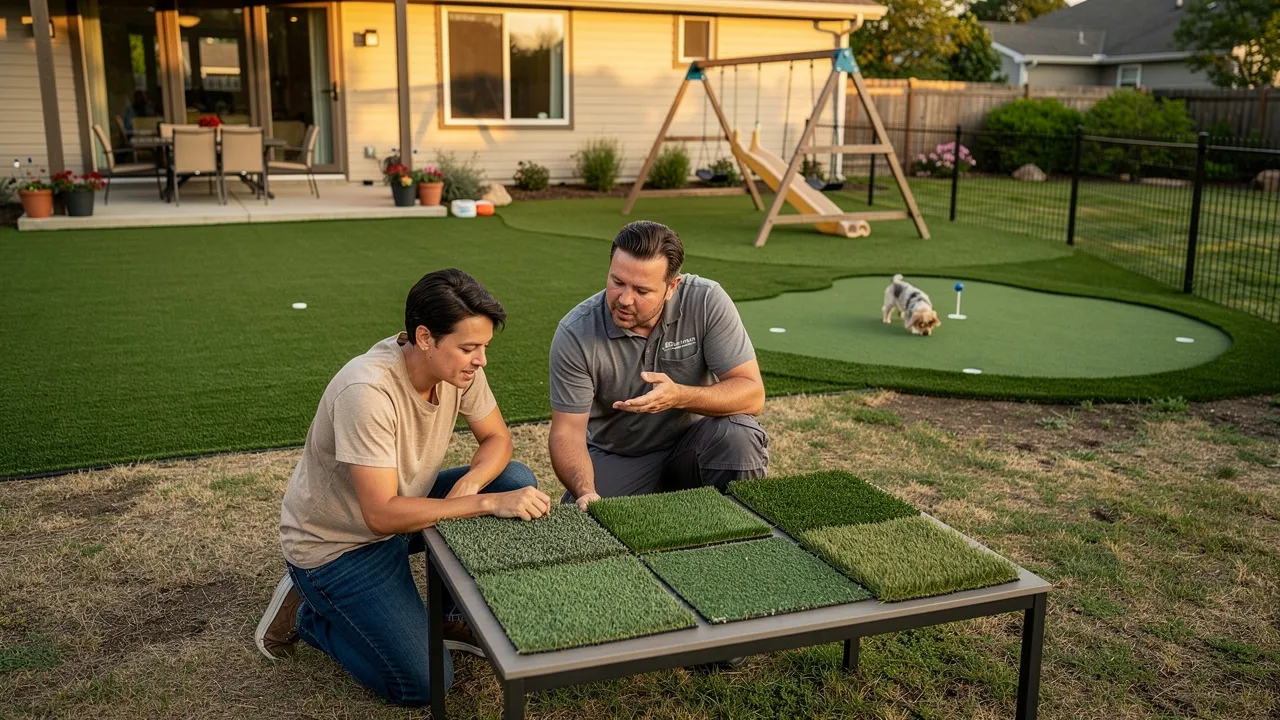
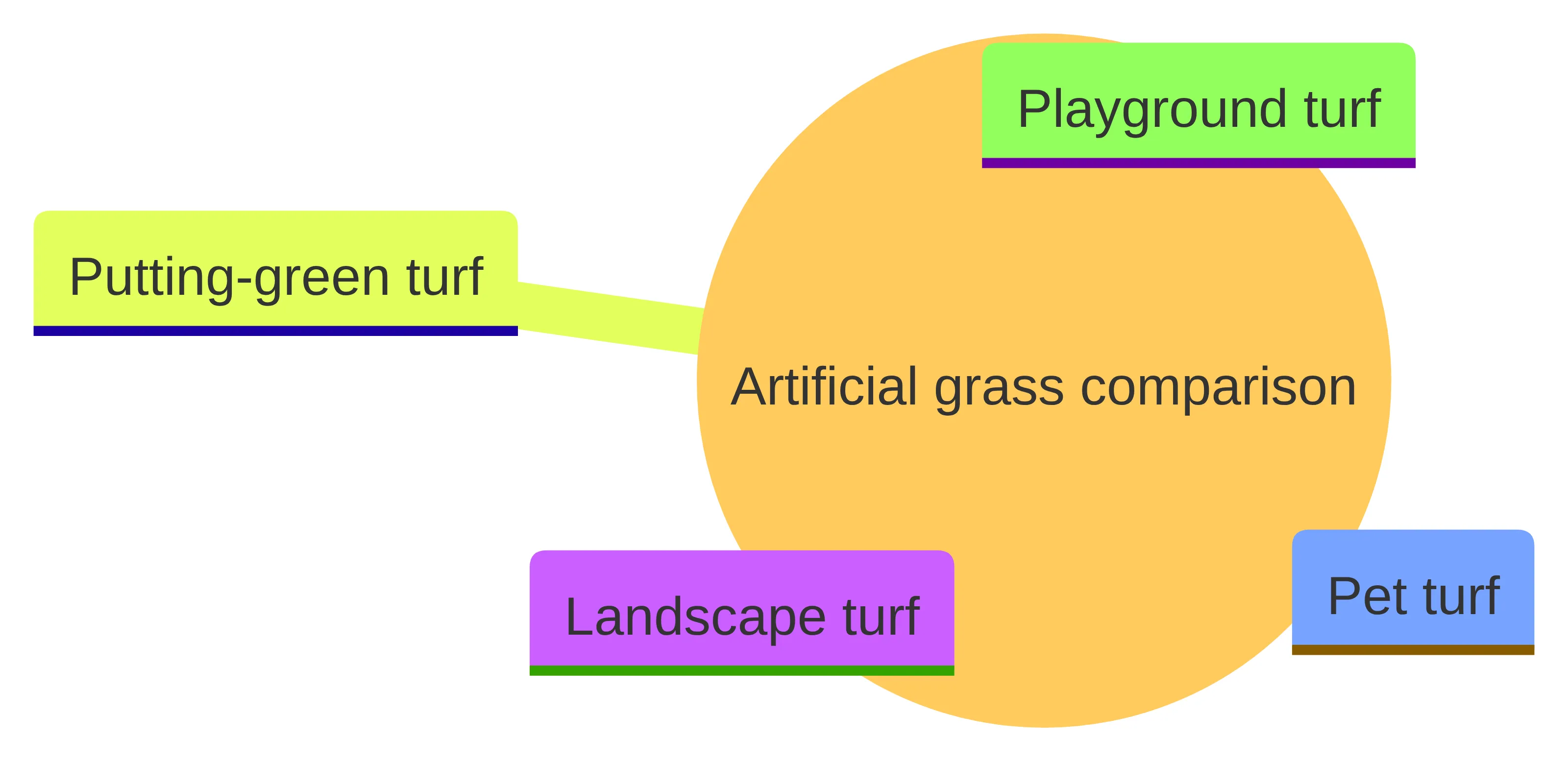
A universal top-10 ranking cannot tell you which artificial grass belongs on your Kansas City lawn. Artificial turf products are designed for different functions, including ordinary landscaping, pet areas, playgrounds, and putting greens, so the useful first question is what the surface must do. Matching the turf to that demand can help you avoid performance, drainage, and wear problems. Compare the complete system rather than treating a color, sample, or product label as the decision by itself.
Use this shortlist as ten decision paths, not ten ranked brands or models:
- General family lawn: Start with landscape turf when the area mainly needs a residential lawn appearance and ordinary household use.
- Higher-traffic lawn: Compare landscape options that include fiber memory when repeated foot traffic is likely.
- Appearance-led lawn: Give appearance, feel, density, pile height, and integration with the yard greater weight when visual fit is the main concern.
- Active-dog area: Move from a general landscape specification toward pet turf when vigorous activity and wear drive the decision.
- Pet-use system: Compare fully permeable backing and antimicrobial or odor-control infill when dogs and waste management are central concerns.
- Backyard putting green: Use putting-green turf when consistent golf-ball roll matters more than a general-lawn appearance.
- Play area: Treat playground turf as a use-specific project because playground products are designed around impact absorption rather than ordinary lawn appearance.
- Mixed-use yard: Separate zones by their dominant use instead of forcing one turf type to serve a lawn, dog area, and putting surface equally.
- Drainage-led project: Put backing, drainage, site preparation, and installation scope ahead of appearance when water movement is the unresolved site question.
- Scope-defined installation: Let the written system proposal decide among otherwise plausible options after product selection, preparation, drainage, installation, and warranty details are documented.
The remaining sections turn those paths into a comparison method for homes in Kansas City, Kansas, and Missouri. You will narrow the field by use first, then test appearance, maintenance, site conditions, and installation scope.
The practical answer is simple: choose the turf system whose construction and installation scope match the lawn’s dominant demand. A general landscape surface may fit an ordinary yard, while pet, playground, and putting-green uses require separate questions. No option is universally best for every residential property.
Set the comparison rules before evaluating turf options
Artificial grass options should be compared against the same core questions before you judge one sample against another. Start with intended use, then examine appearance, maintenance needs, pile height, fiber composition, backing, and drainage. These criteria keep a residential comparison tied to what the surface must handle rather than to a product name alone.
| Turf path | Main demand | Appearance question | System questions to carry forward |
|---|---|---|---|
| Landscape turf | A general yard and ordinary household use | Does the surface fit the look and feel you want in the yard? | Compare pile height, density, fiber details, backing, drainage, and traffic expectations. |
| Pet turf | Dog activity, waste handling, and repeated use | Can the surface still fit the surrounding landscape? | Examine resilience, fully permeable backing, infill choice, drainage, and the care routine. |
| Putting-green turf | Consistent golf-ball roll | Is a specialized short surface acceptable in the intended zone? | Compare the short dense pile, infill, firmness, and the installation scope for the green. |
| Playground turf | A play surface designed around impact absorption | Does the play zone fit the rest of the yard without confusing uses? | Treat the product and installation as a dedicated use-specific project. |
The table is a screening tool, not a performance guarantee. A product can appear attractive and still be poorly matched to the way you plan to use it. Conversely, a use-specific surface may be the wrong visual choice for a front lawn even when it fits a separate backyard zone.
For a Kansas City property, record the intended use and the site questions before requesting a proposal. Include whether the area is a front lawn, backyard, dog run, play zone, or practice area; how much foot traffic you expect; and which drainage or maintenance questions remain open. Then compare candidate systems using the same list.
Use the dominant demand as the tie-breaker. If two options appear similar, prefer the one whose documented construction and installation scope answer the harder site question, not the one with the more appealing label.
Use landscape turf as the baseline for a general family lawn
Landscape turf is the sensible baseline when your Kansas City front or back lawn needs a general residential appearance rather than a specialized golf, pet, or playground function. That baseline does not make every landscape product interchangeable. Compare the intended use, maintenance capacity, appearance, pile height, fiber composition, backing, and drainage before selecting a system.
One selector recommends 1.5- to 1.75-inch landscape turf with medium-high density and silica sand infill for a low-maintenance family lawn. Treat that range as a starting point from one selector, not as a universal specification for every Kansas or Missouri property. The right choice still depends on how the area will be used, how much traffic it receives, and what the installation scope requires.
Use landscape turf as your starting category when:
- People will walk across the area, but it is not primarily a dog run, playground, or putting green.
- The lawn must blend with the surrounding yard design.
- You want to compare visual feel and maintenance demands before considering specialized features.
- The site can be evaluated for backing, drainage, and preparation as part of the complete installation.
A general lawn can still have a demanding use pattern. Children, frequent gatherings, pathways, and outdoor furniture may create more traffic than the phrase “family lawn” suggests. If repeated foot traffic is likely, add fiber memory to the comparison rather than assuming that a general landscape specification will hold its appearance equally well under every workload.
Pile height should also be read alongside density and fiber construction. A taller surface is not automatically the right surface for your yard, and a shorter surface is not automatically easier to maintain. Ask how the proposed combination relates to the way you will use the lawn and how it fits the site.
For an ordinary residential lawn, shortlist landscape turf first. Carry the proposed pile range, density, infill, backing, drainage, and preparation requirements into the written scope before treating the option as suitable.
Switch the specification when pets or heavy activity drive the decision
Pet use changes the comparison because the surface must account for activity, waste handling, and the way the area will be cleaned. Pet turf emphasizes durability and resistance to digging, while landscape turf places more emphasis on appearance and integration with the yard design. If active dogs will use the area vigorously, choose the comparison path for more resilient grass rather than assuming that a general lawn specification will fit.
That recommendation identifies features to compare; it does not establish a universal product choice or guarantee an outcome on your property. Ask how those features appear in the proposed complete system and how they relate to the site’s drainage and cleaning plan.
Pet-use questions should include:
- How often will dogs use the area, and will their activity include running, digging, or concentrated wear?
- Is the area a dedicated dog zone or a shared lawn used by people and pets?
- Does the proposed backing address the drainage question for this site?
- What infill is proposed, and what care does the system require after installation?
- Will the visual character of pet turf fit the surrounding landscape?
A shared lawn may need a compromise, while a dedicated dog area gives you more freedom to compare pet-specific construction. Drainage and maintenance should be assessed separately from the infill specification. Those features belong in the same conversation, but they answer different questions.
For Kansas City and Missouri homeowners, write down the dog activity pattern before comparing samples. A calm, occasional-use area and a heavily used run should not enter the shortlist with the same assumptions.
If dogs are the dominant demand, start with pet turf and compare resilience, backing, infill, drainage, and care together. If the area is shared with people, keep appearance and household traffic in the same evaluation rather than choosing from a pet label alone.
Keep specialized putting surfaces separate from a general-lawn comparison
Putting-green turf belongs in a separate comparison because its main job is consistent golf-ball roll, not general lawn appearance. The cited putting-green examples use a short, dense pile. One source gives a range of about 3/8 to 9/16 inch, while another describes putting-green products as generally under an inch.
That short, dense construction changes the questions you should ask. Instead of beginning with softness or a lawn-like appearance, define the putting experience you want: practice putting, a dedicated backyard green, or a smaller feature within a larger landscape. Then compare the proposed pile, density, infill, firmness, and installation scope.
A cited putting-green system uses specialized silica sand infill between the fibers to stabilize the green and adjust firmness and stimp speed. Use that information to understand why putting turf cannot be evaluated by the same criteria as a family lawn. A surface designed for ball roll may be a poor choice for the surrounding lawn, and a general landscape surface should not be assumed to deliver the same putting behavior.
Keep the putting area separate when your property has mixed uses. A backyard could include a general lawn, a dog area, and a putting zone, but one category should not be selected merely because it sounds versatile. Map each zone and identify its main demand before you ask for a system recommendation.
Your project brief should specify the approximate putting area, the intended practice use, the relationship to nearby lawn or hardscape, and any unresolved drainage or preparation questions. Those details help separate the specialized surface from the rest of the installation.
Choose the putting-green path only when ball roll is the governing requirement. Keep its short pile, dense construction, infill, and firmness questions separate from the criteria you use for a general residential lawn.
Treat appearance as a workload question, not only a color choice
Artificial grass appearance depends on more than color. Compare the surface’s feel, blade construction, pile height, density, fiber composition, and how it is expected to respond to use. A realistic-looking option should fit both your aesthetic goal and the amount of traffic the area will receive.
Artificial grass with memory returns toward its original shape after foot traffic, which can help reduce matting and preserve a realistic appearance. Low-traffic turf used heavily may wear and look less natural. That makes workload part of the appearance decision: a surface selected for occasional use may not be the right fit for a busy path, play area, or gathering space.
Use this sequence when comparing samples:
- Describe the look you want. Note whether the lawn should blend with nearby planting beds, paths, or other landscape elements.
- Assess the feel. A source on realistic-looking artificial grass notes that feel can be matched by choosing an option that emphasizes the softness you prefer.
- Estimate the workload. Mark entrances, walkways, play areas, seating locations, and other places where traffic will concentrate.
- Ask about recovery. For higher-traffic areas, compare whether the proposed fibers have memory and how that feature relates to the intended use.
- Connect appearance to construction. Review pile height, fiber composition, density, backing, and drainage rather than judging a loose sample by itself.
This process prevents a common mismatch: choosing a surface for a quiet display area and then placing it where people or pets repeatedly cross. It also keeps you from treating “natural-looking” as a measurable promise. Appearance is a fit question involving sight, feel, traffic, and the surrounding design.
For a front lawn in Overland Park, Olathe, or another Kansas City-area community, evaluate the visible relationship between the turf and the rest of the property. For a backyard in Missouri, give equal attention to the actual use pattern. The same visual preference can lead to different specifications when the workload changes.
Choose appearance and traffic as a pair. If the area will be busy, shortlist options with memory and carry that workload into the installation discussion instead of relying on a sample’s first impression.
Describe maintenance honestly: lower effort still means recurring care
A practical maintenance baseline includes regular brushing, rinsing, and inspection. Deeper cleaning may be needed for pet odors, compaction, or drainage issues that basic tools cannot fully reach.
Include these care tasks in your turf comparison before installation. Ask what the selected system requires under your intended use, especially if dogs, heavy foot traffic, or a concentrated activity area will be present. A low-effort surface is not a no-maintenance surface, and a product feature does not replace an operating routine.
Plan your maintenance questions in four parts:
- Routine cleaning: Identify how you will remove ordinary debris and when rinsing or brushing belongs in the schedule.
- Traffic inspection: Look for areas where fibers may mat, where people repeatedly cross, or where furniture concentrates use.
- Pet-area care: If dogs use the turf, include waste handling, odor questions, infill condition, and drainage observations.
The maintenance decision also affects which turf path belongs on the shortlist. A general lawn, pet area, putting surface, and playground zone may not share the same cleaning priorities. Keep those uses distinct when you ask about care.
Do not turn a maintenance comparison into an unsupported promise about water use, odor control, safety, or service life. Instead, list the actions you are prepared to perform and the conditions that would call for deeper attention. This gives you a practical basis for comparing systems without assuming that every product or site behaves identically.
Put brushing, rinsing, inspection, pet-area care, and seasonal routines on the project checklist. Select a turf option only after its maintenance demands fit the way you expect to use the property.
Build a property brief before requesting a comparison quote
A property brief turns a broad product search into a site-specific discussion. Before you request a comparison quote for a Kansas City, Kansas, or Missouri home, record what the area must do and which site questions remain unresolved. The installation site must be prepared before artificial grass is installed.
Write down these details:
- Location and use: Identify the front lawn, backyard, side yard, dog area, play area, putting zone, or mixed-use space.
- Dominant workload: Describe ordinary walking, concentrated foot traffic, children’s play, dog activity, digging, furniture, or other repeated use.
- Appearance target: Note the desired visual relationship to the home, planting beds, paths, and neighboring lawn areas.
- Maintenance capacity: State how much routine brushing, rinsing, inspection, pet-area care, and seasonal attention you expect to provide.
- Turf criteria: Record the pile-height, density, fiber, memory, backing, infill, and drainage questions that matter for the intended use.
- Site questions: Mark areas where preparation, drainage, access, grading, or the relationship between separate zones needs explanation.
- Scope questions: List the parts of the installation that must appear in writing before you compare proposals.
This brief does not need to predict the final product. Its purpose is to make your priorities visible and keep the same questions in front of every option. It also gives you a way to separate a general lawn from a specialized zone instead of asking one surface to satisfy incompatible demands.
For a property in Johnson County, Jackson County, or another Kansas City-area location, use the actual lot and intended use as the basis for discussion. Do not substitute a broad regional label for an evaluation of your site. The same turf category can require a different conversation when traffic, pets, drainage, or mixed-use boundaries change.
Before sending the brief, check that it names the intended use, workload, appearance goal, maintenance expectations, site conditions, drainage questions, and requested written scope. Then carry the same brief into each proposal comparison.
Compare written installation scopes instead of grass samples alone
A grass sample shows appearance, but it does not show the entire installed system. When you compare artificial turf proposals, the written estimate should cover product selection, site preparation, drainage, installation scope, and warranty details. Those items give you a common structure for comparing what each proposal actually includes.
Use a scope review rather than a sample-only review:
- Product selection: Match the proposed turf category to the dominant use you recorded. Check whether a general landscape, pet, putting-green, or playground path is being proposed.
- Site preparation: Identify the preparation work included before the turf is installed. The installation site must be prepared first, and the written scope should make that work visible.
- Drainage: Look for the drainage approach and the site question it is intended to address. Do not treat a backing label as a complete drainage explanation.
- Installation work: Read what laying the synthetic turf includes, including the defined installation area and any separate zones.
- Warranty details: Keep warranty language in the written comparison so you are not relying on a verbal summary.
- Maintenance discussion: Add the routine care and any deeper-cleaning questions that relate to pets, traffic, or the chosen use.
The cited professional-installation guidance describes independent installers experienced in laying synthetic turf. That supports comparing installation experience and defined scope, but it does not establish that every installer, product, or property will produce the same result. Keep the comparison tied to the proposal in front of you.
If two samples look similar, the scope can reveal the more meaningful difference. One proposal may leave preparation or drainage undefined while another explains those items in writing. That distinction matters more than a small color difference when the site question is unresolved.
For a Kansas or Missouri home, keep your property brief beside the written estimates. Mark every answer, qualification, and open item against the same checklist. A clear comparison should show what is being installed, where it is being installed, how preparation and drainage are handled, and which details remain conditional.
Do not choose from samples alone. Move an option forward only when its written scope addresses product selection, preparation, drainage, installation, and warranty details clearly enough for you to compare it with the alternatives.
Turn the shortlist into a Hall Turf consultation
The strongest shortlist for your Kansas City home is the one that explains the intended use, expected workload, appearance goal, maintenance routine, site conditions, and installation scope. Start with landscape turf for a general family lawn, switch to pet turf when dog activity governs the surface, and keep putting-green or playground uses separate. Then compare pile, fiber, memory, backing, infill, drainage, preparation, and written scope.
Include the area’s use, traffic pattern, pet or play demands, desired appearance, maintenance expectations, drainage concerns, and the scope details you want documented.
A qualified turf professional should decide individual suitability after reviewing the property and the proposed system. If the remaining uncertainty concerns preparation, drainage, or the boundary between different yard uses, keep that question open until it is addressed in the project discussion. Your goal is not to name a universal winner; it is to select a complete turf system whose use, construction, and installation scope fit your home.
Organize your notes around the surface’s dominant demand, carry the same criteria into the written scope, and use the consultation to resolve the site-specific questions that a product label cannot answer.
What should homeowners ask before choosing artificial grass?
What factors should I consider when choosing artificial grass for my Kansas City home?
Evaluate artificial grass based on intended use, appearance, maintenance needs, pile height, fiber composition, backing, and drainage.
What maintenance is required for artificial grass?
Regular maintenance includes brushing, rinsing, and inspecting the turf. Deeper cleaning may be necessary for pet odors, compaction, or drainage issues, so plan for ongoing care.
What should I include in a property brief before requesting a quote for artificial grass?
Include details such as the intended use of the area, expected foot traffic, desired appearance, maintenance capacity, and any unresolved site questions. This helps ensure accurate proposals.
How do I compare different artificial grass proposals?
Review written estimates for product selection, site preparation, drainage, installation scope, and warranty details. This allows for a clear comparison of what each proposal includes.