
Choose a Front-Yard Surface by What the Space Must Do
The right front-yard alternative starts with the work the space must perform, not with the surface that looks appealing in a product photo. A front yard may need to frame the house, provide a walkable route, tolerate children or pets, handle occasional foot traffic, support plantings, or simply reduce the amount of mowing and watering you want to do. Those demands can point toward different solutions.
For a property in Kansas City, Kansas, or Missouri, compare every option against the same questions:
- How much routine care are you willing to perform?
- What appearance do you want through the seasons?
- What water-related needs should the option address on this property?
- Will people, pets, vehicles, or outdoor furniture use the surface?
- Does the option support the ecological qualities you value?
- What site preparation, planting work, or construction does installation require?
Artificial turf can reduce some lawn work, but that benefit does not settle every project question. The same principle applies to living alternatives, planted areas, mulch, and hardscape: a surface should earn its place by fitting the property and your priorities.
Start by writing a short description of the job. For example, you might need a mostly decorative front yard with a clear walkway, a durable area beside the driveway, or a low-maintenance surface that remains visually consistent. Then separate the area into zones instead of assuming the entire front yard needs one treatment.
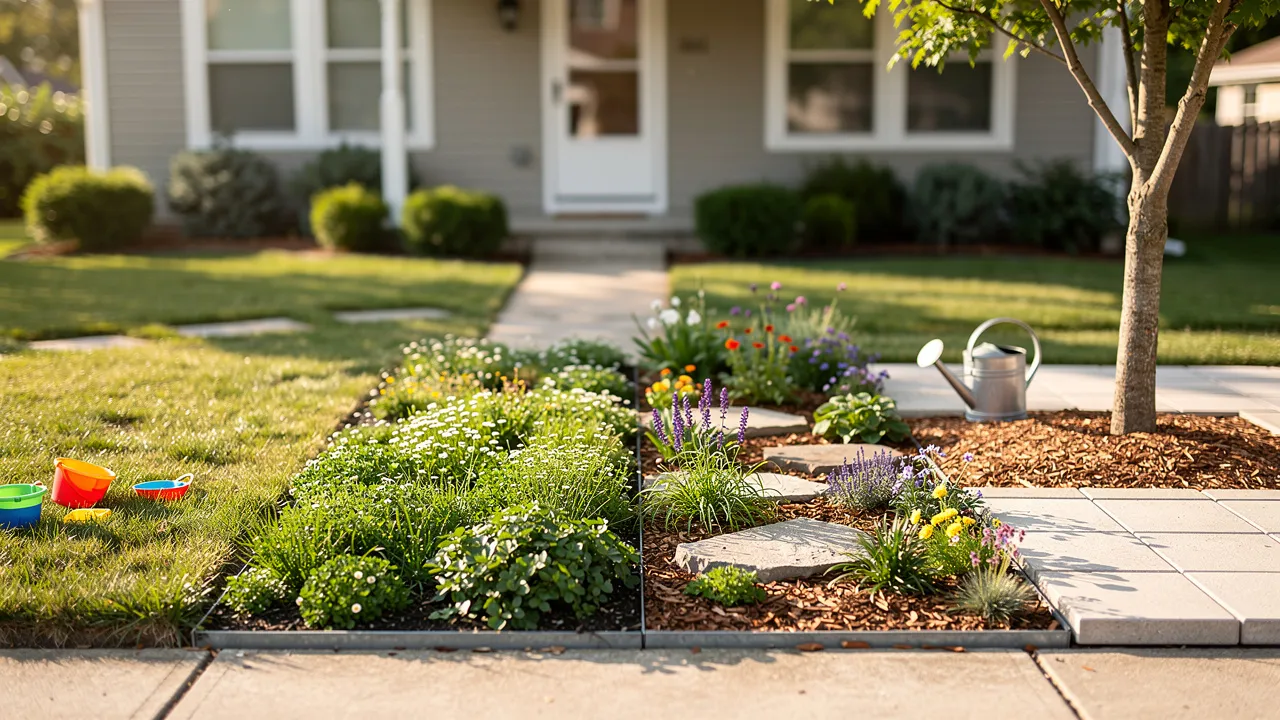
A mixed design may place hardscape on a path, living plants near the foundation, bark chips around a tree, and either natural grass or artificial turf in the area that must remain open. This approach lets each zone answer a different need. It also prevents a preference for one material from controlling parts of the property where another option would make more sense.
The decision is not artificial turf versus an unchanged natural lawn. The useful comparison includes natural grass, clover, meadow-style areas, groundcovers, mixed plantings, hardscape, bark chips, and artificial turf. The sections that follow apply common criteria to those choices, then narrow the question to whether artificial turf deserves a site-specific evaluation.
Compare Every Alternative Using the Same Decision Criteria
A front-yard comparison becomes clearer when every option is judged by the same criteria. Budget, intended use, and willingness to perform regular upkeep are useful starting points, while existing ground, weather, water conditions, and the desired function add the property-specific context.
| Alternative | Maintenance question | Appearance question | Water question | Use and durability question | Installation question |
|---|---|---|---|---|---|
| Natural grass | How much mowing, watering, fertilizing, and seasonal care will you continue? | Are patches or seasonal browning acceptable? | How much water will the chosen grass and site require? | Will the lawn receive regular foot traffic or remain mostly decorative? | Can the existing soil and grade support the desired lawn, or will planting work be needed? |
| Clover or meadow lawn | What establishment and recurring care will the planting require? | Do you prefer a less formal, living appearance? | What water use should you expect after establishment, and what local conditions could change it? | Can the area tolerate the way you use it? | Does the site need soil preparation, seeding, or a trial area? |
| Groundcovers and mixed plantings | Which plants and zones will need attention? | Do you want texture and seasonal variation rather than a uniform lawn? | Which parts of the property need plants, paths, or another surface? | Are the plantings decorative, walkable, or intended to withstand activity? | How will separate zones be laid out and established? |
| Hardscape | What sweeping, cleaning, or weed control will remain? | Should the area read as a path, terrace, border, or open surface? | Where will water move around the constructed area? | Is the surface intended for walking, access, furniture, or visual structure? | What excavation, base work, edging, and connection to existing surfaces are needed? |
| Bark chips | How often will the area need tidying or replenishment? | Does a natural, textured ground layer fit the house and planting plan? | How should water move through and around the material? | Is the area decorative, planted, or used as a route? | What edging and ground preparation will keep the material in place? |
| Artificial turf | What cleaning and other care will remain after mowing is removed? | Do you want a consistent green appearance? | How do the existing grade, water paths, and proposed system fit together? | Will the surface face foot traffic, children, pets, or mostly visual use? | What site preparation and stable sub-base does the project require? |
The table is a screening tool, not a promise about how any surface will perform at a particular address. Use it to identify the questions that need a property-specific answer. A surface that appears attractive may still be a poor fit if its care routine, water behavior, use limits, or installation demands conflict with the site.
Your priorities should determine the order in which you weigh the criteria. If reducing routine lawn work is the main goal, give maintenance and appearance more weight. If habitat and living plants matter most, give ecological function and planting conditions more weight. If the front yard must provide a dependable route from the sidewalk to the door, give access, grade, and surface stability more weight.
A small trial can make a preference more concrete. Consider testing a 100-square-foot area before converting the full yard so you can evaluate appearance and maintenance under your own conditions. Treat that as a way to learn how an option fits your property, not as a guarantee that the rest of the yard will behave the same way.
Write down the two or three criteria that can disqualify an option. For example, you might reject a surface that requires more upkeep than you will provide, a planted approach that cannot perform the intended use, or an artificial-turf proposal that does not explain site preparation. Clear boundaries make the comparison more useful than a general preference for a material.
Living Options: Natural Grass, Clover, Meadow Lawns, and Plantings
Natural grass remains a reasonable front-yard option when you want a living surface and are willing to maintain it. Natural grass can support biodiversity, improve air quality, and support local wildlife, but it requires ongoing care and investment. That ecological role is a meaningful difference from a manufactured surface, especially if living plants are part of your purpose for changing the yard.
The trade-off is workload and visual variation. Regular mowing, watering, and fertilizing are associated with natural grass, and the selected comparison source notes that natural grass may develop patches or brown during extreme heat or colder months. Those possibilities do not make natural grass unsuitable. They give you specific questions to ask about the appearance you will accept and the care you will continue.
Natural grass may fit when you want an open living area, value habitat, and accept recurring maintenance. It may fit less comfortably when you want to remove mowing and watering from your routine or when consistent green appearance is a primary requirement. Your property conditions still matter, so treat the choice as a site and maintenance decision rather than a default.
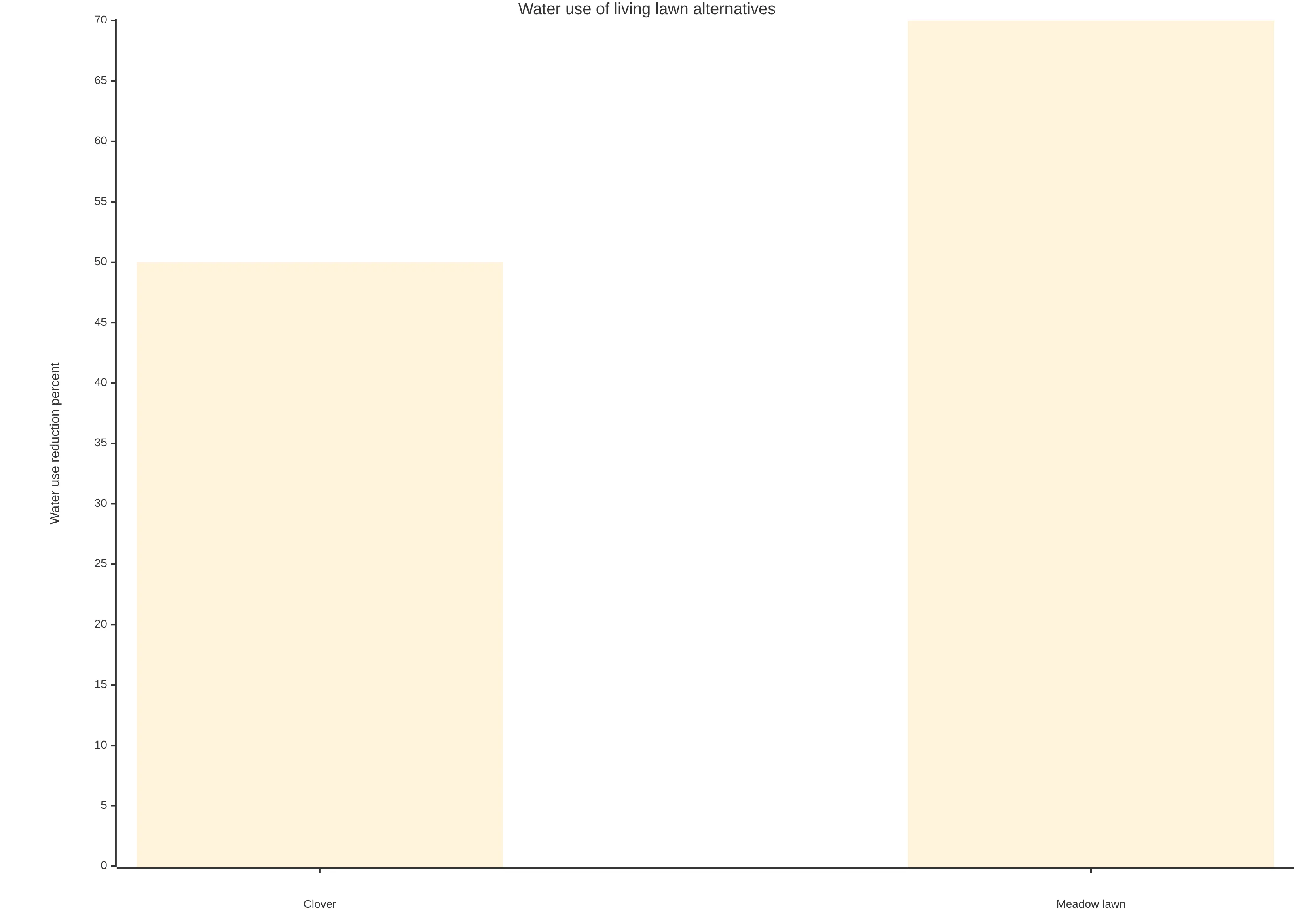
Clover and meadow lawns offer living alternatives to a conventional grass-only surface, but they should be evaluated by their establishment, appearance, water needs, and tolerance for the way you use the yard.
Those figures are planning information, not a Kansas City performance guarantee. Ask what the planting requires during establishment, how its appearance changes through the year, and whether the area will receive the foot traffic you expect. A meadow-style appearance may suit a less formal front yard, while a highly manicured appearance may lead you toward a different option. The key comparison is not simply low water use; it is water use together with care, appearance, use, and site conditions.
Clover or meadow areas deserve a trial when you are open to a living landscape but want to question the assumptions of a conventional lawn. Use a defined section, observe the care it requires, and decide whether the appearance and use match your priorities before extending the treatment.
Living plantings can also occupy part of the front yard rather than replacing every open lawn area. A planted bed may frame a walkway, separate the driveway from the house, or reserve a zone for biodiversity while another surface handles movement.
Do not judge a living alternative only by whether it eliminates mowing. Ask how much establishment work it needs, how you will maintain it, what appearance you want, and whether the planting belongs in the zone you have selected. A living treatment may be a better fit for an ecological or visual goal even when it does not provide a uniform play surface.
Choose a living option when its care and appearance are acceptable to you and its intended use matches the property. If those conditions remain unclear, test a defined area or discuss the planting plan with a qualified landscape professional before converting the full front yard.
Groundcovers and Mixed Plantings for Different Front-Yard Zones
Groundcovers and mixed plantings can solve a zoning problem that a single lawn substitute cannot. A front yard may include shade, a slope, a narrow strip beside a walkway, a tree area, and an open section that receives more activity. Each zone can receive a treatment selected for its role instead of forcing one surface to perform everywhere.
Start with a map of the property. Mark the route from the sidewalk to the entrance, the areas that collect or direct water, the places where existing hardscape must remain, and the portions that are shaded or planted. Then describe the job of each zone in plain language: walk through, frame the house, hold soil, provide an open view, or support a specific activity.
Groundcovers may be useful in planted zones, but their suitability, establishment rate, and maintenance needs depend on the site. Select the plant type and care plan for the actual site rather than assuming that every groundcover is low-maintenance. A mixed approach is strongest when each material has a defined job and its boundaries are clear.
Mixed planting plans can combine living plants with permeable hardscape, moss in suitable shaded areas, or native plants in selected zones. That recommendation supports a design process, not a promise that every listed treatment will suit every Kansas City yard.
Use the following zone test:
- Name the function of the zone.
- Identify the condition that may limit it, such as shade, slope, existing hardscape, or water movement.
- Define the appearance and maintenance you will accept.
- Choose a surface or planting that addresses that function.
- Keep the zone separate from areas with different demands.
A mixed front yard can reduce the area that needs a single lawn treatment, but it adds boundaries and design decisions. If you want a simple visual field with minimal changes in material, a mixed plan may not match your preference. If the property has clearly different zones, however, separating those jobs can make the final decision more precise.
Kansas City properties can differ in soil, slope, shade, and existing hardscape, so a generic recommendation cannot settle where a groundcover or mixed planting belongs. Record those conditions before you compare materials. A front yard with a narrow shaded strip should not be judged by the same criteria as an open area beside the driveway.
Groundcovers and mixed plantings are worth considering when your priorities include living material, varied texture, habitat, or a design divided into functional zones. They are less suited to a decision that requires one uniform surface across the entire property unless the selected planting can meet the use and care requirements. Ask a qualified landscape professional to assess site-specific planting suitability when the consequences of a poor selection would be significant.
Hardscape and Bark Chips When You Want Less Lawn, Not a Turf Substitute
Hardscape changes the function and visual language of a front yard rather than imitating grass. Paths, borders, terraces, and other constructed areas can define movement and reduce the amount of living surface that needs care. Hardscape deserves consideration when the front yard needs a route, an arrival area, a defined edge, or a structured design element.
The comparison should focus on the job of the constructed area. A path is judged by how it connects destinations and handles access. A border is judged by how it separates planting from another surface. An open constructed area is judged by the activities and visual role you expect. Those questions are different from the question of whether a surface should look like grass.
Hardscape also introduces installation questions. Ask how the area will be laid out, what preparation is needed, how it will connect to existing walks or driveways, and where water will move. Avoid treating a hard surface as a universal solution for a front yard that contains several different uses. Keep plantings or another surface where the design requires them.
Natural bark chips can serve as a planted-area treatment when you want a softer, more textured ground layer instead of artificial grass. An environmental comparison identifies natural bark chips as a potentially softer, easier-to-maintain alternative that may reduce the possibility of friction burns. That wording describes a potential comparison, not a guarantee for every material, installation, or use.
Bark chips are not a direct replacement for every lawn function. They may suit a bed, border, or other area where you want to support plantings, but they should not automatically be treated as a route or activity surface. Ask how the material will stay in place, how the boundaries will be maintained, and how it will interact with water moving through the property.
Choose bark chips when the intended zone is planted or decorative and the material’s texture fits your design. Choose another surface for a zone that needs a different function. A material can be easier to maintain in one location and unsuitable in another.
Reducing lawn area is a separate goal from replacing lawn with artificial turf. You can create a front yard with a smaller living area, planting beds, paths, and bark chips without asking any one surface to cover the entire property. That approach may suit you if your main objective is to divide maintenance into manageable zones rather than achieve a uniform green appearance.
Before choosing hardscape or bark chips, identify the boundary between visual reduction and functional replacement. If you still need an open area for activity, keep that need in the comparison. If you only need a clear arrival route and a planted frame, a lawn substitute may be unnecessary.
Use the same screening questions for construction materials as for planted materials: intended use, existing ground, weather and water conditions, care requirements, ecological priorities, and installation complexity. Then select the surface that answers the specific job instead of describing every front-yard change as a turf project.
Artificial Turf for Consistent Appearance and Less Routine Lawn Work
Artificial turf may fit a front yard when you want a consistent green appearance and less routine lawn work, provided the property and intended use support the installation. Artificial turf avoids the regular mowing, watering, and fertilizing associated with natural grass. Hall Turf describes artificial grass as a low-maintenance alternative that can enhance outdoor appearance, offer long-term savings, and promote water conservation.
Artificial turf can also be designed for areas that receive substantial foot traffic. Quality artificial turf can suit heavy foot traffic, including use by families with children or pets. This describes quality turf generally, not a promise that every product or installed system will perform identically.
The appearance benefit is specific but limited. If visual consistency is one of your main goals, include it in the comparison. If living plants, habitat, or seasonal variation matter more, keep those priorities visible rather than allowing low routine mowing to decide the project by itself.
Artificial turf requires an upfront cost comparison against the scope of the complete project. Hall Turf states that synthetic grass may cost more upfront than a natural lawn, while durability and water conservation may provide long-term advantages.
Use cost as a question about scope rather than a universal price per square foot. Ask what area will be included, what existing material must be removed, what site preparation is needed, how edges and transitions will be handled, and which surface is being proposed. A quote that leaves those items unclear cannot answer the total project question.
Artificial turf deserves further evaluation when lower routine lawn work, consistent appearance, and the intended use matter enough to justify investigating installation scope. It is not automatically preferable when its upfront expense conflicts with your budget or when living material and ecological function are central priorities.
Artificial turf is a candidate, not a conclusion. Hall Turf’s site-fit guide says its advantages should be used as reasons to investigate fit rather than as a promise that every yard will perform the same way. Apply that boundary directly to your property.
Ask whether the front yard has a clear use, whether the existing ground can be prepared, whether weather and water conditions have been considered, and whether the remaining care routine is acceptable. If those answers are not clear, continue comparing alternatives or request a site assessment before selecting a product.
The practical decision is therefore conditional: pursue artificial turf when its benefits align with your priorities and the site can support the planned system; choose another option when the property’s use, conditions, or ecological goals point elsewhere.
Artificial Turf Reduces Some Work but Is Not Maintenance-Free
Artificial turf reduces some lawn work but is not completely maintenance-free.
That distinction changes the question from “Will I have any maintenance?” to “Which maintenance tasks am I willing to perform?” Your list may include removing litter, keeping the surface presentable, and addressing the conditions identified for the installed system. Do not compare artificial turf with an imaginary zero-care surface. Compare the care it requires with the care you are willing to provide for natural grass, plantings, bark chips, or hardscape.
A written proposal should make the expected care understandable without turning general guidance into a product promise. Ask what routine cleaning is expected, which areas need special attention, and how the maintenance plan relates to the particular use of the front yard. Keep the answer tied to the proposed system and site.
Natural grass and artificial turf exchange different types of work. Natural grass requires ongoing care and investment and is associated with mowing, watering, and fertilizing. Artificial turf removes those regular lawn tasks but can still require cleaning. Bark chips may be easier to maintain than artificial grass, but they serve a different role and may need their own upkeep.
Write the care routine beside each option before you decide. Include the tasks, frequency you are prepared to handle, and the consequences of leaving the work undone. This exercise can expose a mismatch that a material sample will not show. A surface that looks low-maintenance may still be inconvenient if its remaining care conflicts with how you use the property.
Select artificial turf only when the reduced lawn workload and remaining care routine both make sense to you. Select a living or planted option when its care is acceptable and its ecological or visual role matters more. Select hardscape or bark chips when the area needs a non-lawn function rather than a grass substitute.
Artificial turf’s maintenance advantage does not answer drainage, heat, material, or installation questions. Hall Turf’s site-fit guide specifically separates lower maintenance from the broader decision about intended use, existing ground, weather and water conditions, and the care you will continue.
Keep the decision criteria separate. First ask whether the surface fits the property. Then ask whether its appearance and care fit your routine. Finally ask whether the installation scope fits your budget and tolerance for construction. Separating those questions prevents a single benefit from hiding a material concern.
If a proposal presents artificial turf as maintenance-free or treats cleaning as irrelevant, ask for a more precise care description before moving forward. If a living alternative is described as effortless without an establishment or upkeep discussion, apply the same standard.
Balance Water, Ecology, Heat, and Material Trade-Offs
Water use should be compared across the specific alternatives rather than reduced to artificial turf versus conventional grass. A Verona, New Jersey case study identified high water use as a drawback of natural grass, while a separate comparison reports 50% lower water use for clover and up to 70% lower water use for meadow lawns once established; local results may differ.
Artificial turf can promote water conservation and avoid the regular watering associated with natural grass. Those points explain why water use may favor artificial turf in some decisions, but they do not establish a universal result for every Kansas City property or every living alternative.
Ask how the selected option will be established, maintained, and integrated with the property’s water movement. Keep water use separate from drainage performance. A surface can reduce routine watering while still requiring a site-specific plan for water around and beneath the installation.
Ecological trade-offs deserve a direct comparison. Natural grass can support biodiversity, improve air quality, and support local wildlife, although it requires ongoing care and investment. A Verona, New Jersey case study identified concerns about artificial turf’s emissions, microplastic pollution, permeability, and possible PFAS; those findings should not be treated as Kansas City-specific measurements. Artificial grass is made from plastic polymers, and fragments can contribute to microplastic pollution.
Artificial turf may reduce some lawn inputs, while living plants may support habitat and other ecological functions. Artificial turf also raises material, end-of-life, and soil-biodiversity questions that should be part of your decision.
If habitat, living soil, and wildlife support are central goals, keep natural or planted alternatives in the comparison. If reduced routine watering and mowing are central goals, evaluate artificial turf while asking how material and site impacts will be handled. State the priority clearly before choosing.
Surface heat is another question to raise before selecting artificial turf. Artificial turf can become hot underfoot and may contribute to urban heat, so surface heat warrants attention to the proposed location and use.
Treat that concern as a reason to ask about the actual location and use of the proposed surface, not as a local performance prediction. Direct sun, shade, nearby hardscape, and the times when people or pets will use the area may all affect the practical significance of the question. The general heat concern does not establish a Kansas City-wide temperature or universal mitigation result.
Include heat in the site discussion when the front yard will be used for sitting, play, or frequent contact. If surface temperature is a deciding factor, ask a qualified professional to assess the proposed location and intended use before selecting the material.
Match the Surface to the Yard’s Intended Use
The intended use of the front yard should control the comparison. A decorative area, pedestrian route, play area, pet area, and entertaining space place different demands on a surface. Artificial turf may suit heavy foot traffic according to the selected comparison source, including use by families with children or pets, but that general statement does not determine whether a particular front yard or product is suitable.
Describe the use in concrete terms:
- Identify who or what will use the surface.
- Estimate whether use is occasional, regular, or concentrated in one zone.
- Mark routes, standing areas, play areas, and planted areas.
- Identify furniture, vehicles, pets, or other items that may affect the surface.
- State the appearance and maintenance standard you will accept.
This description makes it easier to compare options without treating durability as an isolated feature. Natural grass may support a living open area, while a planting bed may be better for a decorative zone. Hardscape may define a route, bark chips may suit a planted section, and artificial turf may merit evaluation where consistent appearance and lower routine lawn work are important.
Your intended use should be weighed with budget and care, not substituted for them. Hall Turf recommends weighing budget, intended use, and willingness to perform regular upkeep when comparing plastic turf with natural grass. Hall Turf’s site-fit guide adds existing ground, weather and water conditions to the decision.
Use a simple fit statement for each option. “This surface fits because it performs the required job, matches the appearance I want, and has a care routine I will maintain” is more useful than “This material is durable.” If you cannot complete the statement without guessing about drainage, heat, establishment, or construction, keep the option under evaluation.
A front yard with several uses may need several materials. A single surface can still be appropriate when the area has one clear role and the proposed system addresses the relevant conditions. Do not expand a surface into zones that have not been screened.
Use the following decision branches:
- If the area must remain living and support habitat, compare natural grass, clover, meadow lawns, groundcovers, and mixed plantings by care, appearance, and site fit. Keep a living option in the plan.
- If the area mainly needs a defined route or constructed edge, compare hardscape and planted borders instead of treating artificial turf as the default. Select the construction approach that matches the route or edge.
- If consistent green appearance and less routine lawn work are central, evaluate artificial turf against the site’s existing ground, water conditions, intended use, and installation needs. Request a site-specific assessment before selecting it.
- If the front yard has several different functions, divide the property into zones and compare a mixed plan. Assign each zone a surface with a clear job.
The boundary is straightforward: do not choose a surface until its intended use and care requirements are acceptable to you.
Check Kansas City Property Conditions Before Choosing Artificial Turf
Kansas City property conditions can change the artificial-turf decision from one address to the next. In the Kansas City area, soil, slope, shade, and existing hardscape can differ by yard, so a site walkthrough is more informative than a generic quote for planning a project.
Inspect the front yard with those conditions in mind:
- Soil: Record areas that are soft, compacted, exposed, or difficult to access.
- Slope: Note changes in grade and the direction water appears to move.
- Shade: Mark areas with limited direct sun and areas exposed to it.
- Existing hardscape: Record walks, steps, driveways, borders, drains, and surfaces that must remain.
- Water conditions: Identify places where water collects, crosses the yard, or reaches another surface.
- Use: Mark the portions that people, pets, vehicles, or furniture will use.
A decision should consider intended use, existing ground, weather and water conditions, and the maintenance you are willing to perform. Use that list as a screening record, not as a promise that an artificial-turf installation will solve every condition.
A generic green-surface preference cannot answer whether the property is ready for artificial turf. Existing ground may need preparation, the planned surface may interact with nearby hardscape, and water conditions may affect the project design. Drainage outcomes, weather performance, and installation methods need to be assessed for the specific property rather than assumed to be the same for every Kansas City yard.
Treat an unresolved condition as a reason to investigate, not as a reason to assume. Photograph the area, sketch its boundaries, and list the question that needs an answer. For example, you might need to ask how an existing slope will be addressed, how the proposed surface will meet a walkway, or what site preparation is required.
If the property includes conditions you cannot interpret confidently, obtain a site-specific assessment from a qualified professional before approving an artificial-turf plan. That boundary protects the decision from being based on a sample or generic description.
Use this short property screen before comparing written proposals:
- Photograph the full yard from the street and from the house.
- Mark the boundaries of the proposed surface.
- Note soil, slope, shade, hardscape, and visible water paths.
- Describe how the area will be used and by whom.
- List any plants, trees, edges, steps, or access routes that should remain.
- Record the care routine you want to reduce and the care you will still perform.
A site walkthrough can then focus on the questions that matter to your address. If the proposal does not respond to the conditions you recorded, keep comparing options rather than treating the quote as a complete suitability decision.
Account for the Site Preparation Behind an Artificial-Turf Surface
Artificial-turf installation requires site preparation, so the visible grass layer is only one part of the project. Hall Turf states that the site must be prepared before installing artificial grass. A selected installation guide describes a prepared sub-base as a general requirement and identifies crushed rock or Class 2 road base as options for most projects because of stability and drainage capabilities.
The installation guide recommends spreading and leveling a sub-base to a depth of 2–4 inches based on project needs, then compacting it until firm and stable. That recommendation is not a site-specific design for your front yard. The appropriate preparation depends on the property, planned use, existing ground, and project requirements.
Ask what preparation the proposed project includes. The answer should distinguish removal or clearing, grading or leveling, sub-base material, compaction, edges, transitions, and the surface installation. Do not compare bids only by the visible turf or by a material name when the underlying preparation affects the project scope.
A prepared base gives you a practical way to evaluate an artificial-turf proposal. Ask these questions:
- What existing material must be removed or retained?
- What condition of the ground affects the preparation plan?
- Which sub-base material is proposed, and why does it fit this project?
- How will the sub-base be spread, leveled, and compacted?
- What depth is proposed for this property, and what project need supports it?
- How will edges meet walks, driveways, planting beds, steps, and other surfaces?
- Which parts of the work are included in the written scope?
The selected guide supports a 2–4-inch sub-base recommendation based on project needs and thorough compaction, but the final site-specific design should be assessed for the property. Treat a vague preparation description as an unresolved scope question.
Site preparation is a fit question, not merely a construction detail. If the required preparation changes the appearance, access, budget, or use of the front yard, include that effect in the comparison with planted, hardscape, and natural options.
Artificial turf may remain a sensible candidate when the use, appearance, care, and project scope align. Another alternative may be more appropriate when the required preparation conflicts with the property or your priorities. The site-fit guide’s central boundary applies here: artificial turf’s advantages are reasons to investigate fit, not a promise that every yard will perform the same way.
Obtain a written, property-specific explanation of preparation before you treat an artificial-turf quote as a complete project decision.
Test or Phase the Alternative Before Converting the Whole Yard
A defined trial can reduce the risk of making a full-yard decision from an abstract preference.
Use the trial to answer specific questions rather than waiting for a vague impression. Observe whether the appearance matches the house, whether the care routine is acceptable, whether the zone works as intended, and whether the material or planting changes how you use the space. Keep notes during the period you choose to evaluate it, and separate what you directly observe from what a general description predicts.
A trial does not establish whole-yard performance. Conditions can differ across the front yard, especially where shade, slope, soil, hardscape, or water movement changes. Use the result to refine the decision and identify the questions that still require a site assessment.
Phasing can also divide a complex decision into functional zones. You might address the route and entry zone first, retain a living planting area, and evaluate the open portion separately.
A phased plan should have a clear purpose for each stage. Do not phase only to postpone an unresolved problem. Write down what the first stage is intended to demonstrate and what information will determine the next stage. If the first zone exposes a condition that affects the rest of the property, pause and reassess rather than extending the same treatment automatically.
Use a trial or phased plan when you want to learn about appearance, maintenance, or zone function before committing the entire front yard. Use a full design discussion when the property must be coordinated as one system or when separate stages could create access, grade, or visual conflicts.
A trial can compare different kinds of alternatives, but the test criteria should match the material. For natural grass, clover, meadow lawns, or plantings, observe appearance, establishment, and care. For bark chips or hardscape, observe boundaries, function, and maintenance. For artificial turf, observe appearance, intended use, cleaning expectations, and how the proposed zone relates to the site’s conditions.
Do not treat a successful small area as proof of a universal outcome. A selected comparison source describes artificial turf as capable of consistent appearance and lower routine lawn work, while environmental evidence identifies material and ecological questions that remain relevant to the larger decision. Keep the benefits and boundaries together.
Move from a trial to a broader project only when the criteria you set have been answered well enough for your priorities. If a condition remains material and uncertain, seek a qualified site assessment before proceeding.
Prepare the Property Information Needed for a Meaningful Quote
A clear property brief can help focus an artificial-turf quote beyond a request for a square-foot price. A Kansas City-area installation source says soil, slope, shade, and existing hardscape differ by yard and that a walkthrough is more useful than a generic quote. Gather the information that lets the discussion focus on your actual property.
Prepare this brief:
- Location: Give the property address and identify whether it is in Kansas or Missouri.
- Area: Estimate the proposed surface boundaries and note any zones that may be treated differently.
- Use: Describe foot traffic, pets, children, furniture, access routes, and the visual purpose of the space.
- Existing conditions: Record soil, slope, shade, hardscape, planting beds, trees, steps, and visible water paths.
- Goals: State whether your priority is less routine lawn work, consistent appearance, water conservation, a particular use, or a mixed design.
- Alternatives considered: Note whether you have compared natural grass, clover, meadow areas, plantings, bark chips, or hardscape.
- Care expectations: Identify which tasks you want to reduce and which remaining tasks you will accept.
- Questions: List every unresolved issue about preparation, transitions, water, heat, material, and use.
This brief does not replace a site assessment. It gives the assessment a clear starting point.
Hall Turf installs artificial turf on both sides of the state line, and our on-site consultation and written quote are free. Use that next step only after comparing the alternatives and deciding that artificial turf is worth evaluating for your property.
Bring or send the property information that will help define the project. Include photographs, a simple sketch, approximate measurements, intended use, existing hardscape, shade, slope, soil observations, visible water paths, and the parts of the yard you want to preserve. Explain whether you want one surface or a combination of zones.
A written quote should be read as a project-scope document. Compare the proposed area, preparation, materials, edges, transitions, and care expectations with the questions in your brief. If a material condition remains unclear, ask for that condition to be addressed before treating the quote as a final suitability decision.
Use this final quote checklist:
- Confirm that the proposed area matches your intended use.
- Ask how site preparation is defined and what existing conditions affect it.
- Identify the proposed sub-base and how it will be leveled and compacted.
- Confirm how the surface will meet walks, driveways, planting beds, and steps.
- Separate upfront project expense from possible long-term advantages.
- Ask what care remains after installation.
- Identify assumptions about water, shade, slope, heat, and use.
- Compare the proposal with the living, planted, bark, and hardscape options you considered.
Use the quote to clarify the proposed scope for your property.
Request a Site-Specific Evaluation When Artificial Turf Still Fits
Artificial turf merits a quote when its lower routine lawn work and consistent appearance match your priorities, the intended use is clear, and the property’s ground, water conditions, shade, slope, and existing hardscape can be addressed in the project scope. Natural grass, clover, meadow lawns, plantings, groundcovers, bark chips, and hardscape remain valid choices when their care, appearance, ecological role, or function better matches your front yard.
Use your property brief to compare the options without assuming that one surface must cover every zone. If artificial turf remains a fit after that comparison, Hall Turf can evaluate the Kansas or Missouri property through an on-site consultation and written quote. A qualified professional should decide individual suitability after assessing the actual site and intended use.
Bring the surface comparison, site notes, photographs, approximate boundaries, intended use, and unresolved questions to the next conversation. That information makes the discussion about your front yard rather than a generic lawn replacement. If the conditions or priorities point toward another alternative, keep that option in the plan instead of forcing an artificial-turf decision.
What Should You Confirm Before Requesting an Artificial-Turf Quote?
What are the main alternatives to grass for a front yard in Kansas City?
Common alternatives include natural grass, clover, meadow lawns, groundcovers, mixed plantings, hardscape, and artificial turf. Each option has different maintenance, appearance, and ecological considerations.
How does artificial turf compare to natural grass in terms of maintenance?
Artificial turf requires less routine maintenance than natural grass, as it does not need mowing, watering, or fertilizing. However, it still requires some cleaning and upkeep to maintain its appearance.
What factors should I consider when deciding between artificial turf and other landscaping options?
Consider the intended use of the space, existing ground conditions, maintenance willingness, water needs, appearance preferences, and ecological impacts when comparing options.
What site conditions should I assess before installing artificial turf?
Evaluate soil type, slope, shade, existing hardscape, and water movement on your property. These factors can significantly influence the suitability of artificial turf.
How can I prepare for a quote from Hall Turf for artificial turf installation?
Gather information about your property’s location, intended use, existing conditions, and any specific questions you have about the installation process. This will help ensure a meaningful consultation.
Is artificial turf a sustainable option for my front yard?
While artificial turf can reduce water usage and maintenance, it raises concerns about environmental impacts, such as microplastic pollution and heat retention. Weigh these factors against your ecological priorities.
What should I do if I want to test an alternative before committing to a full installation?
Consider testing a small area, such as a 100-square-foot section, to evaluate maintenance and appearance under your specific conditions before converting the entire yard.