
Compare Putting-Green Surfaces by Their Maintenance Profiles
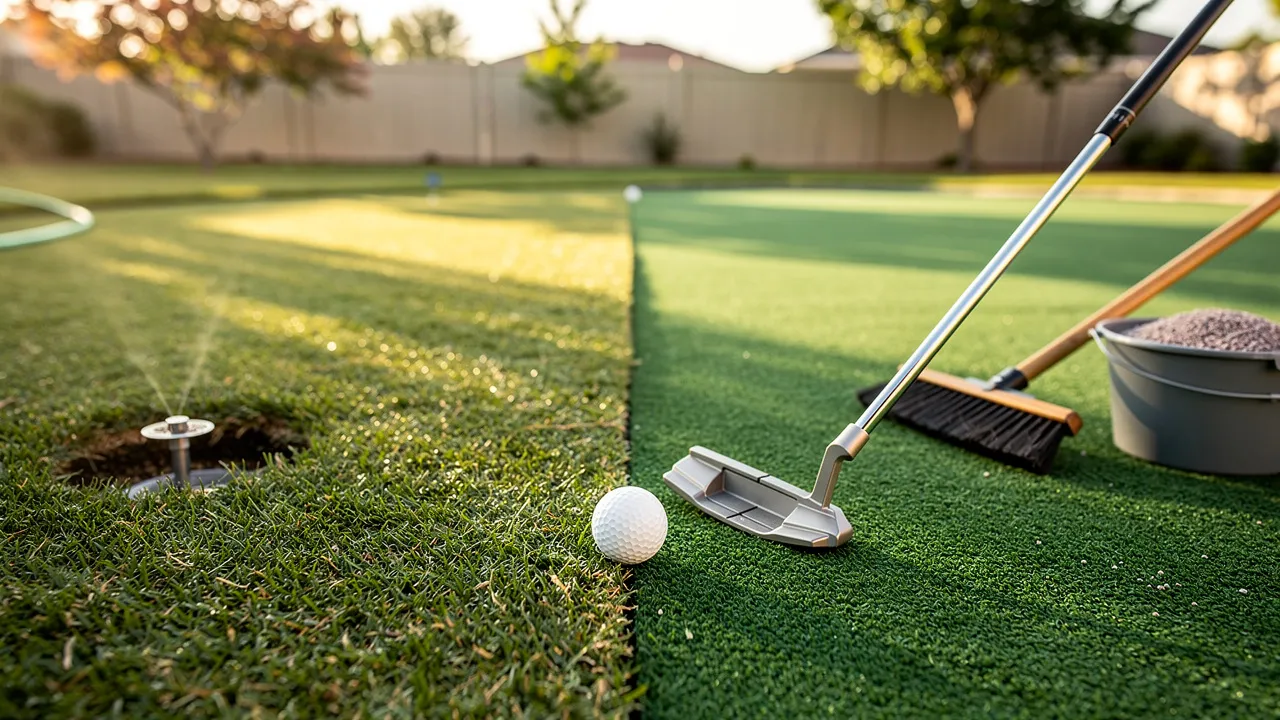
This comparison treats each putting-green surface as a maintenance profile rather than as a grass label. Among natural options, Poa annua and creeping bentgrass both require intensive maintenance, but Poa annua requires frequent product applications for seedhead suppression and disease control, along with more-frequent watering and fertilization, while creeping bentgrass requires more aeration, vertical mowing, and sand topdressing to manage thatch and reduce disease pressure. Once installed, synthetic putting greens have minimal maintenance requirements compared with natural grass.
The USGA describes synthetic putting greens as the most popular option for backyards. The maintenance contrast sets a practical first question: can the project support the selected care routine? If artificial grass is being considered, the site must be prepared before installation.
Natural-grass and synthetic greens share several planning questions: the available footprint, the intended layout, the playing experience you want, and the work required to build the site. Their construction and design considerations are similar in broad logistical terms, but the finished surface and ongoing care are different. Homeowners should assess their specific needs and consult with professionals to explore available artificial-grass installation options..
Overview
Natural grass and synthetic turf are the main putting-green surface categories. Natural grass offers several species and management approaches, but the choice is tied closely to climate context and an intensive care routine. In northern and cooler climates, Poa annua greens are considered the norm and can provide good putting surfaces. Poa annua and creeping bentgrass both require intensive maintenance for quality putting-green conditions, although their specific demands differ.
Synthetic turf shifts the decision from growing and maintaining a grass stand to selecting and installing a purpose-built system. Once installed, synthetic putting greens have minimal maintenance requirements compared with natural grass. That lower post-installation burden can matter when you want a defined practice area without adopting the care routine associated with a living green.
Your surface decision should answer four practical questions:
- What playing experience do you want to support?
- How much intensive natural-grass care can you provide?
- What site preparation and design work will the property require?
- Is the green for private practice, shared residential use, or a commercial setting?
You can customize a putting green to your specific space and skill level. That makes the footprint and intended use part of the surface decision, not an afterthought. A compact practice area and a larger shared installation may call for different design conversations even when both use the same broad surface category.
The maintenance comparison is a starting point rather than a complete project recommendation. Natural grass requires you to sustain species-specific practices, while synthetic turf reduces maintenance after installation but still requires a planned site and constructed system. Keep those two questions separate: first decide what surface experience you want, then decide whether the property and your available care routine can support it.
Key Highlights
Putting-green planning becomes clearer when you separate the grass name from the project requirements. Carry these points into your decision:
- Natural grass is a care commitment. Poa annua and creeping bentgrass both require intensive maintenance, but they do not demand exactly the same work. Poa annua calls for frequent product applications, watering, and fertilization; creeping bentgrass calls for more aeration, vertical mowing, and sand topdressing.
- Synthetic turf reduces ongoing upkeep after installation. Synthetic putting greens have minimal maintenance requirements compared with natural grass once installed, but they still need a designed and prepared site.
- Climate context matters. Bermuda illustrates why a grass associated with hot-weather conditions should not be treated as a default choice for every property.
- Your layout and use matter. You can customize a putting green to a specific space and skill level, so practice goals, available area, and the people using the green should shape the design discussion.
- Installation belongs in the comparison. Surface selection is only one part of the project. Site preparation, construction, and design affect the scope of both natural and synthetic installations.
Use those points to narrow the decision before you compare products. If you are considering artificial grass, assess your specific needs and discuss the available options with a professional. For a Kansas City-area property, carry the same questions into the site conversation rather than assuming that a surface label answers them.
Cool-Season Natural Grasses Bring Different Maintenance Demands
Poa annua requires frequent product applications for seedhead suppression and disease control, along with more-frequent watering and fertilization. If you prefer this grass, ask how those tasks would fit the property’s maintenance schedule and who would perform them. The relevant question is whether you can sustain the care pattern required to keep the surface in the condition you expect.
Creeping bentgrass requires more aeration, vertical mowing, and sand topdressing to manage thatch and reduce disease pressure. Those practices create a different maintenance plan from the one associated with Poa annua. If bentgrass is under consideration, make aeration, vertical mowing, and topdressing part of the project discussion before you select the surface.
Neither option should be presented as a maintenance-free solution. Compare the actual tasks, timing, equipment, and responsibility involved with each grass rather than relying on a general preference for one species.
A natural-grass decision should begin with the care commitment you are prepared to make:
- Choose Poa annua only when its watering, fertilization, and product-application demands fit your plan.
- Choose creeping bentgrass only when the required aeration, vertical mowing, and sand topdressing fit your plan.
- If neither routine is realistic, compare synthetic turf with the natural-grass alternatives before proceeding.
This approach keeps the grass choice connected to the work required after installation. It also gives you a concrete set of questions to take into a maintenance or installation discussion.
Bermuda Shows Why Climate Fit Matters
Bermuda grass shows why climate context must come before a species recommendation. Bermuda thrives in hot-weather conditions. Hybrid forms such as Tifway are used on putting greens in the hot-weather golf-course settings described by the source.
That association makes Bermuda useful as a comparison point, not as a default answer for a Kansas City-area property. Treat Bermuda as a grass to evaluate against the property and intended use rather than assuming that its use elsewhere transfers directly.
Bermuda grass can be mowed as low as 0.5 inches, according to the source. A mowing detail like this helps explain why putting-green grasses are managed differently from ordinary lawn grass, but it does not by itself settle the selection decision. You still need to consider the climate context, the care routine, the site, and the playing purpose together.
For a property in or around Kansas City, use Bermuda as a prompt for a suitability discussion. Do not select it solely because it is associated with putting greens in hotter regions.
A Bermuda comparison is useful when you want to test whether a warm-season option belongs in the discussion. Begin with the local property and intended use, then ask what maintenance routine and climate conditions the proposed grass requires. Keep the boundary clear: evidence about hot-weather golf-course settings does not establish a recommendation for a particular Kansas or Missouri property.
Synthetic Turf Reduces Upkeep but Still Requires a Designed System
Synthetic turf changes the maintenance question from managing living grass to planning a manufactured putting surface. The USGA describes synthetic putting greens as the most popular option for backyards, and once installed they have minimal maintenance requirements compared with natural grass. That difference can matter when you want a practice area but do not want the intensive watering, fertilization, or species-specific care routines associated with natural-grass greens.
Minimal maintenance does not mean no planning. A synthetic green still has to be treated as a complete playing system, with its surface, layout, site preparation, and installation considered together.
The logistical, construction, and design aspects of synthetic putting greens are similar to those of natural-grass greens, although important differences remain. The site must be prepared before artificial grass is installed. That preparation belongs in the initial scope because the surface cannot be separated from the ground and construction work supporting it.
Ask the installation plan to explain what happens before the turf is placed, how the intended putting layout will be formed, and what the finished area is expected to support. These questions are useful whether the project is a backyard green, a shared residential amenity, or a commercial installation.
Synthetic turf may suit you when lower post-installation maintenance is a central requirement. It may not suit a project where the primary goal is to manage living grass as part of the playing experience. Neither preference is automatically correct; the surface should reflect the work you want to do after installation and the way you expect the green to be used.
Describe the playing experience you want in concrete terms. Include the intended practice activities, the people who will use the area, the desired layout, and the level of care you are willing to provide. Then ask how the proposed synthetic system addresses those requirements.
A synthetic-turf discussion should cover more than the surface material. Use this short sequence:
- Define the space and the activities it must support.
- Identify the site preparation required before artificial grass is installed.
- Discuss the layout and construction work needed to create the putting area.
- Separate the post-installation maintenance routine from the work required to build the system.
- Decide whether the reduced upkeep fits your priorities well enough to continue planning.
This sequence keeps a lower-maintenance preference from becoming a substitute for a complete installation scope.
Match the Surface to Playing Goals and Maintenance Capacity
Your playing goals and maintenance capacity should guide the surface category. Start with the experience you want to create, then test that preference against climate context, site conditions, and the work you can sustain. You can customize a putting green to your specific space and skill level, so the same surface category may be planned differently for two properties.
Use the following comparison as a screening tool rather than a universal ranking.
A putting-green surface comparison is most useful when each category is tied to its stated care or planning demand:
| Surface category | Stated care or planning distinction | Question for your project |
|---|---|---|
| Poa annua | Frequent product applications for seedhead suppression and disease control, plus more-frequent watering and fertilization | Can your maintenance plan support this routine? |
| Creeping bentgrass | More aeration, vertical mowing, and sand topdressing to manage thatch and reduce disease pressure | Can you provide the required ongoing practices? |
| Bermuda | Associated with warm-season and hot-weather conditions; hybrid forms such as Tifway are used on putting greens | Does the property and local assessment support considering this grass? |
| Synthetic turf | Site preparation and a designed installation, followed by minimal maintenance compared with natural grass | Does lower post-installation upkeep carry enough weight for your project? |
The comparison separates what is established about each category from what you still need to decide. Ball-roll preference, layout, practice goals, and available space should be described as project requirements rather than assumed from a grass name. If you want a living green, compare the care routines of the species under consideration. If you want to reduce post-installation upkeep, compare synthetic systems by their design and site requirements.
For residential use, ask whether the intended practice area matches the available space and your willingness to maintain it. For commercial use, define who will use the green, how the area will be scheduled, and who will handle the ongoing work. Those answers help determine whether the project should proceed to a detailed surface and installation discussion.
Translate your answers into a surface direction:
- If living grass is part of the experience and you can sustain intensive care, keep the relevant natural-grass options in the discussion.
- If lower post-installation maintenance carries more weight, examine synthetic turf while keeping site preparation and design in scope.
- If the intended use or available space is still unclear, define those requirements before choosing a material.
Choose the category that matches both your playing priorities and your maintenance capacity.
If you cannot make that match confidently, assess your specific needs and consult with a professional before selecting an artificial-grass option or approving an installation plan.
Include Site Preparation and Installation in the Decision
Site preparation is part of the putting-green decision, not a separate detail to handle after you choose the surface. The site must be prepared before artificial grass is installed, and synthetic putting greens still involve logistical, construction, and design considerations similar to natural-grass greens. Natural grass also requires a site and design that can support the selected living surface and its continuing care.
Before requesting a scope, record the information that affects the conversation:
- The area available for the green and the surrounding landscape relationship.
- The intended users and practice activities.
- Whether the project is residential, shared, or commercial.
- The maintenance routine you can realistically support.
- Any site conditions that could affect preparation, access, or the planned layout.
This record gives you a concrete basis for discussing surface categories and installation work.
Professional input is appropriate when you need help connecting the surface choice to the property, when the site-preparation requirements are unclear, or when you are comparing an artificial-grass installation with a natural-grass plan. Assess your specific needs and consult with professionals to explore the available options for artificial-grass installation.
Bring your questions to that discussion instead of asking for a surface in isolation. Ask how the proposed option fits the intended use, what preparation it requires, and what care remains after installation. A useful scope should leave you able to distinguish the playing surface from the work required to install and maintain it.
Do not approve a synthetic surface before the installation plan accounts for the prepared site and the desired design. The lower maintenance requirement applies after installation; it does not remove the need to plan the construction and layout.
Apply the Comparison Carefully to a Kansas City-Area Project
A Kansas City-area putting-green project should begin with the property, intended use, and maintenance expectations rather than with a grass name. The grass descriptions connect Poa annua to northern and cooler climates and Bermuda to hot-weather conditions, but those broad descriptions do not decide seasonal suitability for a particular Kansas or Missouri site. Treat local fit as a project question that needs to be addressed with the property’s conditions and planned use.
Whether your property is in Kansas City, Overland Park, Olathe, Lee’s Summit, or another nearby community, keep the same distinction in view: a broad grass description is not a site-specific selection. Your location belongs in the assessment, but it does not replace one.
For a home, business, school, or other local property, prepare a short project brief with these points:
- Purpose: Explain whether the green is for private practice, family use, customers, employees, students, guests, or another defined group.
- Surface preference: State whether you are open to natural grass, synthetic turf, or both categories.
- Care capacity: Describe the maintenance work you can provide and the work you do not want to undertake.
- Site information: Identify the proposed location, usable area, access questions, and conditions that may affect preparation.
- Design needs: Describe the putting layout and surrounding landscape relationship you want to discuss.
- Decision questions: Ask what the proposed surface requires before installation and after the project is complete.
Site preparation must precede artificial-grass installation, so include preparation in the initial conversation rather than treating it as an optional add-on.
Use the brief to compare options on facts that matter to your property: the natural-grass care routine, the synthetic system’s installation requirements, the intended playing use, and the work you can sustain. If those factors point toward artificial grass, assess your specific needs and consult with a professional about the available installation options. If they point toward natural grass, carry the same questions into a species-specific maintenance discussion.
A local project is ready for the next planning conversation when you can describe the intended users, proposed area, surface categories under consideration, and maintenance capacity. Keep any unresolved question visible instead of treating an assumed grass type as a final decision.

Use a Kansas City-Area Suitability Check Before Choosing a Surface
The suitable putting-green surface is the one that fits your playing goals, property, climate context, site requirements, and maintenance capacity. Use the intended use, available site information, surface preference, and maintenance capacity to frame the decision, then confirm site-preparation and design requirements before choosing a surface category. Poa annua and creeping bentgrass remain natural-grass options with different intensive care needs, while Bermuda is an example used on putting greens in hot-weather golf-course contexts; whether a natural-grass option fits a Kansas City property requires site assessment, and synthetic turf has minimal maintenance after installation but still depends on a prepared, designed system.
We offer installation of backyard putting greens for golf lovers. If you are planning a Kansas City-area residential or commercial project, bring your intended use, site information, surface preference, and care expectations into the installation discussion. A qualified professional should determine individual suitability for your property and project conditions.
Before you request a quote, decide which category you want to investigate and write down the questions that remain about preparation, design, installation, and upkeep. That gives the next conversation a clear starting point.
What Should You Confirm Before Requesting a Putting-Green Quote?
What are the main types of grass used for putting greens?
The primary types of grass for putting greens include cool-season grasses like Poa annua and creeping bentgrass, as well as warm-season grasses like Bermuda. The choice depends on climate and maintenance capacity.
What maintenance is required for Poa annua and creeping bentgrass?
Poa annua requires frequent watering, fertilization, and product applications for disease control, while creeping bentgrass needs more aeration, vertical mowing, and sand topdressing to manage thatch.
How does synthetic turf compare to natural grass for putting greens?
Synthetic turf offers minimal maintenance after installation compared to natural grass, which requires ongoing care. However, synthetic systems still need proper site preparation and installation.
What factors should I consider when choosing a putting green surface?
Consider your playing goals, maintenance capacity, climate conditions, site preparation needs, and whether the green will be for private or commercial use.
Is Bermuda grass suitable for putting greens in Kansas City?
Bermuda grass is a warm-season grass that thrives in hot climates. Its suitability for Kansas City should be evaluated based on local climate conditions and maintenance capabilities.
What should I do before installing a synthetic putting green?
Before installation, ensure the site is properly prepared, and discuss the layout, design, and maintenance requirements with a professional.
How can I customize a putting green for my specific needs?
You can customize a putting green by defining the intended use, available space, and skill level, which will guide the design and surface selection.