
Start with the trade-off that matters most in your yard
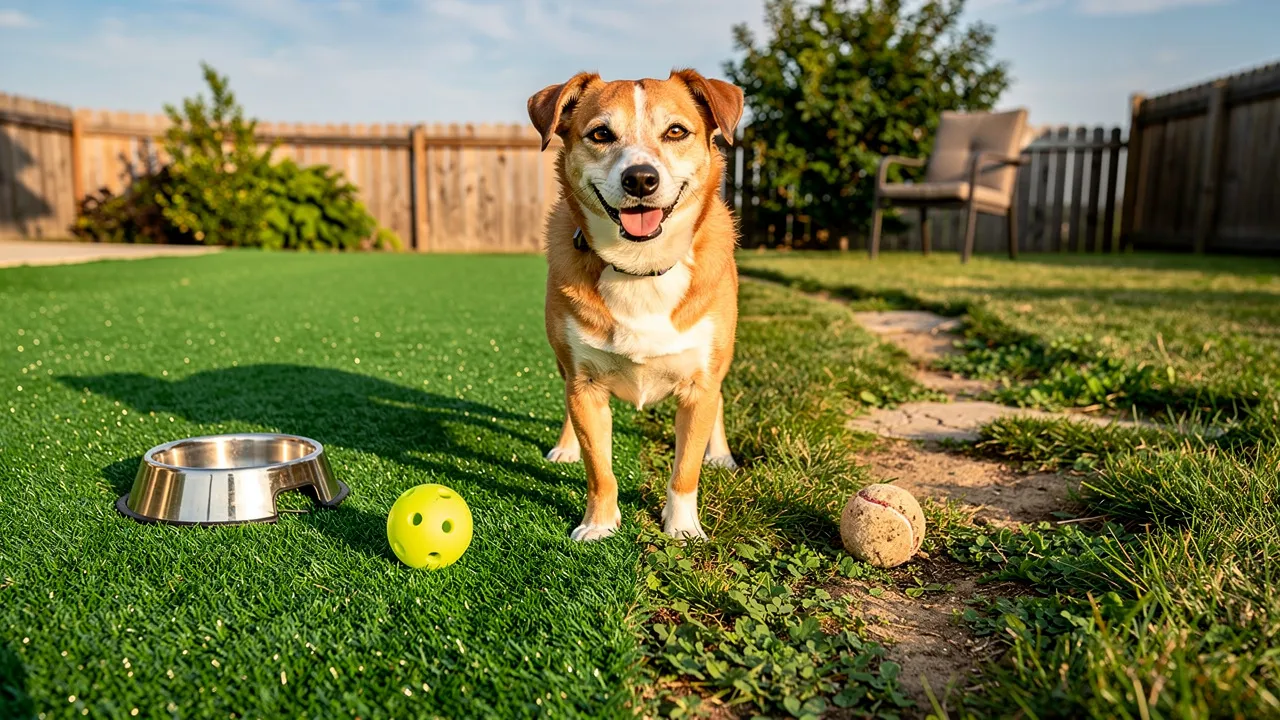
The artificial-turf-versus-natural-grass choice depends on how your yard is used, not on a universal winner. Artificial grass may fit a concentrated dog run, repeated traffic, water-cost concerns, or a poorly lit area where living grass struggles. Natural grass may fit your preference for a living, cooler surface, a very large yard, gardening, or a lower upfront cost. Your dogs may enjoy the smell, texture, and soil of natural grass, while repeated traffic, urine, digging, and wet weather can leave bare soil, standing water, and worn patches. Natural grass can also require reseeding, resodding, or repair after drought, shade, pests, disease, heavy use, or other weather stress.
The Kearney and Kansas City decision also involves water movement, heat, and project scale. A separate report found that one 1.32-acre natural-grass sports field could use up to 1.5 million gallons of irrigation water per year, depending on geographic location. Athletic-field figures are not a home-lawn estimate: reported installation costs ranged from $0.60 to $5.00 per square foot for natural-grass installations and from $4.50 to $10.25 per square foot for artificial turf.
Start by identifying the part of the property that creates the most trouble. If your dogs repeatedly use one narrow strip, dig near a fence, or turn a shaded passage into mud, concentrated-use performance may matter more than the appearance of the whole lawn. If you have a large open yard, value a living surface, and accept seasonal care, natural grass may align better with your priorities. Choose the comparison criteria before you choose the surface.
Compare what each surface asks you to do every week
Artificial turf can reduce muddy paws, withstand frequent activity, and make pet waste easier to manage, but artificial turf is not maintenance-free. The surface does not require regular watering, mowing, trimming, or pesticide treatments, and a hose with mild detergent can be used for cleaning. You still need to remove litter and clean moss growth. Natural grass asks for a different routine: frequent mowing, watering, fertilizing, aerating, reseeding, weed control, and possible irrigation repairs. Natural grass care may accumulate costs over time, while artificial turf shifts the work from plant care to surface care.
A practical maintenance comparison looks like this:
- Choose natural grass if you prefer recurring mowing, watering, fertilizing, and seasonal repair as part of caring for a living lawn.
- Choose artificial turf if you prefer to avoid regular mowing and watering but will brush, rinse, clean, inspect, and occasionally replenish the surface.
- One published account reported budgeting 15-20 minutes for mechanical brushing every two to three weeks on a residential artificial-turf lawn, with an infill top-off every 2-3 years; those are planning figures for that account, not a universal schedule.
- The same estimate reported that same-sized artificial turf athletic fields could save 500,000 to 1 million gallons of water per year, or 8.7 to 17.4 gallons per square foot. That athletic-field comparison should not be used as a direct residential calculation.
Maintenance is therefore a trade: natural grass requires ongoing plant care, while artificial turf requires recurring cleaning and inspection. Neither surface eliminates work.
Artificial turf maintenance can also affect a whole-life comparison. TURI research concluded that artificial turf athletic fields could cost 2 to 10 times more than organically managed natural-grass fields over their life cycles when installation, maintenance, disposal, and replacement fees were included. That evidence concerns athletic fields and should not be transferred directly to a residential dog yard, but it shows why a lower weekly workload does not by itself establish a lower lifetime cost.

Trace dog waste from the surface to the drainage path
Artificial grass gives you a consistent surface where most dogs can be trained to urinate and defecate, and that consistency can make solid waste easier to see and remove. Artificial turf can make daily cleanup more straightforward, but visible waste is only the first part of the system. Liquid waste must move through the surface and away from the area rather than remain trapped beneath it.
For an artificial-turf dog area, check the complete waste path:
- Choose permeable backing so liquid waste can drain through the surface.
- Confirm that the base and drainage route can carry water away from the high-use area.
- Pick up solid waste promptly and rinse areas that receive repeated use.
- Ask what infill is being used and how it affects odor control.
- Watch for pooling after rain or rinsing; pooling can indicate a problem below the visible surface.
Effective drainage is essential to prevent waste and water from accumulating on artificial grass and to support the longevity of pet-friendly turf. Poor drainage or a compacted base can allow urine to pool underneath the turf and create persistent odors. Surface cleaning cannot correct that foundational problem.
Infill affects odor control. Raw sand can absorb and trap urine, while many modern pet-friendly infills are designed with antimicrobial properties to help fight odor buildup. These descriptions do not make every infill suitable for every property, so compare the infill material with the turf backing, base, drainage design, dog traffic, and cleaning routine. If your yard already holds water, resolve the drainage question before treating infill as the solution.
Natural grass does not remove the waste and wet-weather questions. Repeated urine, digging, traffic, and wet conditions can leave bare soil, standing water, and worn patches. If the same section of lawn receives nearly all of your dogs’ daily use, compare the repair work that natural grass may need with the drainage, rinsing, and infill management required by artificial turf.

Separate durability from comfort under repeated dog use
Artificial turf and natural grass respond differently to repeated dog use. In one study, artificial turf was less affected by dog traffic and seasonal changes than the natural turfgrass treatments, but it was harder than both natural surfaces, and dogs spent more time on the natural surfaces. The study describes those tested surfaces under its own conditions; it does not predict how every product, base, dog, or yard will perform. One published account reported that most artificial-turf products lasted 8-15 years before fibers flattened or infill compacted, which could create replacement costs and disposal challenges.
The same dog-turf study found that artificial turf reached up to 63.8 °C while natural turfgrass remained below 40 °C under the same environmental conditions. For every 1 °C increase in environmental temperature, surface temperature increased by 1.67 °C on artificial turf, compared with 1.05 °C on natural turf and 1.09 °C on stabilized turf. Treat those measurements as a reason to examine direct sun, shade, and paw contact rather than as a universal product rating.
A separate study of high school lacrosse games found abrasion injuries accounted for 19.3% of all injuries recorded on artificial turf and 0.5% of all injuries recorded on grass. That study involved athletes and field use, not household dogs, so it does not establish a dog-injury rate. It does reinforce the need to distinguish resistance to visible wear from surface comfort during active use.
Use the durability question in a specific way: identify where your dogs run, turn, dig, rest, and relieve themselves, then ask whether the surface’s hardness, heat, drainage, and expected wear match those activities. Artificial turf may hold its appearance more consistently under concentrated traffic, but that does not remove the need to assess contact comfort or future replacement. Natural grass may feel more familiar and forgiving, but repeated urine, digging, traffic, shade, and wet conditions can produce repair work.

Treat summer heat as a use-and-shade question
Natural grass generally stays cooler than artificial turf in direct sunlight because living plants release moisture through evapotranspiration. Artificial turf fibers and infill absorb and retain more solar energy. During hot months, natural grass tends to stay cooler than synthetic surfaces and may be more comfortable for sensitive dogs’ paws. Artificial turf can heat up in direct sunlight and potentially cause pet discomfort on scorching summer days, so shade and cooling become part of how you plan the space.
The heat studies measured different parts of the question. A field study measured artificial-turf surface temperature at 34.9 ± 11.4 °C [94.8 ± 20.6 °F] versus 24.0 ± 4.6 °C [75.3 ± 8.2 °F] for grass. In the dog-turf study, artificial turf reached up to 63.8 °C while natural turfgrass remained below 40 °C under the same conditions. Surface contact, air conditions, measurement height, shade, and activity are different variables.
When environmental temperature exceeds 25 °C, the dog-turf study recommended caution because the artificial surface temperature could cause injuries to dogs; the study also suggested irrigation and shade where artificial turf was under direct sunlight. For your yard, map the hours of direct sun, locate shaded rest areas, and consider when your dogs use the space. If a large section receives afternoon sun with no cooler route or resting area, natural grass may fit the comfort priority more readily. If you choose artificial turf, include shade and a way to cool the surface in the site discussion rather than treating heat as an afterthought.
Compare the cost timeline, not just the installation quote
Artificial turf generally costs more to install upfront than natural grass or sod. A national cost account reported $7 - $15 per square foot for artificial-grass installation projects under 1,500 square feet and less than $1 per square foot for professionally laid sod. The account said actual costs varied with preparation, labor, materials, and project size, so those figures are national reference points rather than a Kearney or Kansas City proposal. Artificial-turf pricing may also include site preparation, drainage setup, removal of existing grass, and infill. List each item separately so a low visible turf price does not hide necessary ground work.
Published upkeep figures vary because accounts may use different maintenance scopes and time periods. One 2026 account reported artificial-turf maintenance averaging $150 to $300 per year and natural-lawn care reaching $10,000 to $29,000 or more over a decade; the figures depended on the property and local services. Another cost guide reported natural-grass upkeep at $500 to $1,500 annually and artificial-grass maintenance at $400 to $1,000 every few years. Neither range is a universal local estimate.
Your comparison should include:
- installation and removal;
- grading, base preparation, drainage, edging, and infill;
- mowing, watering, fertilizing, cleaning, brushing, and repairs;
- reseeding or resodding for natural grass;
- replacement and disposal considerations for artificial turf.
Artificial turf may reduce recurring maintenance and water costs compared with natural grass, but higher initial costs and possible replacement or disposal costs belong in the same calculation.
The time horizon can change the comparison. An October 2, 2026 analysis placed breakeven for a 1,000-square-foot yard between year five and year eight in an average-water-cost market, while reporting that a 2025 lifecycle case study found natural grass could cost less over 25 years because synthetic turf might need replacement around year 15 to year 20. Another account identified eventual artificial-grass disposal or replacement after 15-20 years as a hidden cost. These scenarios do not establish your property’s result; they show why you should compare the installation bill with the years of care, replacement assumptions, and dog traffic you actually expect.
Before comparing estimates, ask whether each figure includes removal, grading, the drainage base, edging, infill, labor, cleanup, and any repair or replacement assumption. A quote that covers only visible turf cannot be compared fairly with a quote that includes the underlying system. For natural grass, record whether the plan includes sod or seed, soil preparation, irrigation, mowing, and future repair. The useful comparison is the cost of the surface and the work it requires over the period you expect to use the yard.
Include the ground and environmental trade-offs
Natural grass can reduce surface temperatures, support biodiversity, reduce soil erosion, and act as a carbon sink. Natural grass also provides natural infiltration through the soil profile. One study found that natural grass was more effective than short and long artificial turf at slowly releasing infiltrated water and storing it. Natural grass helps reduce runoff, mitigate flooding, and ease urban heat, although heavy rainfall can still flood a natural lawn. These benefits depend on soil, grading, grass selection, irrigation, and maintenance rather than appearing automatically after installation.
Artificial grass can inhibit natural infiltration and may require drainage systems to compensate. Artificial grass can also produce greater surface runoff after significant rainfall, which may contribute to flooding. The surface restricts access to the soil and natural materials used by worms and other soil organisms, and it does not provide food for living creatures. Artificial grass can be made from polyethylene, polypropylene, or nylon, and fragments from those materials can enter soil as microplastic pollution. The estimated shelf life is 10-20 years; reuse is difficult, and recycling requires specialist plants and a specific cleaning process.
Water use is not a simple artificial-versus-natural label. One account reported that natural grass could require up to 1 million gallons of water per year in the United States, which could be costly in water-scarce areas. The same comparison noted that artificial turf could be significantly hotter than natural grass; one study found turf exceeded natural grass by 86.5 °F. Artificial turf’s higher temperatures can relate to its higher spectral reflectance, lower heat capacity, and lack of water content, while natural grass is composed of roughly 70% water and can cool through transpiration. For your property, consider water availability, runoff routes, shade, material preference, and how you weigh soil access against reduced plant care.
Score the yard against five decision inputs
Use five inputs to compare the two surfaces on your actual property:
| Decision input | Artificial turf questions | Natural grass questions |
|---|---|---|
| Dog workload | Where do your dogs run, turn, dig, and relieve themselves? | Can the grass tolerate traffic, urine, digging, and wet weather? |
| Heat and shade | Which areas receive direct sun, and where can dogs rest or cool down? | Will the living surface provide the cooler contact area you want? |
| Water and ground | Where will rinse water and stormwater go, and is the base suitable for drainage? | What do soil, grading, irrigation, and infiltration require? |
| Care preference | Will you brush, rinse, clean, inspect, and manage infill? | Will you mow, water, fertilize, weed, aerate, and repair? |
| Budget horizon | Can you include preparation, drainage, infill, replacement, and disposal? | Can you carry recurring mowing, watering, reseeding, and repair costs? |
Consider your budget, the intended use of the space, and your willingness to commit to regular upkeep before choosing either surface. The five inputs turn a general comparison into a property-specific decision.
Add these checks before you commit:
- For artificial turf, check product specifications and available safety testing because materials vary between products and manufacturers.
- For natural grass, arrange soil testing and select grass species based on climate and maintenance needs. If irrigation is not viable, choose a high-drought-resistance variety; where winters and summers are extreme, consider varieties less sensitive to climate extremes.
- Treat a 1-million-gallon annual water figure as a United States-wide estimate for natural grass, not as a measurement of your Kearney or Kansas City yard.
- Treat the cited 50 °C [122 °F] recommended safety limit as a source-specific reference for avoiding skin injury, not as a complete dog-use rule.
- A 2019 Tempe, Arizona, study compared Division I football training on artificial turf at 67 °C [153 °F] with natural grass at 33 °C [91 °F]; skin temperatures, core temperatures, perceived exertion, and heat stress were higher on the turf day. That athlete study does not establish conditions for your yard.
- In sunny conditions, synthetic turf surface temperatures were observed from 140 °F to 170 °F, with fiber and infill materials influencing temperature. Use that range to ask product and shade questions, not to predict one installation.
Choose the surface only after the answers fit your dogs, site, care capacity, and budget horizon.
Use the score to make the choice explicit:
- Artificial turf may fit if concentrated dog traffic and reduced plant care matter most, and you are prepared to manage drainage, rinsing, brushing, heat, infill, and eventual replacement. Proceed only when the base, drainage route, shade plan, and product documentation are clear.
- Natural grass may fit if a cooler living surface, gardening, a very large yard, or lower upfront cost matters most, and you are prepared for mowing, watering, fertilizing, seasonal wear, and repair. Proceed with soil testing and grass selection suited to the local climate and your irrigation capacity.
- A mixed plan may fit when one section receives concentrated dog use but another section can remain natural grass. Keep the use zones, drainage routes, and maintenance expectations separate rather than assuming one surface must cover the entire property.
Get qualified site evaluation when the warning signs are visible
Visible site conditions can change the decision and the project scope. Pause for qualified local assessment when you see any of these warning signs:
- water or urine pooling after rain or rinsing;
- a compacted, uneven, or uncertain base;
- substantial removal of existing grass, concrete, or other surfaces;
- grading that sends water toward a building, fence, or neighboring property;
- complex edges, seams, slopes, or transitions;
- uncertainty about product specifications, safety testing, infill, or the drainage route.
Poor drainage or a compacted base can cause urine to pool below artificial turf and create persistent odors. Artificial turf installation requires a relatively smooth surface and an appropriate gravel or aggregate sub-base for drainage, followed by accurate cutting, seaming, and securing. Poorly installed turf may buckle, wrinkle, or show seams, and installation requires specialized tools and substantial physical work.
Natural grass also deserves a site review when soil, shade, irrigation, or drainage is uncertain. Natural grass provides infiltration through the soil profile, but the result depends on soil condition, grading, grass selection, and maintenance. Artificial turf can inhibit natural infiltration and may need a drainage system to compensate. Before either installation, record the yard’s dimensions, low points, existing surface, sun and shade pattern, irrigation access, dog-use zones, and the route stormwater already takes. A qualified local assessment can then address the physical conditions that a surface comparison alone cannot resolve.
Do not treat cleaning products or a new grass variety as a substitute for correcting the ground beneath the surface. Persistent pooling, uncertain grading, or a compacted base changes the project before the visible lawn is selected. Resolve those physical questions first, then compare turf or grass options against the use pattern and care routine you can sustain.
Turn the decision into a property-specific next step
Your next step is to turn the comparison into a short property brief. Record the measured area, number and size of dogs, daily traffic, digging or urine hotspots, direct-sun hours, shade, pooling, existing grass or hardscape, preferred maintenance routine, and the budget horizon. Include the questions that could change the choice: drainage path, base preparation, infill, surface heat, product documentation, safety testing, replacement assumptions, and natural-grass soil or species requirements. A qualified professional should determine individual site suitability and installation conditions.
If artificial turf fits your priorities after those checks, use the brief to request a property-specific assessment rather than relying on a generic range. If natural grass fits better, use the same record to plan soil testing, grass selection, irrigation, shade, and the care routine your yard will require. Bring the drainage observations, dog-use pattern, and cost horizon to that conversation so the recommendation addresses the property rather than only the surface label.
What should dog owners confirm before choosing artificial turf or natural grass?
Do I need to replace the entire lawn with artificial turf for my dogs?
No. A mixed plan may suit a property where one strip, dog run, or shaded passage receives concentrated traffic while the rest can remain natural grass. Keep the use zones, drainage routes, heat exposure, and maintenance expectations separate when comparing the two surfaces.
Can artificial turf fix a muddy or smelly area if the yard has poor drainage?
Not by itself. Poor drainage, an uneven base, or water directed toward the area can allow urine and rainwater to pool beneath the surface, causing persistent odors and wet conditions. Resolve grading, base, and drainage-path questions before selecting turf, infill, or cleaning products.